


Genome-driven evaluation and redesign of PCR tools for improving the detection of virulence-associated genes in aeromonads
- PMID: 30110345
- PMCID: PMC6093642
- DOI: 10.1371/journal.pone.0201428
Genome-driven evaluation and redesign of PCR tools for improving the detection of virulence-associated genes in aeromonads
Abstract
Many virulence factors have been described for opportunistic pathogens within the genus Aeromonas. Polymerase Chain Reactions (PCRs) are commonly used in population studies of aeromonads to detect virulence-associated genes in order to better understand the epidemiology and emergence of Aeromonas from the environment to host, but their performances have never been thoroughly evaluated. We aimed to determine diagnostic sensitivity and specificity of PCR assays for the detection of virulence-associated genes in a collection of Aeromonas isolates representative for the genetic diversity in the genus. Thirty-nine Aeromonas strains belonging to 27 recognized species were screened by published PCR assays for virulence-associated genes (act, aerA, aexT, alt, ascFG, ascV, ast, lafA, lip, ser, stx1, stx2A). In parallel, homologues of the 12 putative virulence genes were searched from the genomes of the 39 strains. Of the 12 published PCR assays for virulence factors, the comparison of PCR results and genome analysis estimated diagnostic sensitivities ranging from 34% to 100% and diagnostic specificities ranged from 71% to 100% depending upon the gene. To improve the detection of virulence-associated genes in aeromonads, we have designed new primer pairs for aerA/act, ser, lafA, ascFG and ascV, which showed excellent diagnostic sensitivity and specificity. Altogether, the analysis of high quality genomic data, which are more and more easy to obtain, provides significant improvements in the genetic detection of virulence factors in bacterial strains.
Conflict of interest statement
The authors have declared that no competing interests exist.
Figures
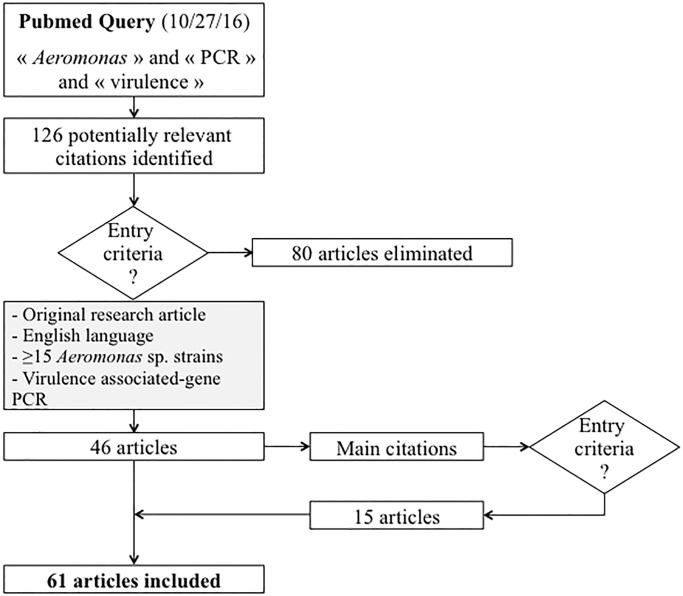
References
-
- Khajanchi BK, Fadl AA, Borchardt MA, Berg RL, Horneman AJ, Stemper ME, et al. Distribution of Virulence Factors and Molecular Fingerprinting of Aeromonas Species Isolates from Water and Clinical Samples: Suggestive Evidence of Water-to-Human Transmission. Appl Environ Microbiol. 2010;76: 2313–2325. 10.1128/AEM.02535-09 - DOI - PMC - PubMed
-
- Nyenje ME, Odjadjare CE, Tanih NF, Green E, Ndip RN. Foodborne pathogens recovered from ready-to-eat foods from roadside cafeterias and retail outlets in Alice, Eastern Cape Province, South Africa: public health implications. Int J Environ Res Public Health. 2012;9: 2608–2619. 10.3390/ijerph9082608 - DOI - PMC - PubMed
-
- Figueras MJ, Beaz-Hidalgo R. Aeromonas infections in humans Aeromonas. Caister Academic Press, Norfolk, UK, ed Graf J; 2015. pp. 65–68.
Publication types
MeSH terms
Substances
LinkOut - more resources
Full Text Sources
Other Literature Sources
