


Detection of pathogenic bacteria in the blood from sepsis patients using 16S rRNA gene amplicon sequencing analysis
- PMID: 30110400
- PMCID: PMC6093674
- DOI: 10.1371/journal.pone.0202049
Detection of pathogenic bacteria in the blood from sepsis patients using 16S rRNA gene amplicon sequencing analysis
Abstract
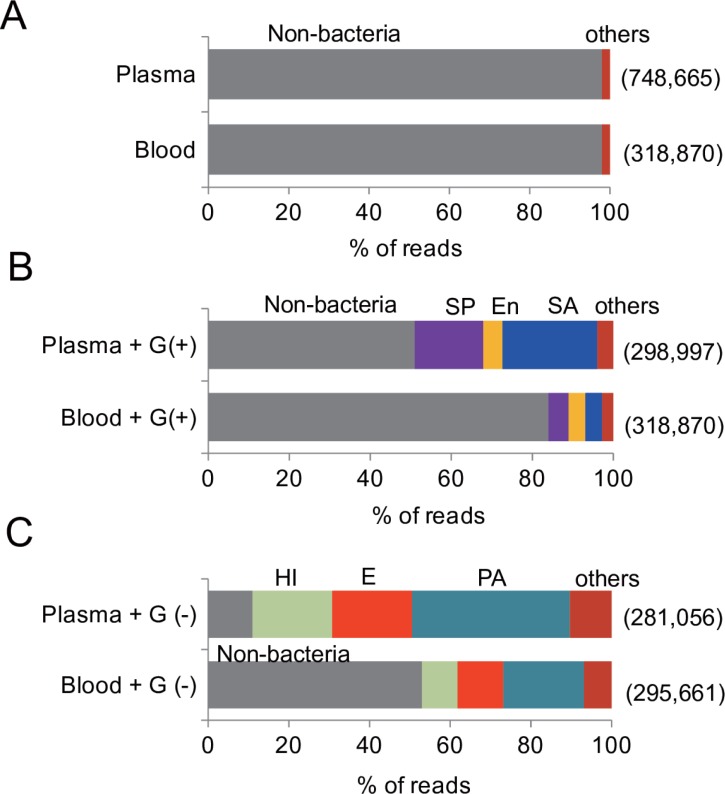
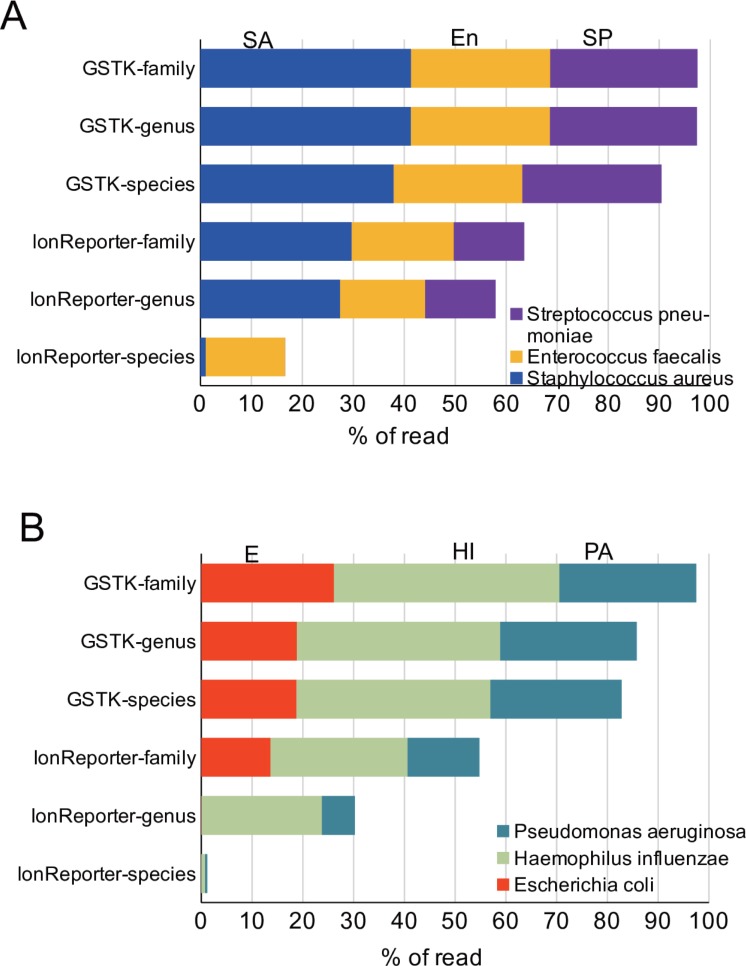
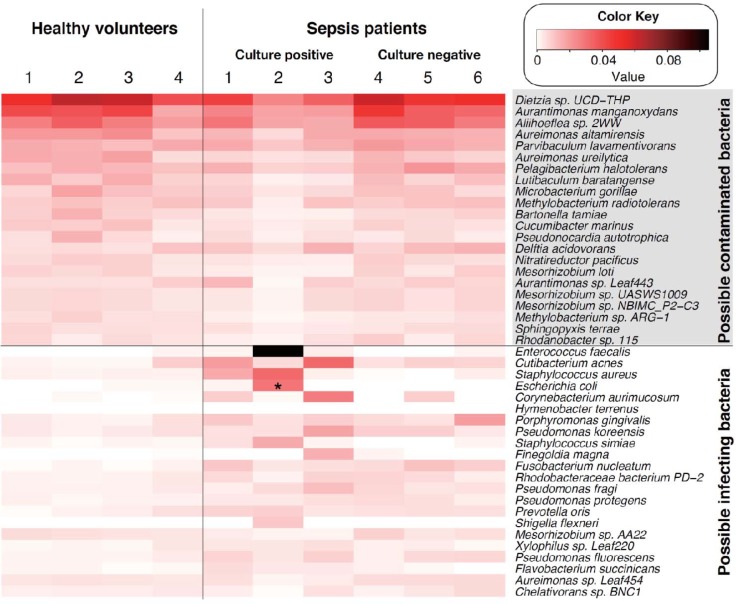
Prompt identification of causative pathogenic bacteria is imperative for the treatment of patients suffering from infectious diseases, including sepsis and pneumonia. However, current culture-based methodologies have several drawbacks including their limitation of use to culturable bacterial species. To circumvent these problems, we attempted to detect bacterial DNA in blood using next-generation DNA sequencing (NGS) technology. We conducted metagenomic and 16S ribosomal RNA (rRNA) gene amplicon sequencing of DNA extracted from bacteria-spiked blood using an Ion Personal Genome Machine. NGS data was analyzed using our in-house pipeline Genome Search Toolkit and database GenomeSync. The metagenomic sequencing analysis successfully detected three gram-positive and three gram-negative bacteria spiked in the blood, which was associated with a significant portion of non-bacterial reads, even though human blood cells were separated by low-speed centrifugation prior to DNA extraction. Sequencing analysis of seven variable regions of the 16S rRNA gene amplicon also successfully detected all six bacteria spiked in the blood. The methodology using 16S rRNA gene amplicon analysis was verified using DNA from the blood of six patients with sepsis and four healthy volunteers with potential pathogenic bacteria in the blood being identified at the species level. These findings suggest that our system will be a potential platform for practical diagnosis in the future.
Conflict of interest statement
The authors have declared that no competing interests exist.
Figures
References
-
- Zengler K. TO GROW OR NOT TO GROW: ISOLATION AND CULTIVATION PROCEDURES IN THE GENOMIC AGE. In: Fredricks DN, editor. The Human Microbiota: How Microbial Communities Affect Health and Disease: Wiley Blackwell; pp. 289–302.2013
-
- Lita M. SC Proctor, McEwen Jean, Peterson Jane, Wellington Chris, Baker Carl, Giovanni Maria, McInnes Pamela, and Dwayne Lunsford R.) THE NIH HUMAN MICROBIOME PROJECT In: Fredricks DN, editor. The Human Microbiota: How Microbial Communities Affect Health and Disease: Wiley Blackwell; pp. 1–50.2013
-
- Gosiewski T, Ludwig-Galezowska AH, Huminska K, Sroka-Oleksiak A, Radkowski P, Salamon D, et al. Comprehensive detection and identification of bacterial DNA in the blood of patients with sepsis and healthy volunteers using next-generation sequencing method—the observation of DNAemia. European journal of clinical microbiology & infectious diseases: official publication of the European Society of Clinical Microbiology. 2017;36(2):329–36. 10.1007/s10096-016-2805-7 - DOI - PMC - PubMed
Publication types
MeSH terms
Substances
LinkOut - more resources
Full Text Sources
Other Literature Sources
