


Prevention of seroma following inguinal lymph node dissection with prophylactic, incisional, negative-pressure wound therapy (SEROMA trial): study protocol for a randomized controlled trial
- PMID: 30111378
- PMCID: PMC6094459
- DOI: 10.1186/s13063-018-2757-6
Prevention of seroma following inguinal lymph node dissection with prophylactic, incisional, negative-pressure wound therapy (SEROMA trial): study protocol for a randomized controlled trial
Erratum in
-
Correction to: Prevention of seroma following inguinal lymph node dissection with prophylactic, incisional, negative-pressure wound therapy (SEROMA trial): study protocol for a randomized controlled trial.Trials. 2018 Oct 19;19(1):570. doi: 10.1186/s13063-018-2882-2. Trials. 2018. PMID: 30340647 Free PMC article.
Abstract
Background: Radical inguinal lymphadenectomy (ILND) for metastatic melanoma is associated with a high complication rate. Seroma is often the first postoperative complication, followed by prolonged wound healing sometimes requiring reoperation, infection, multiple outpatient visits and re-hospitalization. Prevention of seroma may, therefore, lead to a reduction in many of the other complications.
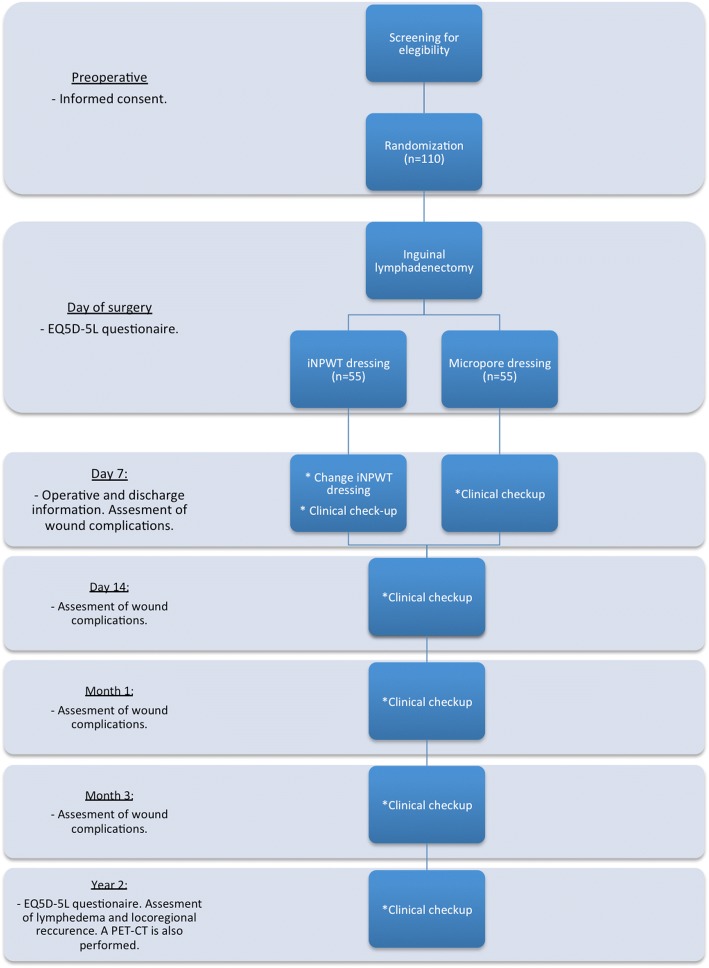
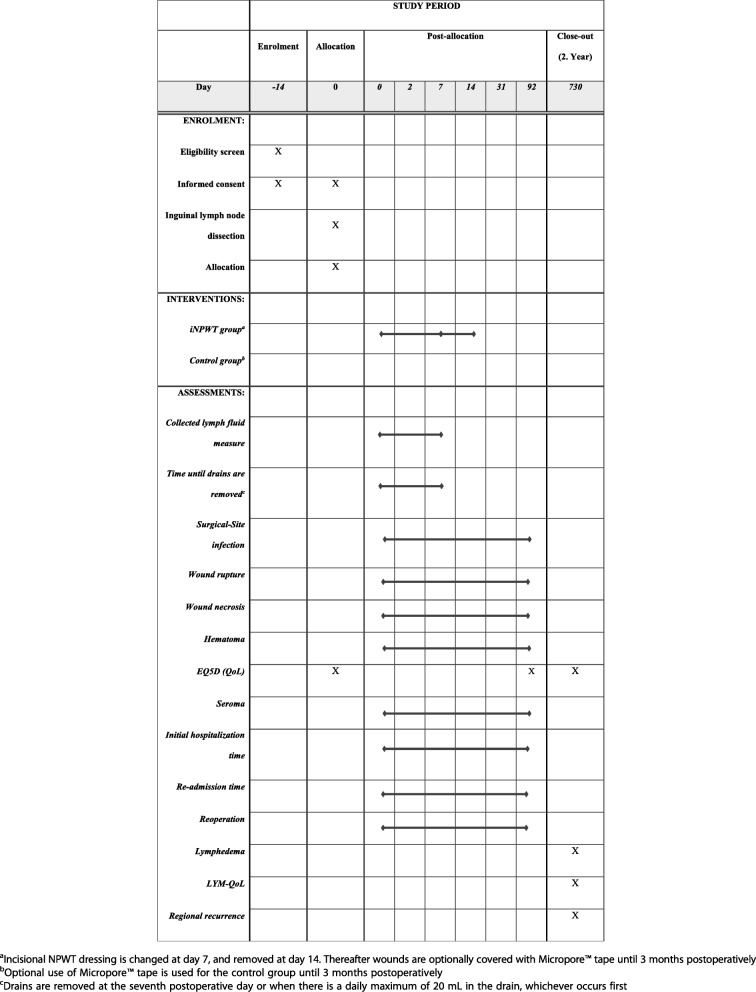
Methods/design: The primary aim of this randomized study is to investigate whether fewer patients require treatment for seroma by immediate prophylactic application of incisional, Negative-pressure Wound Therapy (iNPWT) following ILND, compared to standard postoperative treatment. The secondary outcomes include surgical-site infection, dehiscence, hematoma, length of hospitalization, quality of life, safety, long-term assessment of lymphedema and non-inferiority oncological outcome. Data will be registered prospectively at check-ups after 7 and 14 days, 1 and 3 months and 2 years after inguinal lymphadenectomy using case report forms and questionnaires and stored in a secure online database.
Discussion: To our knowledge, this trial is the first randomized study evaluating negative-pressure wound therapy as a prophylactic intervention for complications following melanoma-related ILND. The results from this trial will hopefully determine the efficacy and safety of prophylactic iNPWT treatment in prevention of the clinical relevant short- and long-term postoperative complications following ILND and may provide an evidence base for the an improved postoperative regimen.
Trial registration: ClinicalTrials.gov, ID: NCT03433937 . Prospectively registered on 15 February 2018.
Keywords: Lymph node dissection; Lymphedema; Melanoma; Negative-pressure wound therapy; Prevention; Seroma; Surgical-site infection.
Conflict of interest statement
Ethics approval and consent to participate
The trial has been approved by The Regional Committees on Health Research Ethics (S-20170085) and registered with the Danish Data Protection Agency (2008–58-0018). Informed consent will be obtained from all participants in the study.
Consent for publication
Not applicable
Competing interests
NH has been paid for providing presentations for Smith&Nephew.
Publisher’s Note
Springer Nature remains neutral with regard to jurisdictional claims in published maps and institutional affiliations.
Figures
References
-
- Jørgensen MG, Toyserkani NM, Thomsen JB, Sørensen JA. Surgical-site infection following lymph node excision indicates susceptibility for lymphedema: A retrospective cohort study of malignant melanoma patients. J Plast Reconstr Aesthet Surg. 2018;71(4):590–96. - PubMed
Publication types
MeSH terms
Associated data
Grants and funding
LinkOut - more resources
Full Text Sources
Other Literature Sources
Medical
