


Tau in Oligodendrocytes Takes Neurons in Sickness and in Health
- PMID: 30111714
- PMCID: PMC6121290
- DOI: 10.3390/ijms19082408
Tau in Oligodendrocytes Takes Neurons in Sickness and in Health
Abstract
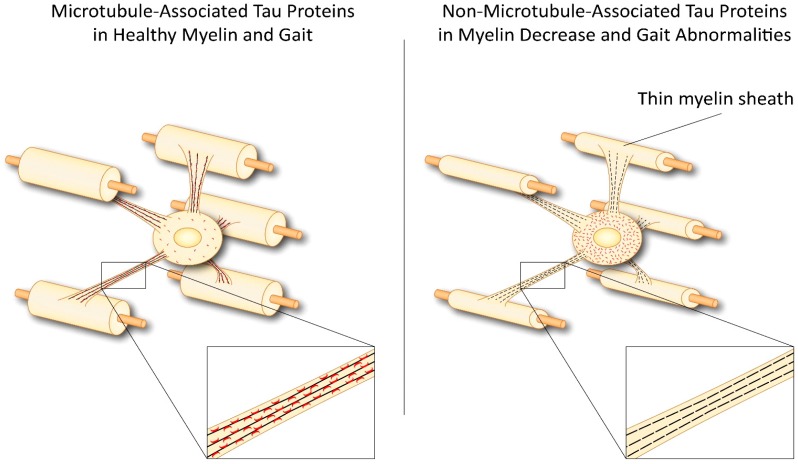
Oligodendrocytes (OLGs), the myelin-forming cells of the central nervous system (CNS), are lifelong partners of neurons. They adjust to the functional demands of neurons over the course of a lifetime to meet the functional needs of a healthy CNS. When this functional interplay breaks down, CNS degeneration follows. OLG processes are essential features for OLGs being able to connect with the neurons. As many as fifty cellular processes from a single OLG reach and wrap an equal number of axonal segments. The cellular processes extend to meet and wrap axonal segments with myelin. Further, transport regulation, which is critical for myelination, takes place within the cellular processes. Because the microtubule-associated protein tau plays a crucial role in cellular process extension and myelination, alterations of tau in OLGs have deleterious effects, resulting in neuronal malfunction and CNS degeneration. Here, we review current concepts on the lifelong role of OLGs and myelin for brain health and plasticity. We present key studies of tau in OLGs and select important studies of tau in neurons. The extensive work on tau in neurons has considerably advanced our understanding of how tau promotes either health or disease. Because OLGs are crucial to neuronal health at any age, an understanding of the functions and regulation of tau in OLGs could uncover new therapeutics for selective CNS neurodegenerative diseases.
Keywords: microtubules; multiple sclerosis; myelin; oligodendrocytes; tau.
Conflict of interest statement
The author declares no conflict of interest.
Figures
References
Publication types
MeSH terms
Substances
LinkOut - more resources
Full Text Sources
Other Literature Sources
Medical
Research Materials
