


Do Culture-Negative Periprosthetic Joint Infections Have a Worse Outcome Than Culture-Positive Periprosthetic Joint Infections? A Systematic Review and Meta-Analysis
- PMID: 30112408
- PMCID: PMC6077559
- DOI: 10.1155/2018/6278012
Do Culture-Negative Periprosthetic Joint Infections Have a Worse Outcome Than Culture-Positive Periprosthetic Joint Infections? A Systematic Review and Meta-Analysis
Abstract
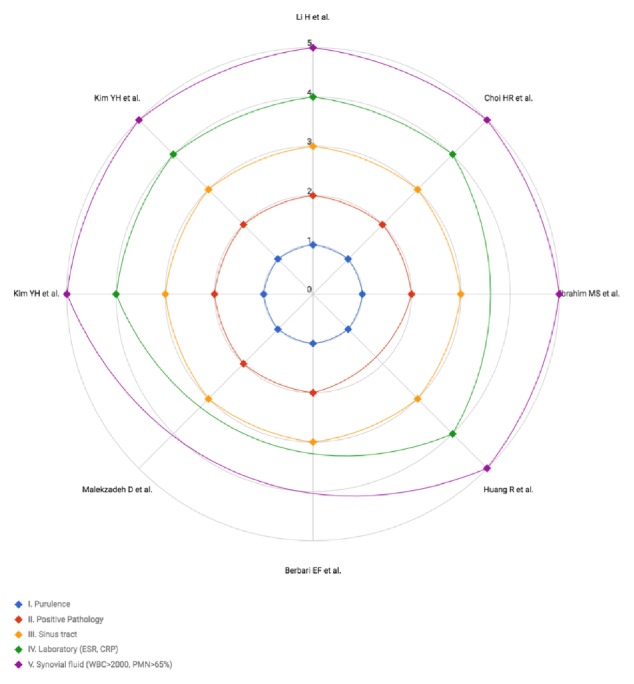
Background: Culture-negative periprosthetic joint infections (CN PJI) have not been well studied, and due to the lack of consensus on PJI, especially with culture-negative infections, there are considerable uncertainties. Due to the challenging clinical issue of CN PJI the aim of this systematic review is to describe incidence, diagnosis, and treatment outcomes based on the current literature on CN PJI.
Hypothesis: The review is designed to assess the formal hypothesis that CN PJI of the hip and knee have a poorer outcome when compared with culture-positive ones.
Study design: It is systematic review with level of evidence 3.
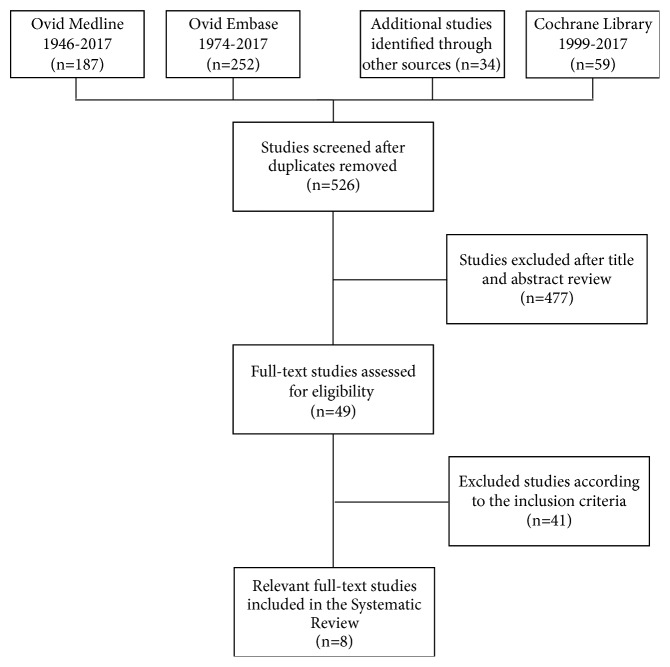
Methods: EMBASE, MEDLINE, and the Cochrane Library were searched electronically in January 2018. All studies regarding CN PJI of the hip or knee published in English or German with a minimum of 10 patients were included. Afterwards, the authors performed a descriptive analysis of diagnosis and treatment outcome.
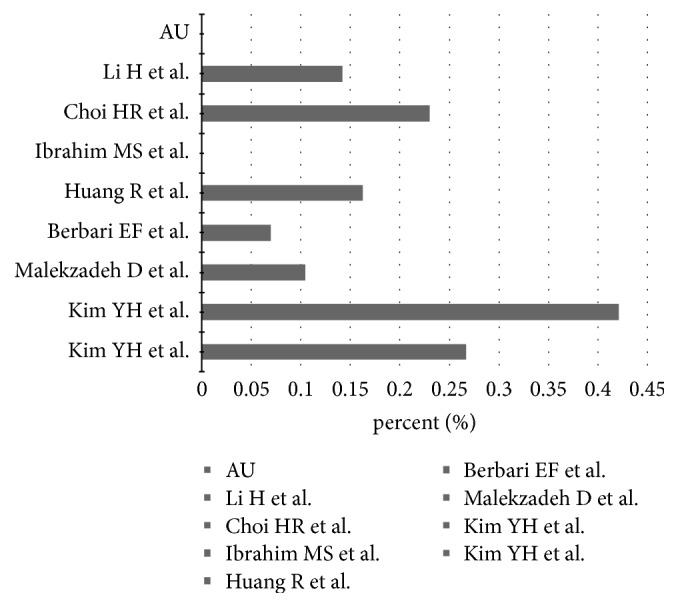
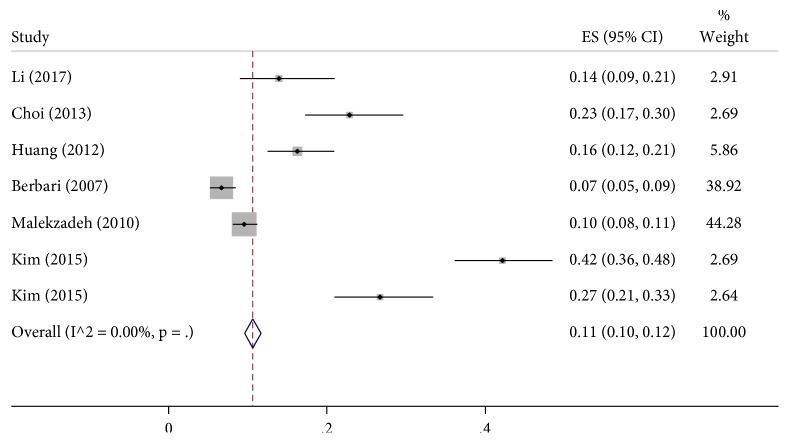
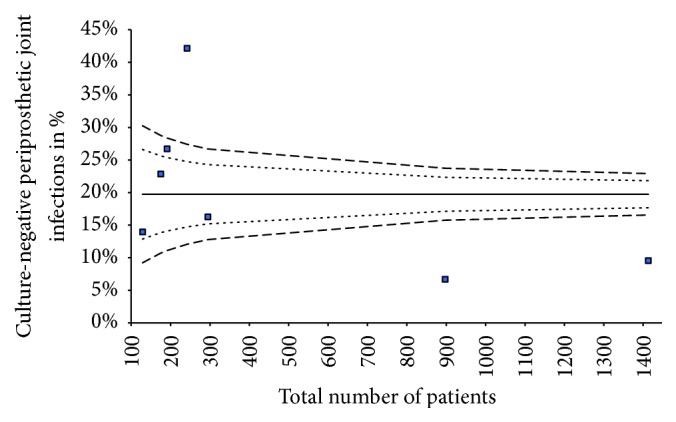
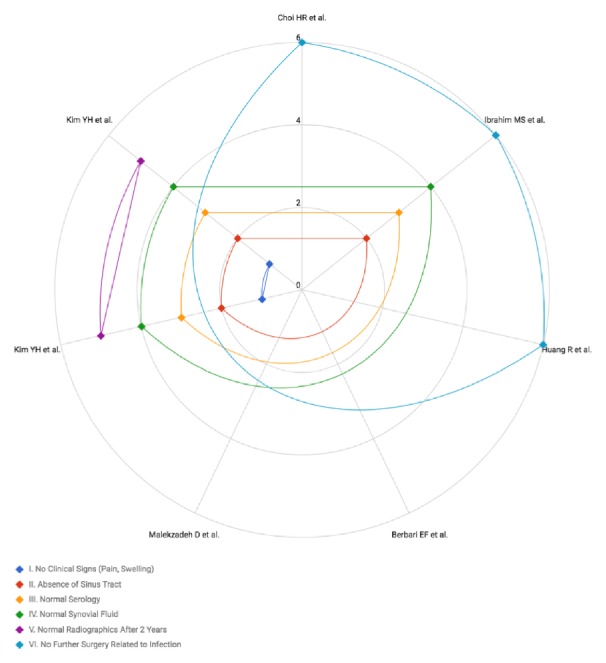
Result: Eight studies were identified that met the inclusion criteria. The incidence of CN PJI in the hip or knee ranged from 7% to 42 %. The included studies were pooled to give an overall incidence rate estimate of 11 % [95% confidence interval (CI): 10-12] based on a random-effects model. The most common surgical intervention was the two-stage revision of prosthesis with 283 patients. Postoperatively, the majority of patients received vancomycin as the antibiotic treatment, alone or in combination with other antibiotics. The rate of succesfully treated infections varied from 85% to 95 % in all included studies. The two-stage exchange arthroplasty had the best outcome, based on the infection-free survival rate of 95%, five years after treatment.
Conclusions: We conclude that CN PJI have the same or even better results than culture-positive infections. Nonetheless, a standardized diagnostic protocol and evidence-based treatment strategies for CN PJI should be implemented for further studies.
Figures
References
-
- Renz N., Trampuz A. Periprothetische Infektionen: aktueller Stand der Diagnostik und Therapie. Orthopädie & Rheuma. 2015:18–20.
-
- Aggarwal V. K., Bakhshi H., Ecker N. U., Parvizi J., Gehrke T., Kendoff D. Organism profile in periprosthetic joint infection: pathogens differ at two arthroplasty infection referral centers in Europe and in the United States. The Journal of Knee Surgery. 2014;27(5):399–406. doi: 10.1055/s-0033-1364102. - DOI - PubMed
Publication types
MeSH terms
LinkOut - more resources
Full Text Sources
Other Literature Sources
Medical
Miscellaneous
