


Comparison of rest-break interventions during a mentally demanding task
- PMID: 30113771
- PMCID: PMC6585675
- DOI: 10.1002/smi.2830
Comparison of rest-break interventions during a mentally demanding task
Abstract
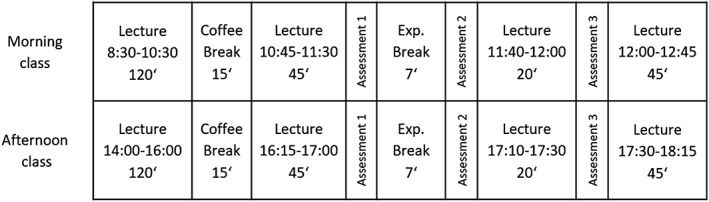
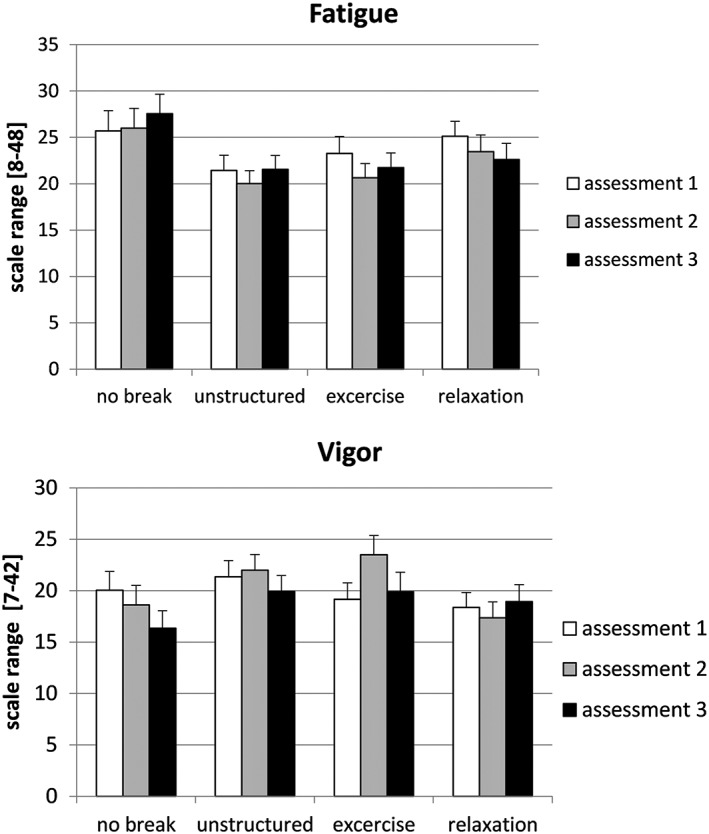
Research is scarce on ways to enhance the effect of rest breaks during mentally demanding tasks. The present study investigated the effectiveness of two rest-break interventions on well-being during an academic lecture. Sixty-six students (53 females, mean age 22.5 years) enrolled in two different university classes of 4-hr duration participated in the study. Two measures of well-being (fatigue and vigor) were assessed immediately before, after, and 20 minutes after the break. A control condition without a break as well as an unstructured break was compared with breaks either encompassing physical activity or a relaxation exercise. Compared with the nonbreak condition, the unstructured rest break led to an increase in vigor, the exercise break as well as the relaxation break both to an increase in vigor and a decrease in fatigue at 20-min post break. Compared with the unstructured break, exercise led to an (additional) increase in vigor and relaxation to an (additional) decrease in fatigue at 20-min post break. Thus, the effects of rest breaks during mentally demanding tasks can be enhanced by engaging in physical activity or relaxation exercises, with effects lasting at least as long as 20 min into the continuation of the task.
Keywords: mental fatigue; physical activity; relaxation; rest breaks; well-being.
© 2018 The Authors. Stress and Health Published by John Wiley & Sons Ltd.
Conflict of interest statement
The authors have declared that they have no conflict of interest.
Figures
References
-
- Anderson, L. W. , & Krathwohl, D. R. (2001). A taxonomy for learning, teaching, and assessing: A revision of Bloom's taxonomy of educational objectives. New York: Longman.
-
- Barredo, R. D. V. , & Mahon, K. (2007). The effects of exercise and rest breaks on musculoskeletal discomfort during computer tasks: An evidence‐based perspective. Journal of Physical Therapy Science, 19, 151–163.
-
- Boucsein, W. , & Thum, M. (1997). Design of work/rest schedules for computer work based on psychophysiological recovery measures. International Journal of Industrial Ergonomics, 20, 51–57.
MeSH terms
LinkOut - more resources
Full Text Sources
Other Literature Sources
Medical
