


Preliminary clinical experience with robotic retroperitoneoscopic pancreatic surgery
- PMID: 30115072
- PMCID: PMC6097221
- DOI: 10.1186/s12957-018-1468-5
Preliminary clinical experience with robotic retroperitoneoscopic pancreatic surgery
Abstract
Backgrounds: Retroperitoneoscopic surgery has shown advantages in urological surgery. However, its application in pancreatic surgery for neoplasm is rare. Robotic surgical system with its magnified view and flexible instruments may provide a superior alternative to conventional laparoscopic system in retroperitoneoscopic surgery. We aimed to evaluate the safety, feasibility, and short-term outcomes in a series of patients treated by robotic retroperitoneoscopic pancreatic surgery.
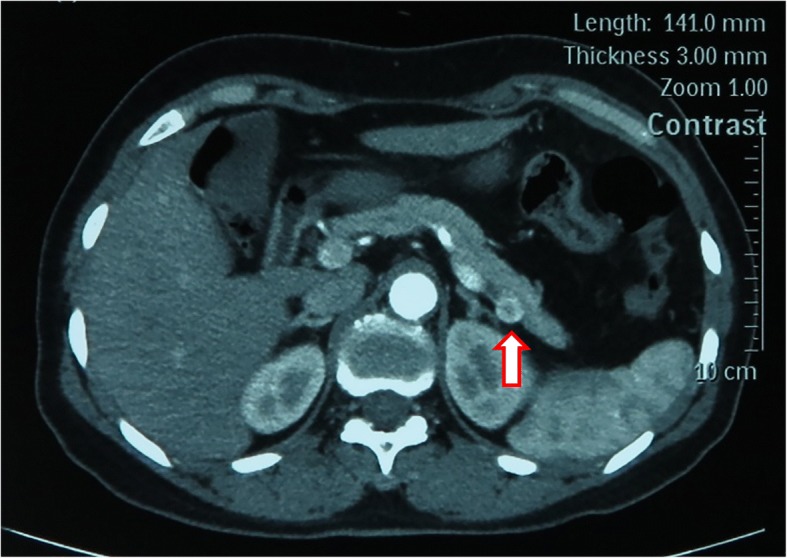
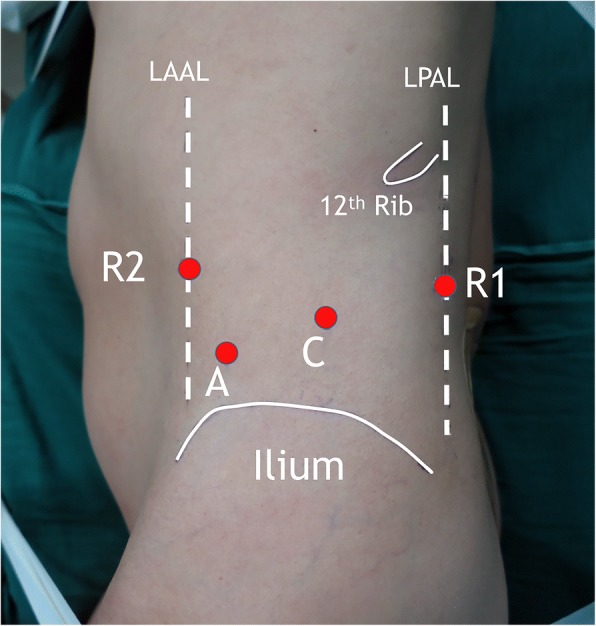
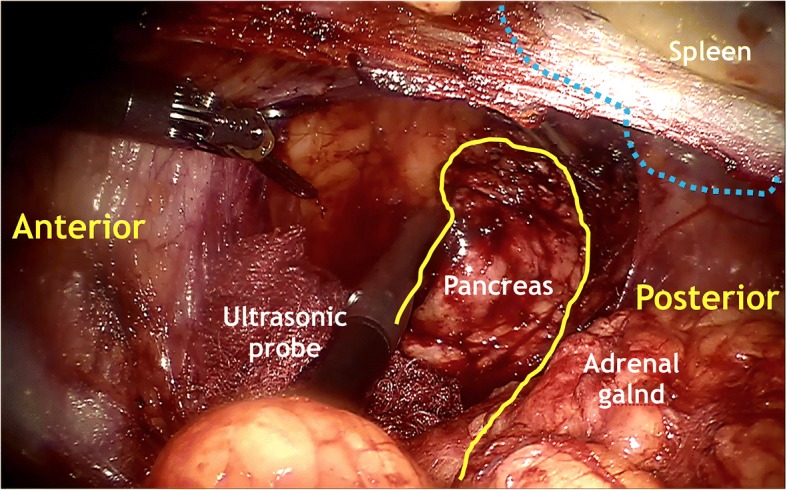
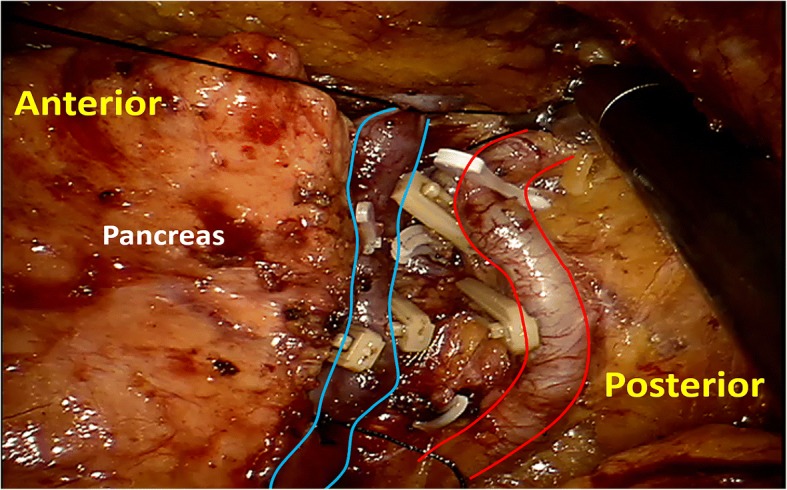
Case presentation: Between March 2016 and May 2016, four patients with solitary pancreatic neuroendocrine neoplasms were treated with robotic retroperitoneoscopic surgery. Prospective collected clinical data were retrospectively analyzed. Three patients underwent distal pancreatectomy (one combined with resection of left adrenal adenoma), and one patient enucleation. The mean operative time was 80 min (range 30-110 min). The estimated blood loss was insignificant. There was no conversion to open procedure. The mean postoperative hospital stay was 5.25 days (range 4-6 days). The mean tumor size was 1.375 cm (range 1.0-1.8 cm) in diameter. All patients' blood glucose level returned to normal range within 1 week postoperatively. Two patients had pancreatic biochemical leak. No patients underwent subsequent treatment, and no recurrence occurred during the 12-month follow-up period.
Conclusions: This study preliminarily indicates that robotic retroperitoneoscopic pancreatic surgery is safe and feasible for neoplasms in the dorsal portion of distal pancreas in selected patients, with some potential advantages of straightforward access, simple and fine manipulation, short operative time, and fast recovery.
Keywords: Distal pancreatectomy; Enucleation; Neoplasm; Pancreas; Retroperitoneoscopic surgery; Robotic surgery.
Conflict of interest statement
Ethics approval and consent to participant
Ethical approval for this medical study involving human subjects has respected the Helsinki ethical principles.
Consent for publication
Informed consent was obtained from the patients for the publication and accompanying images.
Competing interests
The authors declare that they have no competing interests.
Publisher’s Note
Springer Nature remains neutral with regard to jurisdictional claims in published maps and institutional affiliations.
Figures
References
Publication types
MeSH terms
Grants and funding
LinkOut - more resources
Full Text Sources
Other Literature Sources
Medical
