


Chasing the addicted engram: identifying functional alterations in Fos-expressing neuronal ensembles that mediate drug-related learned behavior
- PMID: 30115767
- PMCID: PMC6097770
- DOI: 10.1101/lm.046698.117
Chasing the addicted engram: identifying functional alterations in Fos-expressing neuronal ensembles that mediate drug-related learned behavior
Abstract
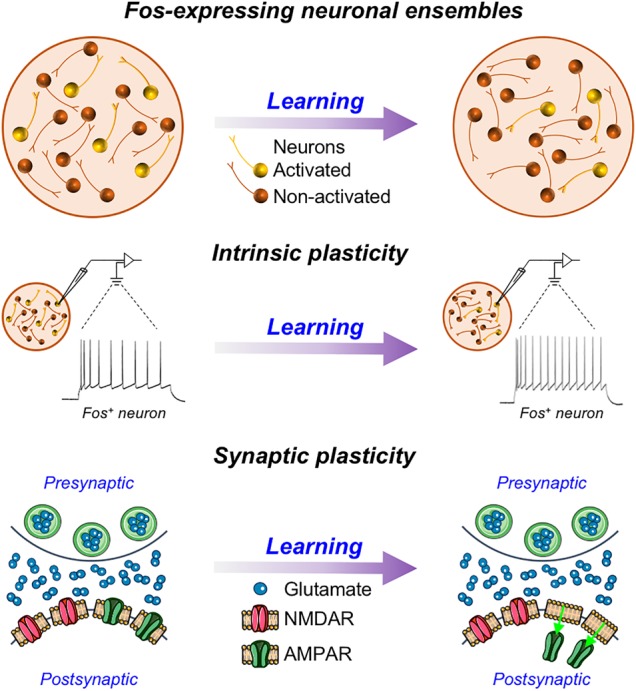
Given that addiction has been characterized as a disorder of maladaptive learning and memory, one critical question is whether there are unique physical adaptations within neuronal ensembles that support addiction-related learned behavior. The search for the physical mechanisms of encoding these and other memories in the brain, often called the engram as a whole, continues despite decades of research. As we develop new technologies and tools that allow us to study cue- and behavior-activated Fos-expressing neuronal ensembles, the possibility of identifying the engrams of learning and memory is moving into the realm of reality rather than speculation. It has become clear from recent studies that there are specific functional, electrophysiological alterations unique to Fos-expressing ensemble neurons that may participate in encoding memories. The ultimate goal is to identify the addicted engram and reverse the physical changes that support this maladaptive form of learning.
Published by Cold Spring Harbor Laboratory Press.
Figures
References
-
- Bliss TV, Collingridge GL. 1993. A synaptic model of memory: long-term potentiation in the hippocampus. Nature 361: 31–39. - PubMed
-
- Brami-Cherrier K, Roze E, Girault JA, Betuing S, Caboche J. 2009. Role of the ERK/MSK1 signalling pathway in chromatin remodelling and brain responses to drugs of abuse. J Neurochem 108: 1323–1335. - PubMed
Publication types
MeSH terms
Substances
LinkOut - more resources
Full Text Sources
Other Literature Sources
Medical
Research Materials