. 2018 Jul 11:2018:9630175.
doi: 10.1155/2018/9630175. eCollection 2018.

Thymosin β 4 Prevents Oxidative Stress, Inflammation, and Fibrosis in Ethanol- and LPS-Induced Liver Injury in Mice

Affiliations

Thymosin β 4 Prevents Oxidative Stress, Inflammation, and Fibrosis in Ethanol- and LPS-Induced Liver Injury in Mice

Ruchi Shah et al. Oxid Med Cell Longev. .

Abstract

Thymosin beta 4 (Tβ4), an actin-sequestering protein, is involved in tissue development and regeneration. It prevents inflammation and fibrosis in several tissues. We investigated the role of Tβ4 in chronic ethanol- and acute lipopolysaccharide- (LPS-) induced mouse liver injury. C57BL/6 mice were fed 5% ethanol in liquid diet for 4 weeks plus binge ethanol (5 g/kg, gavage) with or without LPS (2 mg/kg, intraperitoneal) for 6 hours. Tβ4 (1 mg/kg, intraperitoneal) was administered for 1 week. We demonstrated that Tβ4 prevented ethanol- and LPS-mediated increase in liver injury markers as well as changes in liver pathology. It also prevented ethanol- and LPS-mediated increase in oxidative stress by decreasing ROS and lipid peroxidation and increasing the antioxidants, reduced glutathione and manganese-dependent superoxide dismutase. It also prevented the activation of nuclear factor kappa B by blocking the phosphorylation of the inhibitory protein, IκB, thereby prevented proinflammatory cytokine production. Moreover, Tβ4 prevented fibrogenesis by suppressing the epigenetic repressor, methyl-CpG-binding protein 2, that coordinately reversed the expression of peroxisome proliferator-activated receptor-γ and downregulated fibrogenic genes, platelet-derived growth factor-β receptor, α-smooth muscle actin, collagen 1, and fibronectin, resulting in reduced fibrosis. Our data suggest that Tβ4 has antioxidant, anti-inflammatory, and antifibrotic potential during alcoholic liver injury.


Figures
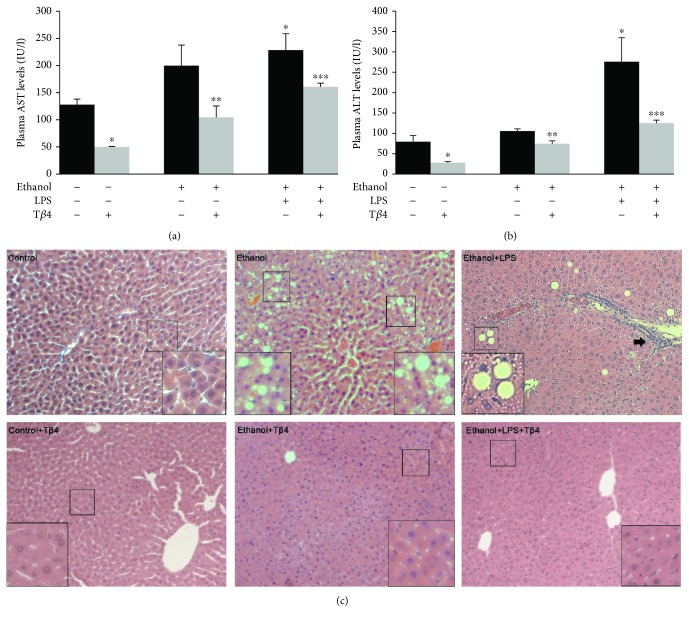
Figure 1
Figure 1
Effect of Tβ4 on EtOH- and LPS-induced liver injury. Biochemical analysis of plasma (a) AST, and (b) ALT, and (c) H&E staining of liver sections from various groups. Lipid droplets for steatosis and inflammatory infiltration in ethanol and ethanol + LPS groups are indicated in the insets and by arrows. Magnification, 20x. All values are means of triplicate experiments ± SE. p < 0.05 versus control; ∗∗p < 0.05 versus EtOH; ∗∗∗p < 0.05 versus EtOH + LPS.
Figure 2
Figure 2
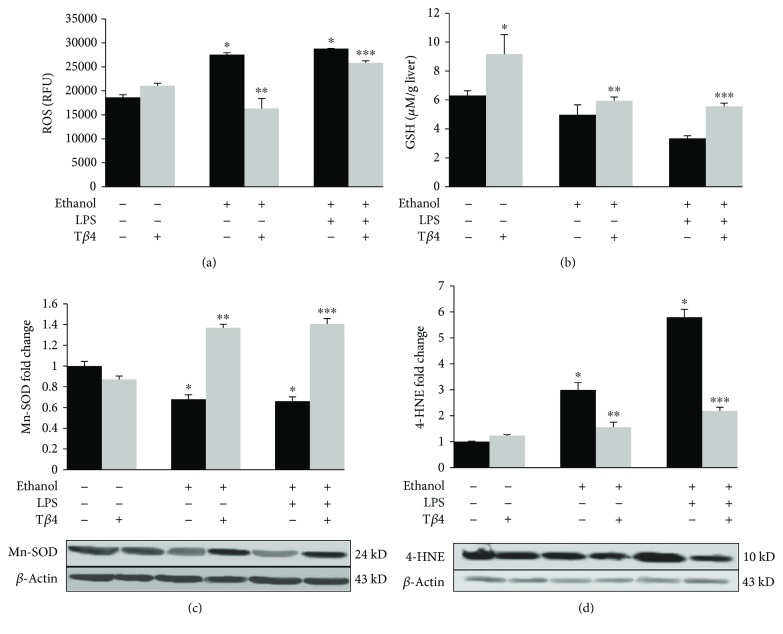
Effect of Tβ4 on EtOH- and LPS-induced hepatic oxidative stress. Liver tissue from various groups was used to determine (a) ROS, (b) reduced GSH, and total protein expression of (c) Mn-SOD and (d) 4-HNE. All values are means of triplicate experiments ± SE and were corrected for loading differences after reprobing with β-actin. p < 0.05 versus control; ∗∗p < 0.05 versus EtOH; ∗∗∗p < 0.05 versus EtOH + LPS.
Figure 3
Figure 3
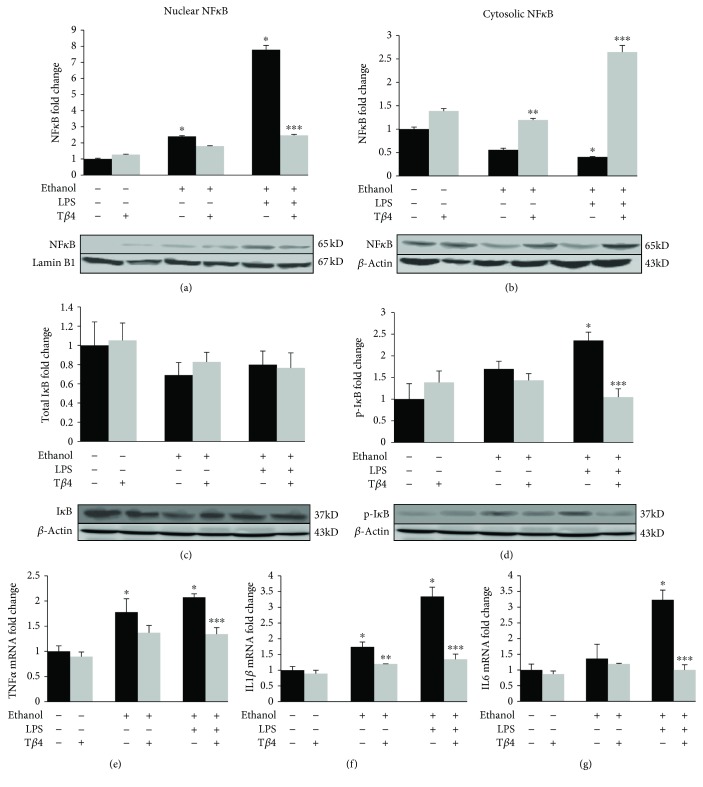
Effect of Tβ4 on EtOH- and LPS-induced activation of NFκB and proinflammatory cytokine induction. Nuclear, cytosolic, or total protein was extracted from whole liver tissue from mice of various groups to determine the protein expression of (a) nuclear NFκB, (b) cytosolic NFκB, (c) total IκB, and (d) p-IκB by Western blot analysis. Total RNA was extracted from whole liver tissue from mice of various groups to determine mRNA expression using quantitative RT-PCR of (e) TNFα, (f) IL-1β, and (g) IL-6. All values are means of triplicate experiments ± SE and were corrected for loading differences after reprobing with lamin B1 (nuclear protein) or β-actin (cytosolic or total protein) or S18 (mRNA). p < 0.05 versus control; ∗∗p < 0.05 versus EtOH; ∗∗∗p < 0.05 versus EtOH + LPS.
Figure 4
Figure 4
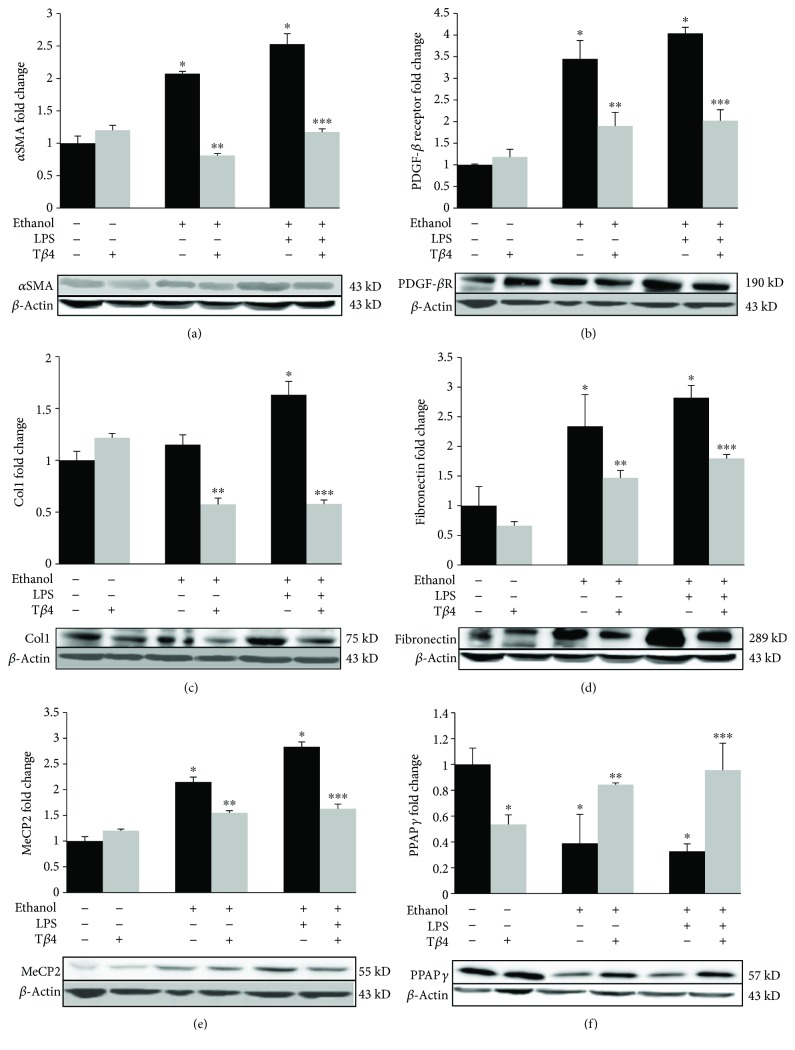
Effect of Tβ4 on EtOH- and LPS-induced fibrogenesis. Total protein was extracted from whole liver tissue from mice of various groups to determine the protein expression of (a) αSMA, (b) PDGF-β receptor, (c) collagen 1, (d) fibronectin, (e) MeCP2, and (f) PPARγ by Western blot analysis. All values are means of triplicate experiments ± SE and were corrected for loading differences after reprobing with β-actin. p < 0.05 versus control; ∗∗p < 0.05 versus EtOH; ∗∗∗p < 0.05 versus EtOH + LPS.
Figure 5
Figure 5
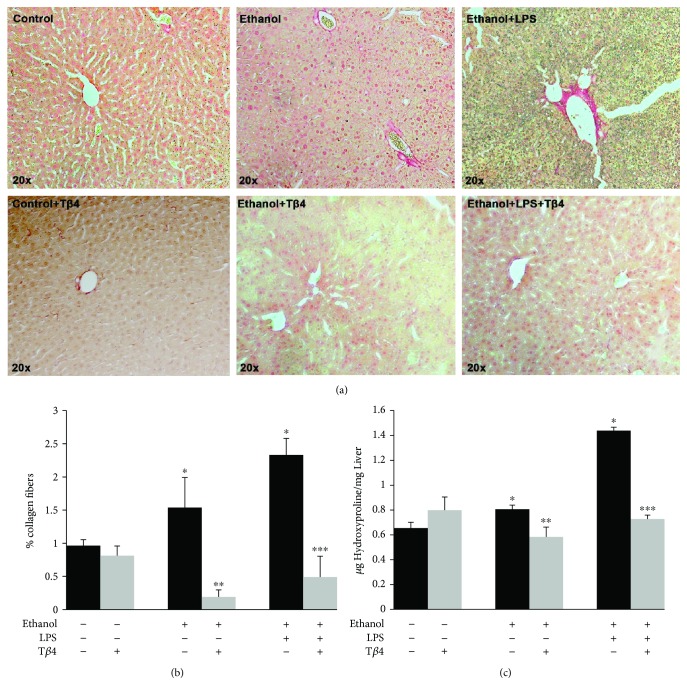
Effect of Tβ4 on EtOH- and LPS-induced fibrosis. Liver tissue from various groups was used to determine (a) Sirius Red staining, magnification, 20x, (b) quantification of percentage of collagen fibers, and (c) hydroxyproline content (indicative of collagen fibers) by biochemical assay to determine the extent of fibrosis. All values are means of triplicate experiments ± SE. p < 0.05 versus control; ∗∗p < 0.05 versus EtOH; ∗∗∗p < 0.05 versus EtOH + LPS.

References

    1. Masarone M., Rosato V., Dallio M., et al. Epidemiology and natural history of alcoholic liver disease. Reviews on Recent Clinical Trials. 2016;11(3):167–174. doi: 10.2174/1574887111666160810101202. - DOI - PubMed
    1. Orman E. S., Odena G., Bataller R. Alcoholic liver disease: pathogenesis, management, and novel targets for therapy. Journal of Gastroenterology and Hepatology. 2013;28(Supplement 1):77–84. doi: 10.1111/jgh.12030. - DOI - PMC - PubMed
    1. Day C. P., James O. F. W. Steatohepatitis: a tale of two “hits”? Gastroenterology. 1998;114(4):842–845. doi: 10.1016/S0016-5085(98)70599-2. - DOI - PubMed
    1. Hoek J. B. Endotoxin and alcoholic liver disease: tolerance and susceptibility. Hepatology. 1999;29(5):1602–1604. doi: 10.1002/hep.510290536. - DOI - PubMed
    1. Szabo G. Gut-liver axis in alcoholic liver disease. Gastroenterology. 2015;148(1):30–36. doi: 10.1053/j.gastro.2014.10.042. - DOI - PMC - PubMed

MeSH terms

LinkOut - more resources