


Heterologous effects of infant BCG vaccination: potential mechanisms of immunity
- PMID: 30117744
- PMCID: PMC6190278
- DOI: 10.2217/fmb-2018-0026
Heterologous effects of infant BCG vaccination: potential mechanisms of immunity
Abstract
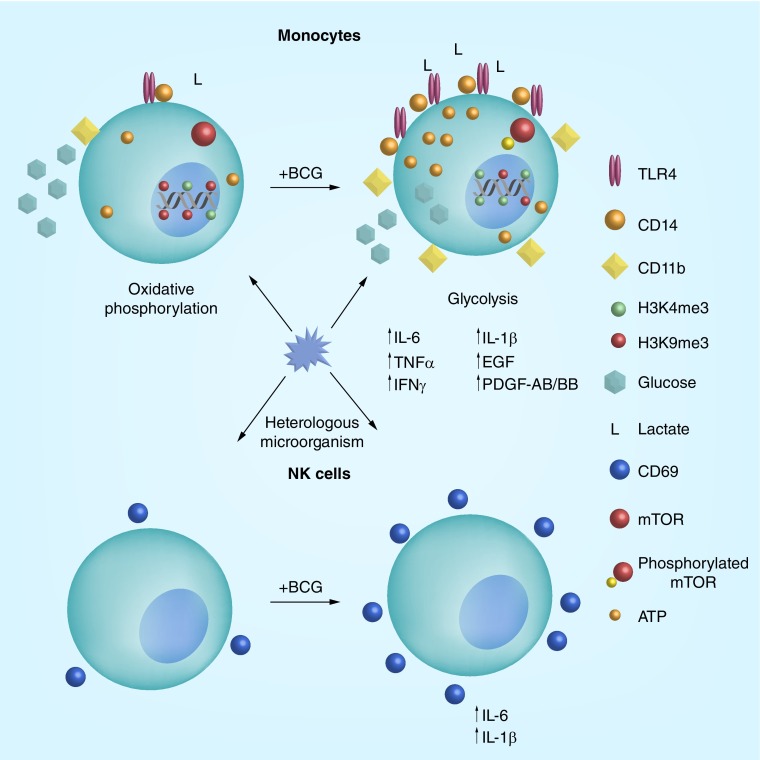
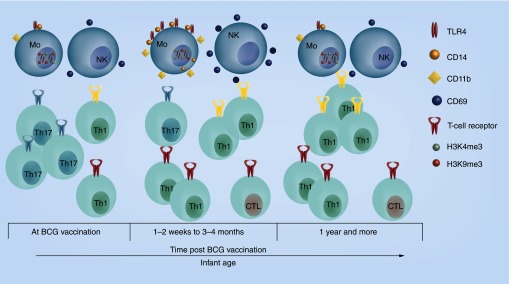
The current antituberculosis vaccine, BCG, was derived in the 1920s, yet the mechanisms of BCG-induced protective immunity and the variability of protective efficacy among populations are still not fully understood. BCG challenges the concept of vaccine specificity, as there is evidence that BCG may protect immunized infants from pathogens other than Mycobacterium tuberculosis - resulting in heterologous or nonspecific protection. This review summarizes the up-to-date evidence for this phenomenon, potential immunological mechanisms and implications for improved childhood vaccine design. BCG induces functional changes in infant innate and adaptive immune compartments, encouraging their collaboration in the first year of life. Understanding biological mechanisms beyond heterologous BCG effects is crucial to improve infant protection from infectious diseases.
Keywords: BCG; NK cells; T cells; childhood immunization; heterologous vaccine effects; humoral responses; infant immunity; innate memory; monocytes; trained immunity.
Conflict of interest statement
E Butkeviciute is supported by a London Intercollegiate Doctoral Training Programme studentship funded by the MRC. CE Jones has received funding from the IMmunising PRegnant women and INfants neTwork (IMPRINT), funded by the GCRF Networks in Vaccines Research and Development, which was co-funded by the MRC and BBSRC; the National Vaccine Program Office (NVPO) and Bill & Melinda Gates Foundation, Grant OPP1119788, Global Alignment of Immunization Safety Assessment in pregnancy (GAIA). CE Jones is an investigator for clinical trials performed on behalf of the University of Southampton and University Hospital Southampton NHS Trust, UK, sponsored by vaccine manufacturers, including Novavax, GSK and Janssen. She has received no personal funding for these activities. SG Smith is supported by a grant awarded to Prof. Hazel M. Dockrell by the European Commission within Horizon2020 TBVAC2020 (Grant No. H2020 PHC-643381) and by the GCRF Networks in Vaccines Research and Development VALIDATE Network which was co-funded by the MRC and BBSRC (Grant No. MR/R005850/1). The authors have no other relevant affiliations or financial involvement with any organization or entity with a financial interest in or financial conflict with the subject matter or materials discussed in the manuscript apart from those disclosed.
No writing assistance was utilized in the production of this manuscript.
Figures
References
-
- Trunz BB, Fine PEM, Dye C. Effect of BCG vaccination on childhood tuberculous meningitis and miliary tuberculosis worldwide: a meta-analysis and assessment of cost–effectiveness. Lancet. 2006;367(9517):1173–1180. - PubMed
-
- Colditz GA, Brewer TF, Berkey CS, et al. Efficacy of BCG vaccine in the prevention of tuberculosis. Meta-analysis of the published literature. JAMA. 1994;271(9):698–702. - PubMed
-
- Mangtani P, Abubakar I, Ariti C, et al. Protection by BCG vaccine against tuberculosis: a systematic review of randomized controlled trials. Clin. Infect. Dis. 2014;58(4):470–480. - PubMed
-
- Kristensen I, Aaby P, Jensen H. Routine vaccinations and child survival: follow up study in Guinea-Bissau, West Africa. BMJ. 2000;321(7274):1435–1438. - PMC - PubMed
-
• This early epidemiological study demonstrated that BCG and other childhood vaccines can exert nonspecific effects on overall infancy survival and attracted scientific interest in this phenomenon.
Publication types
MeSH terms
Substances
Grants and funding
LinkOut - more resources
Full Text Sources
Other Literature Sources
