


Exploring reasoning mechanisms in ward rounds: a critical realist multiple case study
- PMID: 30119624
- PMCID: PMC6098637
- DOI: 10.1186/s12913-018-3446-6
Exploring reasoning mechanisms in ward rounds: a critical realist multiple case study
Abstract
Background: Ward rounds are an important and ubiquitous element of hospital care with a history extending well over a century. Although originally intended as a means of educating medical trainees and junior doctors, over time they have become focused on supporting clinical practice. Surprisingly, given their ubiquity and importance, they are under-researched and inadequately understood. This study aims to contribute knowledge in human reasoning within medical teams, meeting a pressing need for research concerning the reasoning occurring in rounds.
Methods: The research reported here aimed to improve the understanding of ward round reasoning by conducting a critical realist case study exploring the collaborative group reasoning mechanisms in the ward rounds of two hospitals in Victoria, Australia. The data collection involved observing rounds, interviewing medical practitioners and holding focus group meetings.
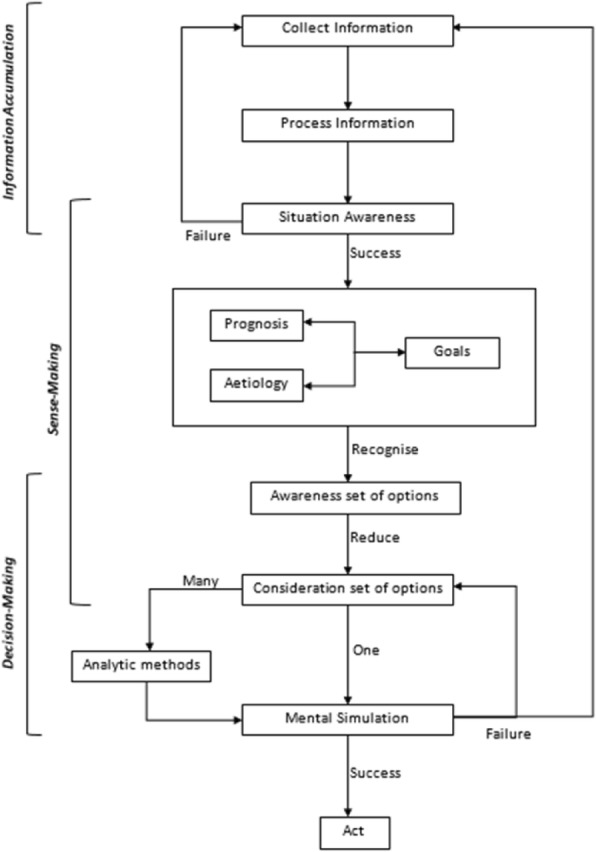
Results: Nine group reasoning mechanisms concerning sharing, agreeing and recording information in the categories of information accumulation, sense-making and decision-making were identified, together forming a program theory of ward round reasoning. In addition, themes spanning across mechanisms were identified, further explaining ward round reasoning and suggesting avenues for future exploration. Themes included the use of various criteria, tensions involving mechanisms, time factors, medical roles and hierarchies.
Conclusions: This paper contributes to the literature by representing rounds in a manner that strengthens understanding of the form of the group reasoning occurring within, thus supporting theory-based evaluation strategies, redesigned practices and training enhancements.
Keywords: Case study; Causal mechanisms; Critical realism; Decision-making; Medical reasoning; Program theory; Sense-making; Teamwork; Ward rounds.
Conflict of interest statement
Ethics approval and consent to participate
Appropriate ethics approvals were sought and obtained from Monash University Human Research Ethics Committee (MUHREC), project number CF14/3679–2,014,001,891. Written consent was obtained from all research participants. Patients were informed of the presence of the researcher, given an explanatory statement providing them an option of withdrawal and asked for verbal consent. No practitioner or patient declined to participate in the study.
Consent for publication
Not applicable
Competing interests
The authors declare that they have no competing interests.
Publisher’s Note
Springer Nature remains neutral with regard to jurisdictional claims in published maps and institutional affiliations.
Figures
References
-
- NSW Department of Health . Multidisciplinary Ward rounds: a resource. North Ryde: Dept of Health; 2011.
-
- Royal College of Physicians, Royal College of Nursing . Ward Rounds in Medicine: Principles for Best Practice. London: RCP; 2012.
MeSH terms
Grants and funding
LinkOut - more resources
Full Text Sources
Other Literature Sources
