


Material microenvironmental properties couple to induce distinct transcriptional programs in mammalian stem cells
- PMID: 30120125
- PMCID: PMC6130338
- DOI: 10.1073/pnas.1802568115
Material microenvironmental properties couple to induce distinct transcriptional programs in mammalian stem cells
Abstract
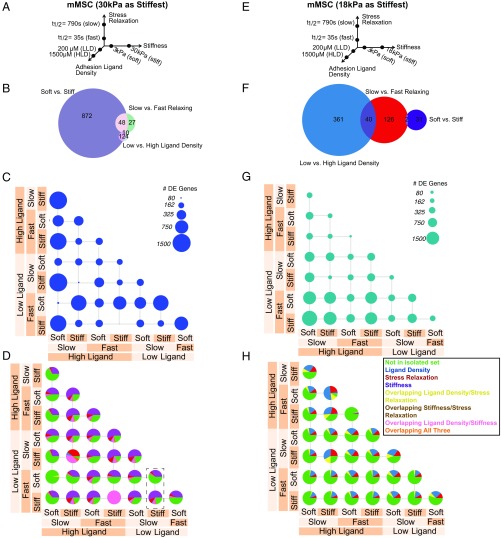
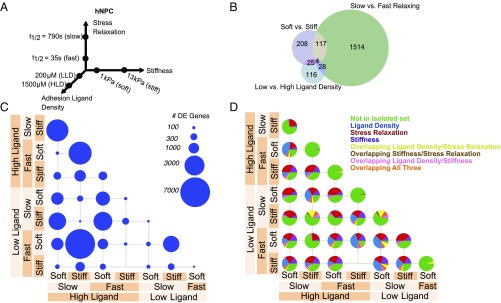
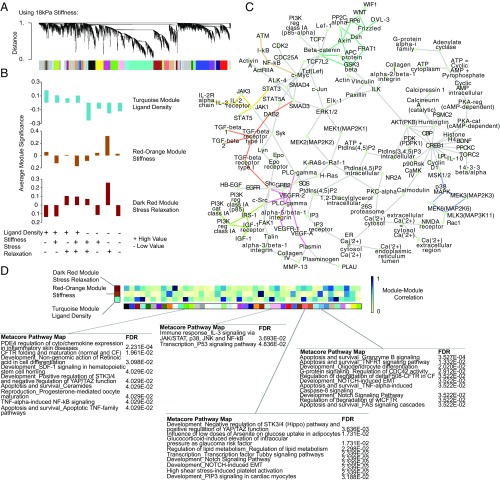
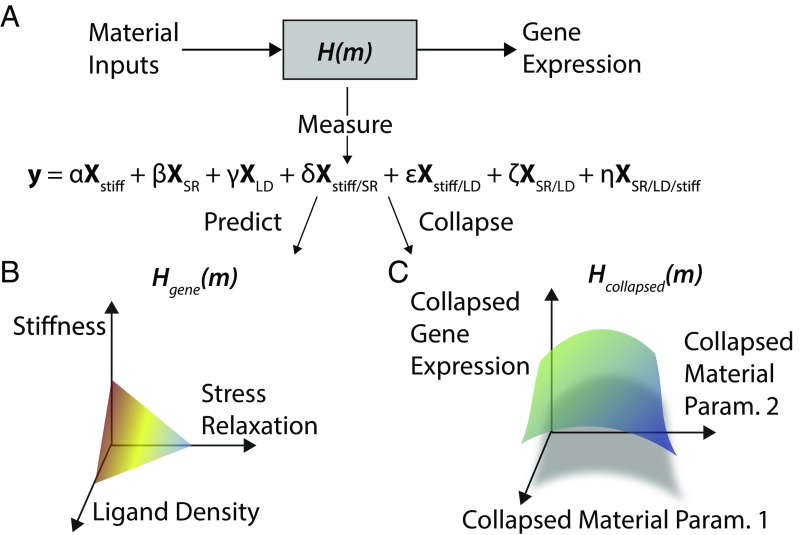
Variations in a multitude of material microenvironmental properties have been observed across tissues in vivo, and these have profound effects on cell phenotype. Phenomenological experiments have suggested that certain of these features of the physical microenvironment, such as stiffness, could sensitize cells to other features; meanwhile, mechanistic studies have detailed a number of biophysical mechanisms for this sensing. However, the broad molecular consequences of these potentially complex and nonlinear interactions bridging from biophysical sensing to phenotype have not been systematically characterized, limiting the overall understanding and rational deployment of these biophysical cues. Here, we explore these interactions by employing a 3D cell culture system that allows for the independent control of culture substrate stiffness, stress relaxation, and adhesion ligand density to systematically explore the transcriptional programs affected by distinct combinations of biophysical parameters using RNA-seq. In mouse mesenchymal stem cells and human cortical neuron progenitors, we find dramatic coupling among these substrate properties, and that the relative contribution of each property to changes in gene expression varies with cell type. Motivated by the bioinformatic analysis, the stiffness of hydrogels encapsulating mouse mesenchymal stem cells was found to regulate the secretion of a wide range of cytokines, and to accordingly influence hematopoietic stem cell differentiation in a Transwell coculture model. These results give insights into how biophysical features are integrated by cells across distinct tissues and offer strategies to synthetic biologists and bioengineers for designing responses to a cell's biophysical environment.
Keywords: RNA-seq; biomaterials; mechanotransduction; stem cells; systems biology.
Conflict of interest statement
The authors declare no conflict of interest.
Figures

References
-
- Cukierman E, Pankov R, Stevens DR, Yamada KM. Taking cell-matrix adhesions to the third dimension. Science. 2001;294:1708–1712. - PubMed
-
- Balaban NQ, et al. Force and focal adhesion assembly: A close relationship studied using elastic micropatterned substrates. Nat Cell Biol. 2001;3:466–472. - PubMed
Publication types
MeSH terms
Substances
Grants and funding
LinkOut - more resources
Full Text Sources
Other Literature Sources
Medical
