Promoting Scientist-Advocate Collaborations in Cancer Research: Why and How
- PMID: 30120210
- PMCID: PMC6548189
- DOI: 10.1158/0008-5472.CAN-18-1600
Promoting Scientist-Advocate Collaborations in Cancer Research: Why and How
Abstract
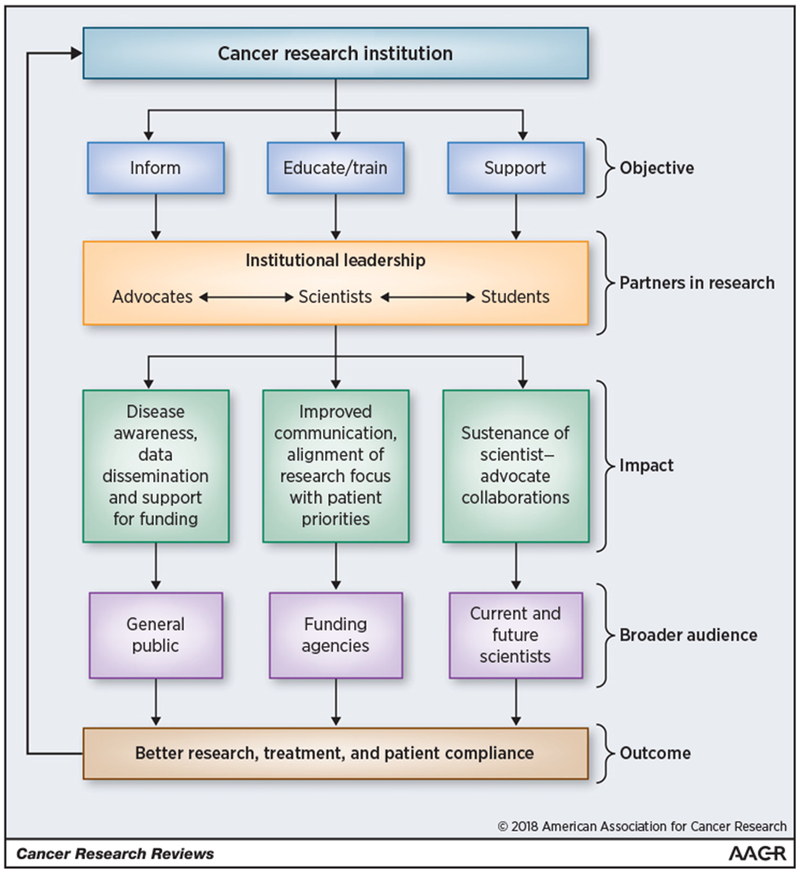
Advocates bring unique and important viewpoints to the cancer research process, ensuring that scientific and medical advances are patient-centered and relevant. In this article, we discuss the benefits of engaging advocates in cancer research and underscore ways in which both the scientific and patient communities can facilitate this mutually beneficial collaboration. We discuss how to establish and nurture successful scientist-advocate relationships throughout the research process. We review opportunities that are available to advocates who want to obtain training in the evaluation of cancer research. We also suggest practical solutions that can strengthen communication between scientists and advocates, such as introducing scientist-advocate interactions at the trainee level. Finally, we highlight the essential role social media can play in disseminating patient-supported cancer research findings to the patient community and in raising awareness of the importance of promoting cancer research. Our perspective offers a model that Georgetown Breast Cancer Advocates have found effective and which could be one option for those interested in developing productive, successful, and sustainable collaborations between advocates and scientists in cancer research. Cancer Res; 78(20); 5723-8. ©2018 AACR.
©2018 American Association for Cancer Research.
Conflict of interest statement
Disclosure of Potential Conflicts of Interest
R. Carlin is Executive Director at American Association on Health and Disability. No potential conflicts of interest were disclosed by the other authors.
Figures
References
-
- Perlmutter J, Roach N, Smith ML. Involving advocates in cancer research. Semin Oncol 2015;42:681–5. - PubMed
-
- Perlmutter J, Bell SK, Darien G. Cancer research advocacy: past, present, and future. Cancer Res 2013;73:4611–5. - PubMed
-
- Finn R Surveys identify barriers to participation in clinical trials. J Natl Cancer Inst 2000;92:1556–8. - PubMed
-
- Tejeda HA, Green SB, Trimble EL, Ford L, High JL, Ungerleider RS, et al. Representation of African-Americans, Hispanics, and whites in National Cancer Institute cancer treatment trials. J Natl Cancer Inst 1996;88:812–6. - PubMed
-
- Lewis JH, Kilgore ML, Goldman DP, Trimble EL, Kaplan R, Montello MJ, et al. Participation of patients 65 years of age or older in cancer clinical trials. J Clin Oncol 2003;21:1383–9. - PubMed
Publication types
MeSH terms
Grants and funding
LinkOut - more resources
Full Text Sources
Other Literature Sources
Medical