


Review
doi: 10.1038/s41386-018-0172-z.
Epub 2018 Aug 2.
Digital devices and continuous telemetry: opportunities for aligning psychiatry and neuroscience
Affiliations
- PMID: 30120409
- PMCID: PMC6224592
- DOI: 10.1038/s41386-018-0172-z
Item in Clipboard
Review
Digital devices and continuous telemetry: opportunities for aligning psychiatry and neuroscience
Neuropsychopharmacology.
2018 Dec.
No abstract available
Conflict of interest statement
JTB serves as a consultant for Pear Therapeutics and Niraxx Therapeutics, LTG serves as a consultant for 23andme, and KJR is on the Scientific Advisory Board for Resilience Therapeutics and serves as a consultant for Biogen. The other authors declare no competing interests.
Figures
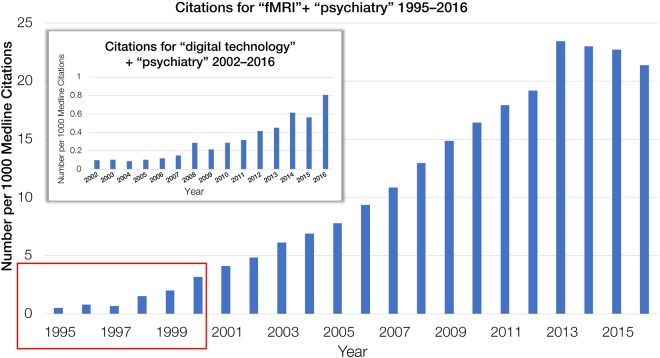
Citations for the terms “digital technology” and “psychiatry” over the past five years show similar trends as the terms “fMRI” and “psychiatry” in 1999, expressed as number per 1000 Medline citations
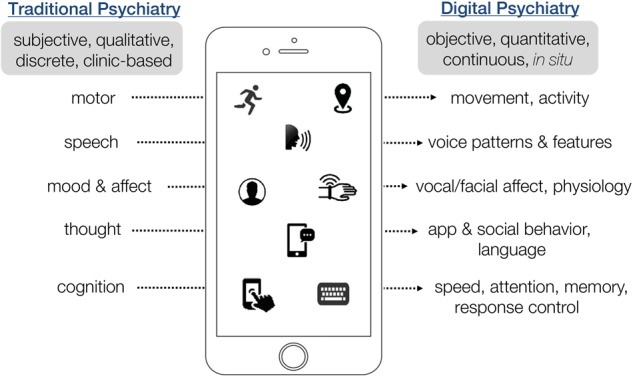
Revisiting the Mental Status Exam (MSE) in an era of digital phenotyping. Traditional psychiatry may undergo a radical transformation of the most fundamental means of assessment, as digital tools pave the way for more efficient, naturalistic capture of an individual’s mental status through continuous analysis of device-based interactions. Figure created by S. Rauch, L. Germine & N. Mirin, and presented at the Technology in Psychiatry Summit, Boston MA, USA, 06 Nov 2017; https://www.youtube.com/watch?v=gFwN08HzRwMt=42s
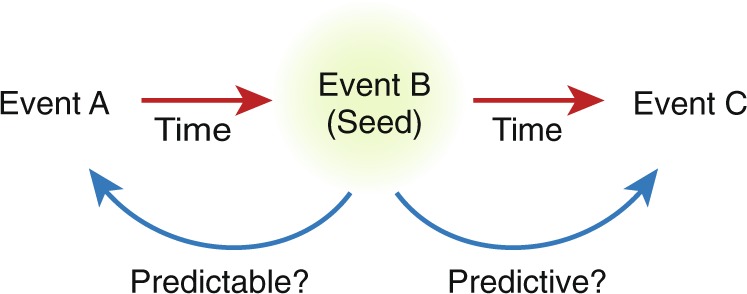
Use of continuous data to predict behavior. In the example depicted, with behavior B serving as the reference (“Seed”) Event, machine learning algorithms may be able to identify antecedents (i.e., Event A, which could be a behavior, an EEG signature, a temperature fluctuation, etc) that would have been predictive of Event B, and future behaviors (i.e., Event C) that are predictable on the basis of Event B (or the combination of Events A and B). Maximizing the timeframe between events within which predictions are reliable is critical and could be life-saving in neuropsychiatric conditions such as suicide or substance abuse
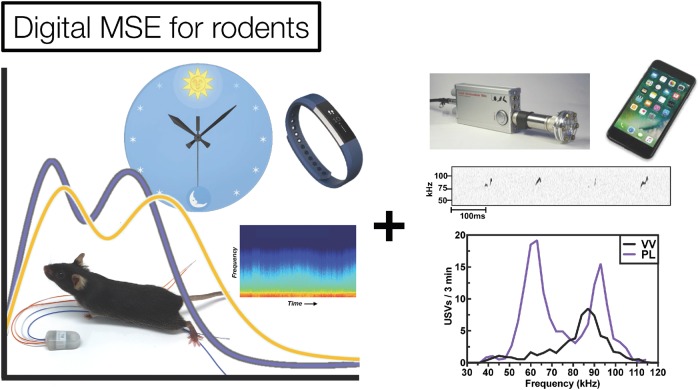
Digital MSE for rodents, using end points that are objective, continuous, and translational. Research in laboratory animals is increasingly employing temporally dense behavioral recordings alongside neural data in ways that could translate to the human MSE. Sleep, diurnal and circadian rhythms, locomotor activity, and vocalizations can routinely be studied as a function of targeted interventions to expose new relationships among genes, circuits, systems, and complex behavior. Vocalizations courtesy of Galen Missig; VV: vehicle control; PL: perinatal immune-activated
References
-
- Naslund JA, Aschbrenner KA, Araya R, Marsch LA, Unützer J, Patel V, et al. Digital technology for treating and preventing mental disorders in low-income and middle-income countries: a narrative review of the literature. Lancet Psychiatry. 2017;4:486–500. doi: 10.1016/S2215-0366(17)30096-2. - DOI - PMC - PubMed
-
- Yang N, Hing E. Table of Electronic Health Record adoption and use among office-based physicians in the U.S., by Specialty: 2015 National Electronic Health Records Survey. 2017. https://www.cdc.gov/nchs/data/ahcd/nehrs/2015_nehrs_ehr_by_specialty.pdf.
Publication types
MeSH terms
Grants and funding
LinkOut - more resources
Full Text Sources
Other Literature Sources
