


Effectiveness of voriconazole and corneal cross-linking on Phialophora verrucosa keratitis: a case report
- PMID: 30121073
- PMCID: PMC6098831
- DOI: 10.1186/s13256-018-1765-1
Effectiveness of voriconazole and corneal cross-linking on Phialophora verrucosa keratitis: a case report
Abstract
Background: We report a rare case of Phialophora verrucosa fungal keratitis, which required various types of treatment according to the intractable natural history of the disease.
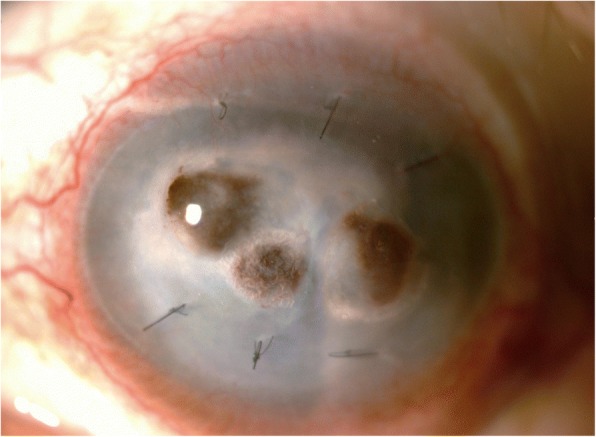
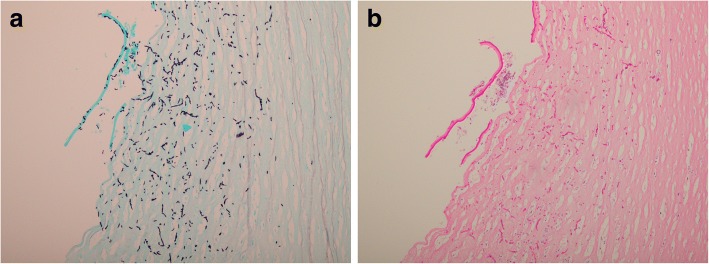
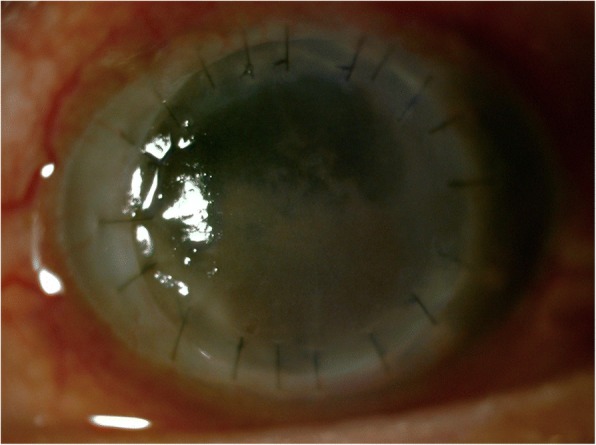
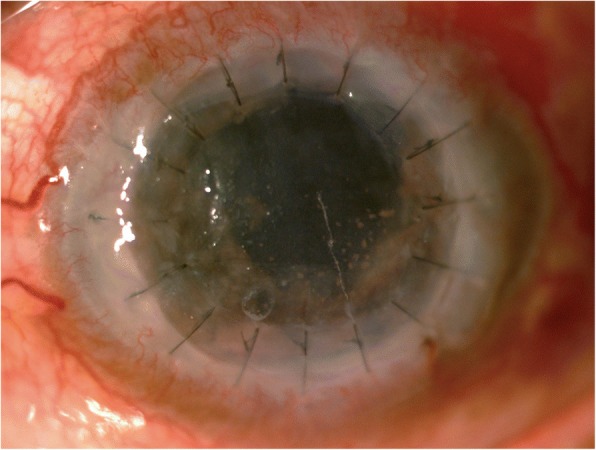
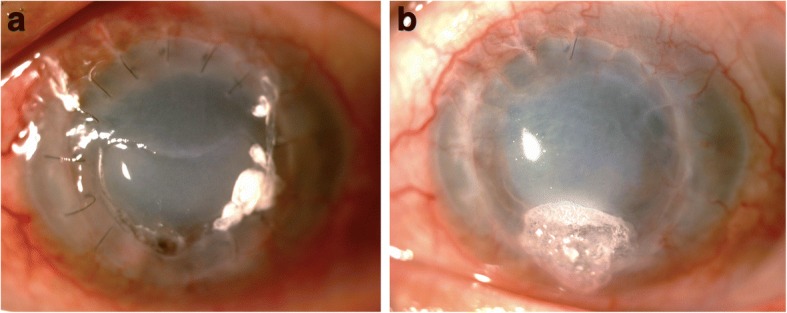
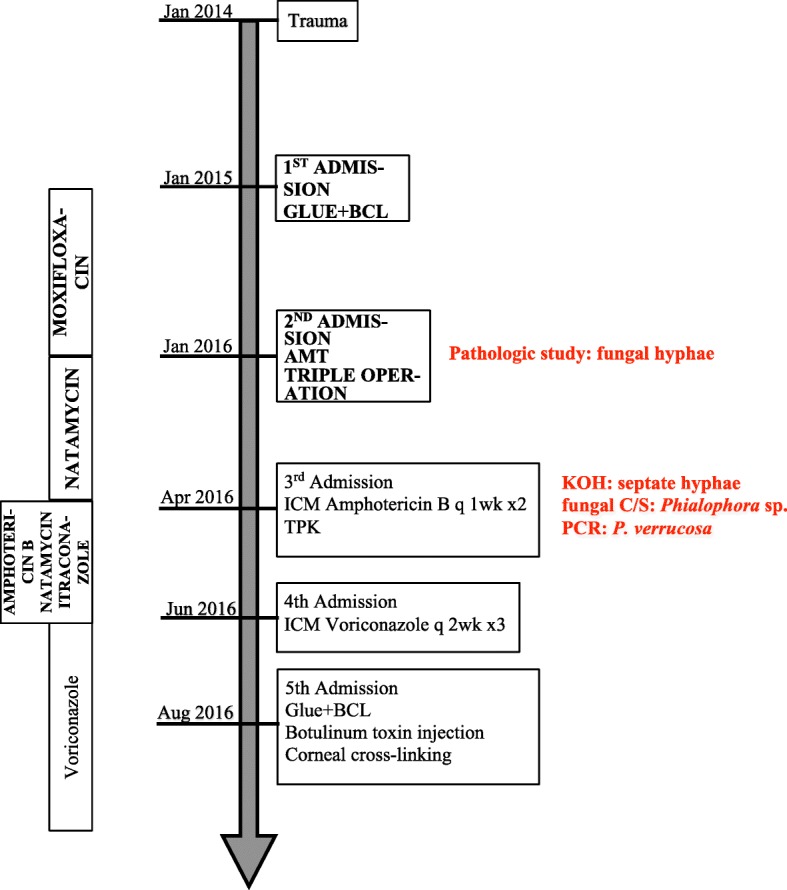
Case presentation: A 51-year-old Thai man with poorly controlled diabetes received a bamboo branch injury and developed a perforated corneal lesion on his left eye. A pathological study from therapeutic penetrating keratoplasty showed fungal hyphae. This was later identified as Phialophora verrucosa by polymerase chain reaction. This organism was aggressive and recalcitrant because it relapsed with two corneal grafts and was resistant to amphotericin B, natamycin, and itraconazole. However, we found that the efficacy of voriconazole was promising for treating Phialophora verrucosa. We also used corneal cross-linking to establish corneal integrity after the infection was under control.
Conclusions: Because of the chronic nature of Phialophora verrucosa, a patient's first visit may occur many years after trauma, and sometimes clinical presentation might not appear to indicate fungal infection. Therefore, a high index of suspicion is needed in this situation. Voriconazole showed good results in our case. Instead of using a more invasive keratoplasty, we used corneal cross-linking to strengthen the corneal biomechanics. To the best of our knowledge, this is the first case showing the benefit of corneal cross-linking to improve corneal biomechanics in resolved Phialophora verrucosa keratitis.
Keywords: Corneal cross-linking; Fungal keratitis; Phialophora verrucosa; Voriconazole.
Conflict of interest statement
Consent for publication
Written informed consent was obtained from the patient for publication of this case report and any accompanying images. A copy of the written consent is available for review by the Editor-in-Chief of this journal.
Competing interests
The authors declare that they have no competing interests.
Publisher’s Note
Springer Nature remains neutral with regard to jurisdictional claims in published maps and institutional affiliations.
Figures
References
-
- Polack FM, Siverio C, Bresky RH. Corneal chromomycosis: double infection by Phialophora verrucosa (Medlar) and Cladosporium cladosporioides (Frescenius) Ann Ophthalmol. 1976;8:139–144. - PubMed
Publication types
MeSH terms
Substances
LinkOut - more resources
Full Text Sources
Other Literature Sources
Medical
