


Hydrogenotrophic Methanogenesis and Autotrophic Growth of Methanosarcina thermophila
- PMID: 30123085
- PMCID: PMC6079545
- DOI: 10.1155/2018/4712608
Hydrogenotrophic Methanogenesis and Autotrophic Growth of Methanosarcina thermophila
Abstract
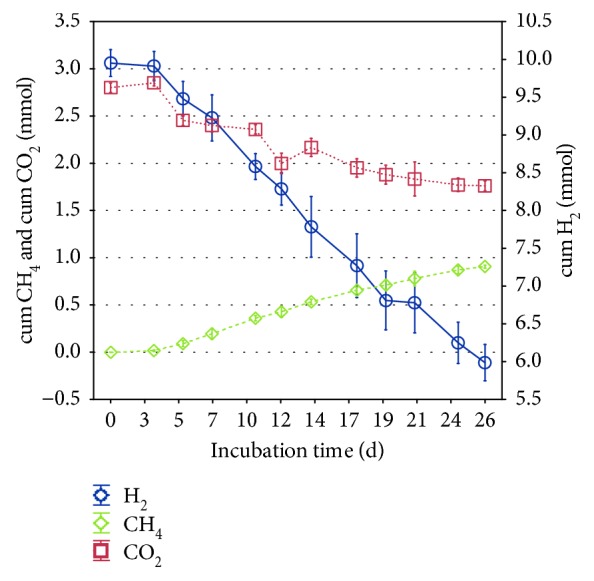
Although Methanosarcinales are versatile concerning their methanogenic substrates, the ability of Methanosarcina thermophila to use carbon dioxide (CO2) for catabolic and anabolic metabolism was not proven until now. Here, we show that M. thermophila used CO2 to perform hydrogenotrophic methanogenesis in the presence as well as in the absence of methanol. During incubation with hydrogen, the methanogen utilized the substrates methanol and CO2 consecutively, resulting in a biphasic methane production. Growth exclusively from CO2 occurred slowly but reproducibly with concomitant production of biomass, verified by DNA quantification. Besides verification through multiple transfers into fresh medium, the identity of the culture was confirmed by 16s RNA sequencing, and the incorporation of carbon atoms from 13CO2 into 13CH4 molecules was measured to validate the obtained data. New insights into the physiology of M. thermophila can serve as reference for genomic analyses to link genes with metabolic features in uncultured organisms.
Figures



References
-
- Dridi B., Fardeau M.-L., Ollivier B., Raoult D., Drancourt M. Methanomassiliicoccus luminyensis gen. nov., sp. nov., a methanogenic archaeon isolated from human faeces. International Journal of Systematic and Evolutionary Microbiology. 2012;62(Part 8):1902–1907. doi: 10.1099/ijs.0.033712-0. - DOI - PubMed
-
- Keltjens J. T., Vogels G. D. Conversion of methanol and methylamines to methane and carbon dioxide. In: Ferry J. G., editor. Methanogenesis - Ecology, Physiology, Biochemistry and Genetics. New York: Springer Science & Business Media; 1993. pp. 253–303.
Publication types
MeSH terms
Substances
LinkOut - more resources
Full Text Sources
Other Literature Sources
Molecular Biology Databases
