


Difficult tracheal intubation in critically ill
- PMID: 30123510
- PMCID: PMC6090786
- DOI: 10.1186/s40560-018-0318-4
Difficult tracheal intubation in critically ill
Abstract
Background: Endotracheal intubation in critically ill is a high-risk procedure requiring significant expertise in airway handling as well as understanding of pathophysiology of the disease process.
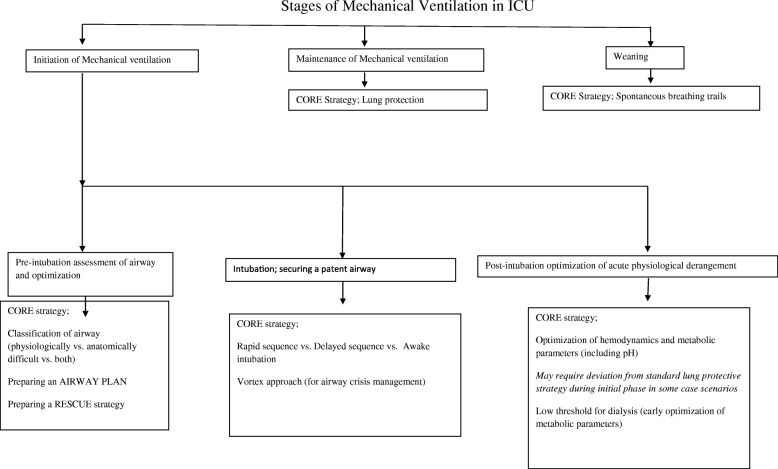
Main body: Critically ill patients are prone for hypotension and hypoxemia in the immediate post-intubation phase due to blunting of compensatory sympathetic response. Preoxygenation without NIV is frequently suboptimal, as alveolar flooding cause loss of alveolar capillary interface in many of these patients. All these factors, along with relative fluid deficit, neuromuscular fatigue and coexistent organ dysfunction lead to physiologically difficult airway. Airway in ICU can be classified as anatomically difficult, physiologically difficult and anatomically as well as physiologically difficult. Though rapid sequence intubation is the recommended method for securing airway in these patients, other methods like delayed sequence intubation awake intubation and double setup approach can be used in specific subgroups. Further research is needed in this field to set guidelines and fine tune airway management for patients with specific organ failure or dysfunction.
Conclusion: Airway in ICU should be managed according to the physiological as well as the anatomical abnormalities.
Keywords: Critically ill; Intubation; Physiologically difficult airway.
Conflict of interest statement
No approval is required. No consent is required. The authors declare that they have no competing interests. Springer Nature remains neutral with regard to jurisdictional claims in published maps and institutional affiliations.
Figures
References
-
- Cook TM, Woodall N, Harper J, Benger J. Fourth National Audit Project. Major complications of airway management in the UK: results of the Fourth National Audit Project of the Royal College of Anaesthetists and the Difficult Airway Society. Part 2: intensive care and emergency departments. Br J Anaesth. 2011;106(5):632–642. doi: 10.1093/bja/aer059. - DOI - PubMed
-
- Higgs A, McGrath BA, Goddard C, Rangasami J, Suntharalingam G, Gale R, et al. Difficult Airway Society; Intensive Care Society; Faculty of Intensive Care Medicine; Royal College of Anaesthetists. Guidelines for the management of tracheal intubation in critically ill adults. Br J Anaesth. 2018;120(2):323–352. doi: 10.1016/j.bja.2017.10.021. - DOI - PubMed
Publication types
LinkOut - more resources
Full Text Sources
Other Literature Sources
