


The Utility and Limitations of CRP, ESR and DAS28-CRP in Appraising Disease Activity in Rheumatoid Arthritis
- PMID: 30123796
- PMCID: PMC6085449
- DOI: 10.3389/fmed.2018.00185
The Utility and Limitations of CRP, ESR and DAS28-CRP in Appraising Disease Activity in Rheumatoid Arthritis
Abstract
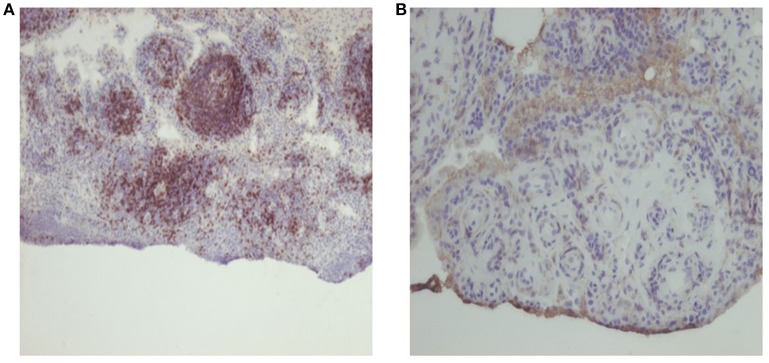
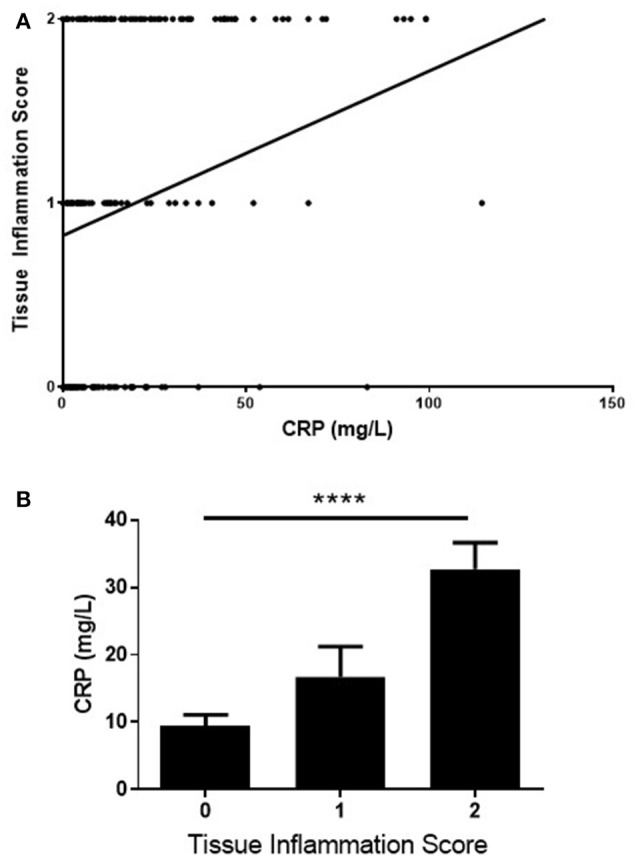
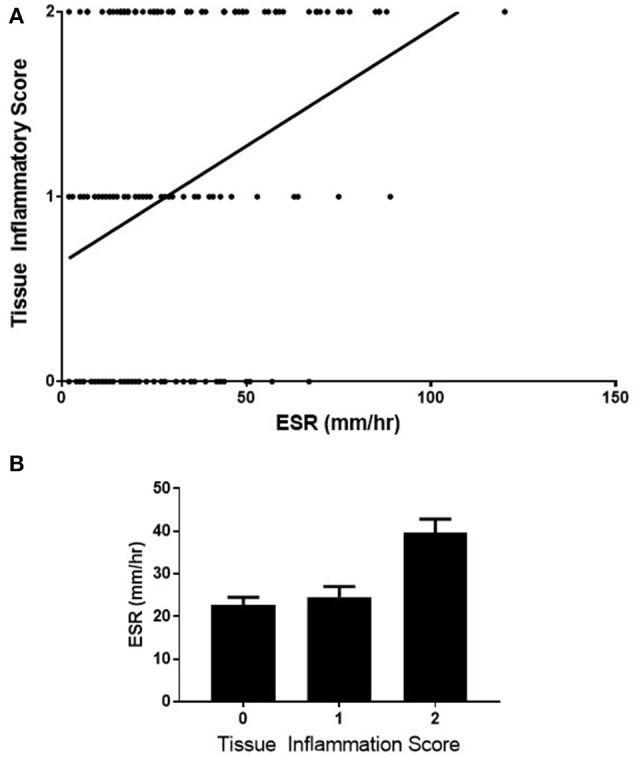
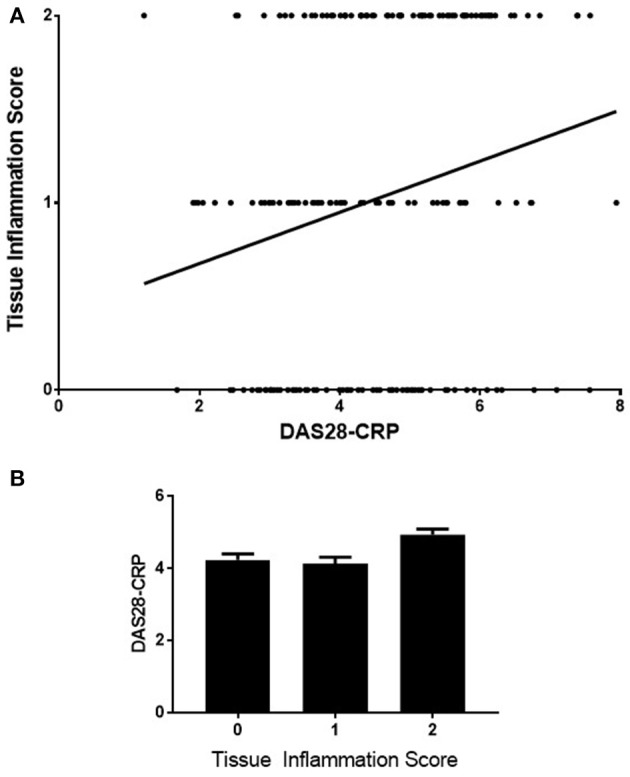
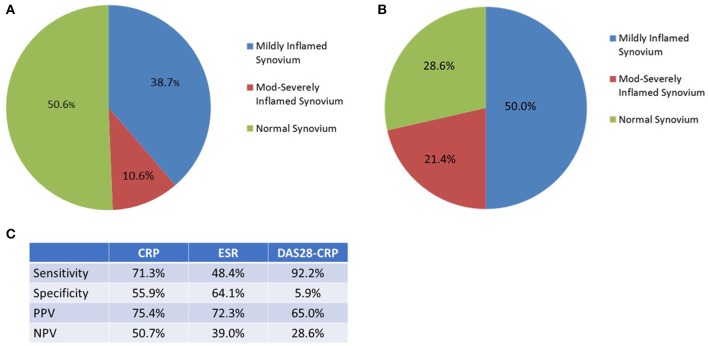
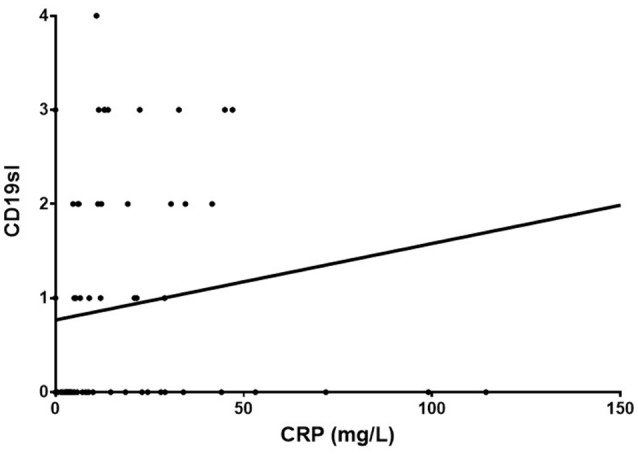
Introduction: Identifying and quantifying inflammatory disease activity in rheumatoid arthritis remains a challenge. Many studies have suggested that a large proportion of patients may have active inflammation, but normal inflammatory markers. Although various disease activity scores have been validated, most rely to a large degree on biomarkers such as CRP and ESR. In this study, we examine the utility and limitations of these biomarkers, as well as the DAS28-CRP in appraising disease activity in RA. Methods: Two hundred and twenty three consecutive rheumatoid arthritis reporting knee arthralgia underwent synovial sampling of the affected knee via needle arthroscopy. The synovium was examined by microscopy with H+E staining as well as immunohistochemistry, and related to the ESR, CRP and DAS28-CRP on blood samples taken immediately before arthroscopy. Results: Although a statistically significant positive correlation was observed between CRP and the level of inflammation in the biopsy retrieved (n = 197, rho = 0.43, CI 0.30-0.54, p < 0.0001), there was histological evidence of inflammation in the synovium in 49.4% of the patients who had a normal CRP. A positive correlation was also observed between ESR and the level of inflammation in the biopsy retrieved (n = 188, rho = 0.29, CI 0.15-0.42 p < 0.0001). A statistically significant but weak positive correlation was observed between the DAS28-CRP and synovial inflammation (n = 189, rho = 0.23, CI 0.09-0.37, p = 0.0011). Only the CD19 infiltrate in the synovium correlated with serum CRP (n = 70, rho = 0.32, CI 0.08-0.52, p = 0.0068). Conclusion: CRP has a moderately strong relationship with disease activity, but there are significant pitfalls in the use of this biomarker in RA, and therefore a need interpret CRP results judiciously. The results of this study underline the heterogeneity of RA, and the need to develop improved panels of biomarkers, to better stratify RA, and to identify the cohort for whom inflammatory activity cannot be measured accurately with CRP.
Keywords: disease activity; inflammatory biomarkers; rheumatoid arthritis; synovial biopsy; synovium.
Figures
References
-
- Prevoo ML, van 't Hof MA, Kuper HH, van Leeuwen MA, van de Putte LB, van Riel PL. Modified disease activity scores that include twenty-eight-joint counts. Development and validation in a prospective longitudinal study of patients with rheumatoid arthritis. Arthritis Rheum. (1995) 38:44–8. - PubMed
-
- Fransen J, Welsing PMJ, De Keijzer RMH, Van Riel PLCM. Development and validation of the DAS28 using CRP. In: Annals of the Rheumatic Diseases. London: BMJ Publishing Group British Med Assoc House; (2003). p. 10.
LinkOut - more resources
Full Text Sources
Other Literature Sources
Research Materials
Miscellaneous
