National Surveillance for Clostridioides difficile Infection, Sweden, 2009-2016
- PMID: 30124193
- PMCID: PMC6106436
- DOI: 10.3201/eid2409.171658
National Surveillance for Clostridioides difficile Infection, Sweden, 2009-2016
Abstract
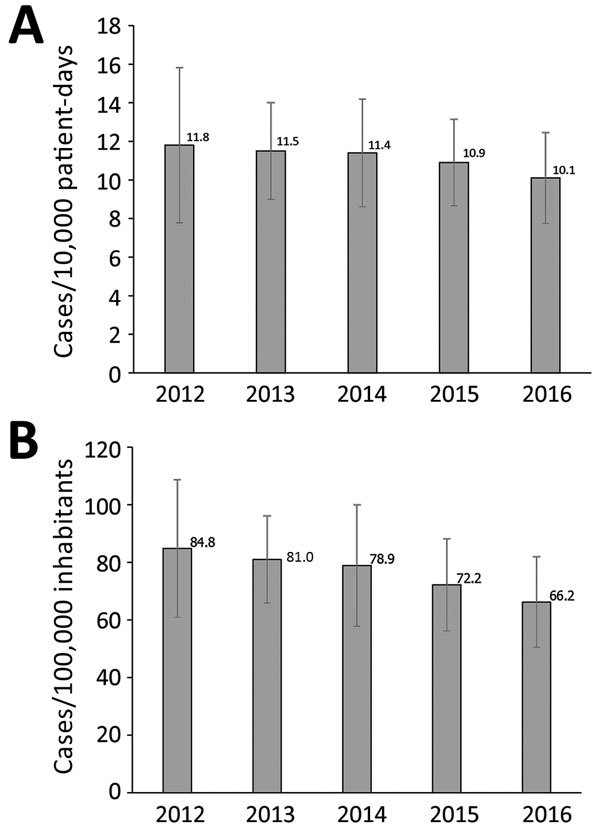
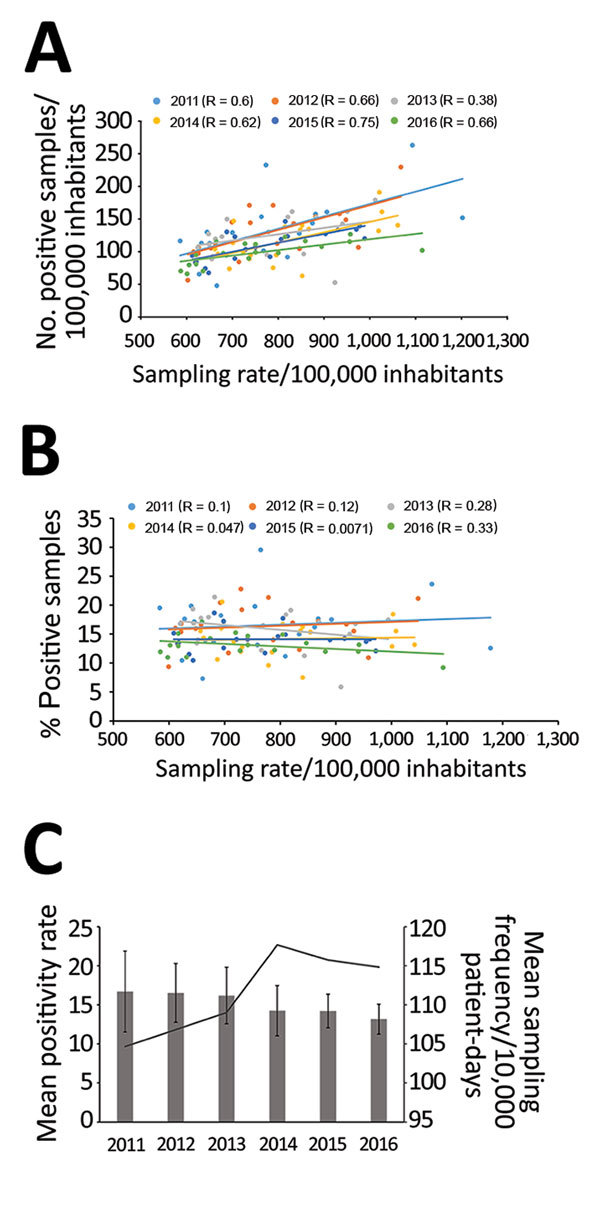
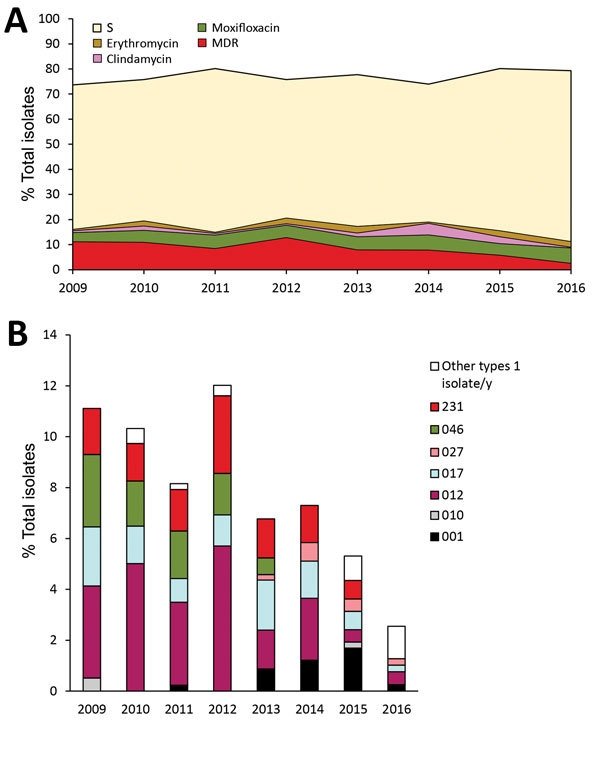
We report results from a national surveillance program for Clostridioides difficile infection (CDI) in Sweden, where CDI incidence decreased by 22% and the proportion of multidrug-resistant isolates decreased by 80% during 2012-2016. Variation in incidence between counties also diminished during this period, which might be attributable to implementation of nucleic acid amplification testing as the primary diagnostic tool for most laboratories. In contrast to other studies, our study did not indicate increased CDI incidence attributable the introduction of nucleic acid amplification testing. Our results also suggest that successful implementation of hygiene measures is the major cause of the observed incidence decrease. Despite substantial reductions in CDI incidence and prevalence of multidrug-resistant isolates, Sweden still has one of the highest CDI incidence levels in Europe. This finding is unexpected and warrants further investigation, given that Sweden has among the lowest levels of antimicrobial drug use.
Keywords: CDI; Clostridioides difficile; Clostridium difficile; Sweden; antibiotic resistance; antimicrobial resistance; bacteria; bacterial infection; epidemiology; outbreaks; surveillance; typing.
Figures
References
-
- Kuijper EJ, Coignard B, Tüll P; ESCMID Study Group for Clostridium difficile; EU Member States; European Centre for Disease Prevention and Control. Emergence of Clostridium difficile-associated disease in North America and Europe. Clin Microbiol Infect. 2006;12(Suppl 6):2–18. 10.1111/j.1469-0691.2006.01580.x - DOI - PubMed
-
- Akerlund T, Alefjord I, Dohnhammar U, Struwe J, Noren T, Tegmark-Wisell K. Swedish C. difficile Study Group. Geographical clustering of cases of infection with moxifloxacin-resistant Clostridium difficile PCR-ribotypes 012, 017 and 046 in Sweden, 2008 and 2009. Euro Surveill. 2011;16:16. 10.2807/ese.16.10.19813-en - DOI - PubMed
-
- Davies KA, Ashwin H, Longshaw CM, Burns DA, Davis GL, Wilcox MH; EUCLID study group. Diversity of Clostridium difficile PCR ribotypes in Europe: results from the European, multicentre, prospective, biannual, point-prevalence study of Clostridium difficile infection in hospitalised patients with diarrhoea (EUCLID), 2012 and 2013. Euro Surveill. 2016;21:30294. 10.2807/1560-7917.ES.2016.21.29.30294 - DOI - PubMed
Publication types
MeSH terms
Substances
LinkOut - more resources
Full Text Sources
Other Literature Sources