


Validity and reliability of evaluating hip abductor strength using different normalization methods in a functional electromechanical device
- PMID: 30125320
- PMCID: PMC6101381
- DOI: 10.1371/journal.pone.0202248
Validity and reliability of evaluating hip abductor strength using different normalization methods in a functional electromechanical device
Abstract
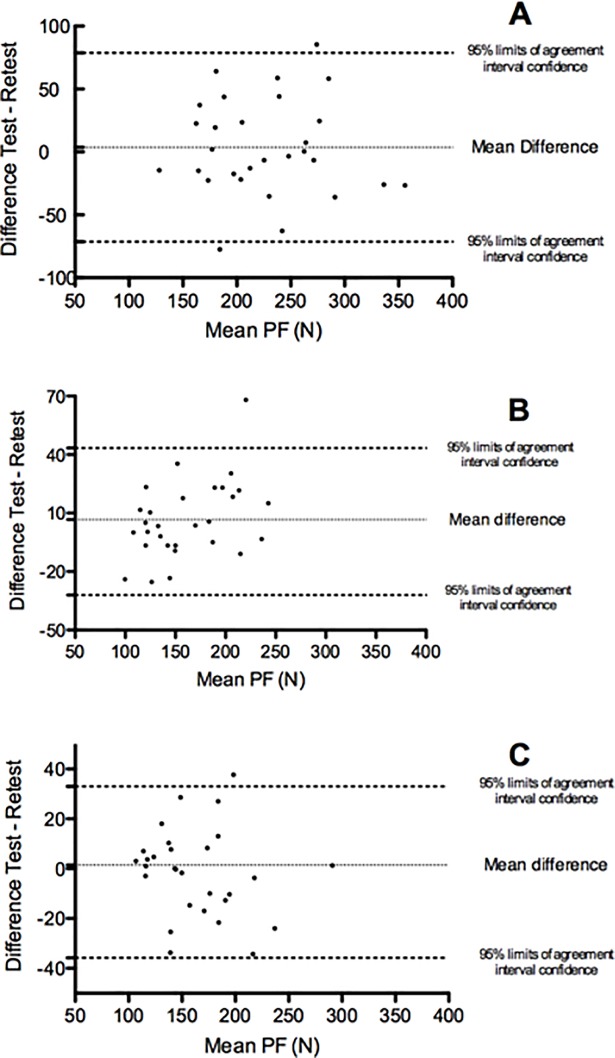
The hip abductor muscles are vitally important for pelvis stability, and common strength deficits can negatively affect functionality. The muscle strength can be measured using different dynamometers and be evaluated in three positions (side-lying, standing, and supine). Obtained strength data can be expressed in different ways, with data normalization providing more objective and comparable results. The aim of this study was to establish the validity and reliability of three protocols in evaluating the isometric strength of the hip abductor muscles. A new functional electromechanical dynamometer assessed strength in three positions, with findings subjected to three data normalization methods. In two identical sessions, the hip abductor strengths of 29 subjects were recorded in the side-lying, standing, and supine positions. Peak force was recorded in absolute terms and normalized against body mass, fat-free mass, and an allometric technique. The peak force recorded in the side-lying position was 30% and 27% higher than in the standing and supine positions, respectively, independent of data normalization methodology. High inter-protocol correlations were found (r: 0.72 to 0.98, p ≤ 0.001). The supine position with allometric data normalization had the highest test-retest reliability (0.94 intraclass correlation coefficient and 5.64% coefficient of variation). In contrast, the side-lying position with body mass data normalization had a 0.66 intraclass correlation coefficient and 9.8% coefficient of variation. In conclusion, the functional electromechanical dynamometer is a valid device for measuring isometric strength in the hip abductor muscles. The three assessed positions are reliable, although the supine position with allometric data normalization provided the best results.
Conflict of interest statement
The authors have declared that no competing interests exist.
Figures
References
-
- Johnson ME, Mille ML, Martinez KM, Crombie G, Rogers MW. Age-related changes in hip abductor and adductor joint torques. Arch Phys Med Rehabil. 2004;85(4):593–7. . - PubMed
-
- Dwyer MK, Stafford K, Mattacola CG, Uhl TL, Giordani M. Comparison of gluteus medius muscle activity during functional tasks in individuals with and without osteoarthritis of the hip joint. Clinical biomechanics (Bristol, Avon). 2013;28(7):757–61. Epub 2013/08/06. 10.1016/j.clinbiomech.2013.07.007 . - DOI - PubMed
MeSH terms
LinkOut - more resources
Full Text Sources
Other Literature Sources
