


Continuous Monitoring of Respiratory Rate in Emergency Admissions: Evaluation of the RespiraSense™ Sensor in Acute Care Compared to the Industry Standard and Gold Standard
- PMID: 30126085
- PMCID: PMC6111745
- DOI: 10.3390/s18082700
Continuous Monitoring of Respiratory Rate in Emergency Admissions: Evaluation of the RespiraSense™ Sensor in Acute Care Compared to the Industry Standard and Gold Standard
Abstract
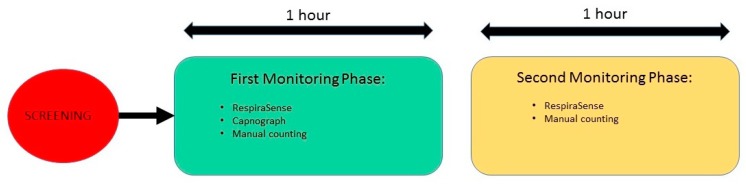
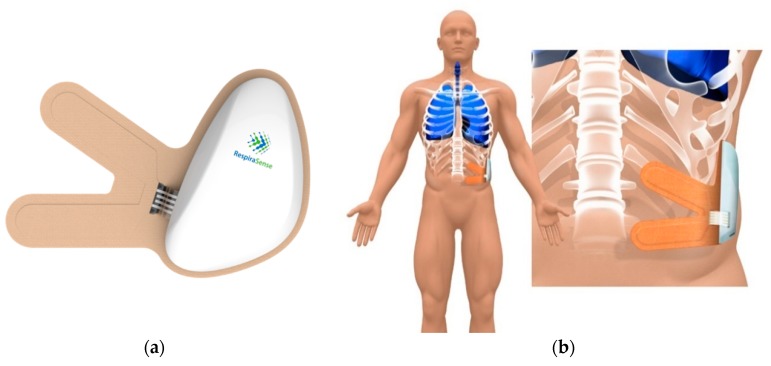
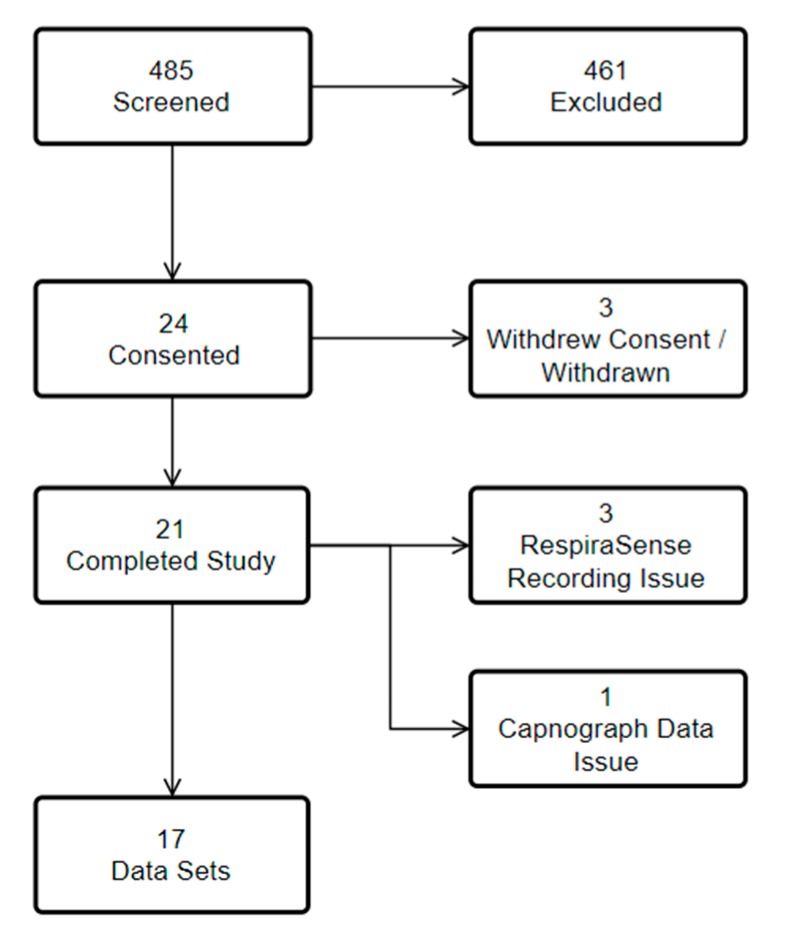
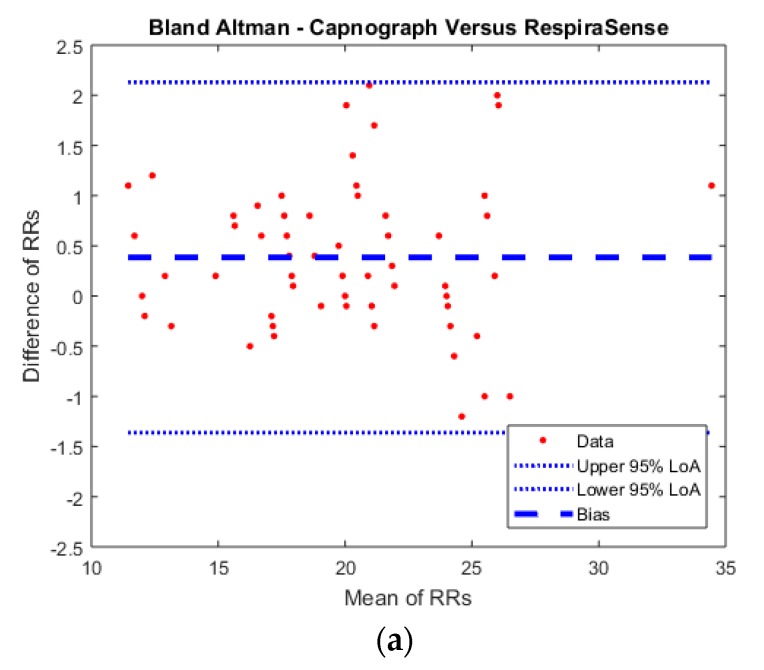
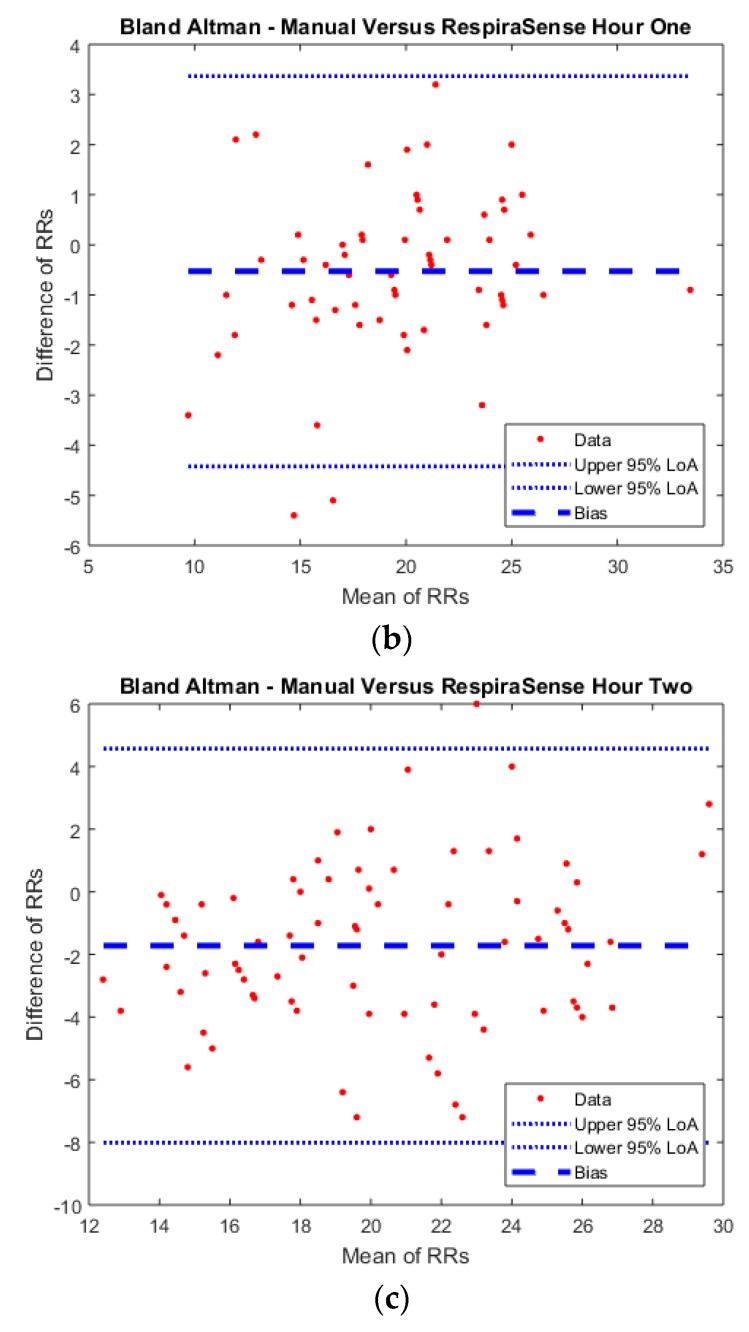
Respiratory Rate (RR) is the best marker to indicate deterioration but measurement are often inaccurate. The RespiraSense™ is a non-invasive, wireless, body worn, motion-tolerant and continuous respiratory rate monitor. We aimed to determine whether the performance of RespiraSense™ was equivalent to that of a gold standard measurement technique of capnography and the industry standard of manual counts. RespiraSense™ measures respiratory rate and transmit signals wirelessly to a tablet device. We measured respiratory rate in 24 emergency admissions to an Acute Medical Unit in the UK. Patients were observed for two hours. Manual counts were undertaken every 15 min and compared to measurements with capnography and RespiraSense™. Data from 17 patients admitted as medical emergencies was evaluated. For measurements obtained at rest a mean RR of 19.3 (SD 4.89) for manual measurements compared to mean RR of 20.2 (SD 4.54) for measurements obtained with capnography and mean RR of 19.8 (SD 4.52) with RespiraSense™. At rest, RespiraSense™ has a bias of 0.38 and limits of agreement of 1.0 to 1.8 bpm, when compared to the capnography derived RR. Measurements were within pre-defined limits of error at rest. Continuous measurement of RR with RespiraSense™ in patients admitted as acute emergencies is both feasible and reliable.
Keywords: monitoring; respiratory rate; sensor.
Conflict of interest statement
The authors declare no conflict of interest.
Figures
References
-
- NICE Guideline [CG50]: Acute Illness in Adults in Hospital: Recognising and Responding to Deterioration. National Institute for Health and Care Excellence (NICE); London, UK: 2007. - PubMed
-
- Odell M., Forster A., Rudman K., Bass F. The critical care outreach service and the early warning system on surgical wards. Nurs. Crit. Care. 2002;7:132–135. - PubMed
-
- Lam T., Mak P., Siu W., Lam M., Cheung T., Rainer T. Validation of a Modified Early Warning Score (Mews) in Emergency Department Observation Ward Patients. Hong Kong J. Emerg. Med. 2006;13:24–30. doi: 10.1177/102490790601300102. - DOI
Publication types
MeSH terms
LinkOut - more resources
Full Text Sources
Other Literature Sources
Medical
