


Similar Effects for Resting State and Unconscious Thought: Both Solve Multi-attribute Choices Better Than Conscious Thought
- PMID: 30131738
- PMCID: PMC6090893
- DOI: 10.3389/fpsyg.2018.01360
Similar Effects for Resting State and Unconscious Thought: Both Solve Multi-attribute Choices Better Than Conscious Thought
Abstract
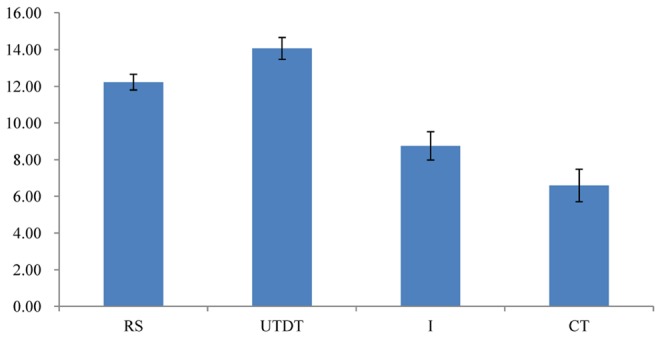
When people have headaches, they put their work aside and do other things. When they return, their decisions may be better, resulting in more satisfaction than if they had contemplated their choices consciously. Researchers have proposed the "deliberation-without-attention" hypothesis to discover whether it is always advantageous to engage in conscious deliberation before making a choice. Unconscious thinking can optimize people's behavioral decision-making in a complex environment and improve their satisfaction with their choices. As previous studies have not used a resting state (RS), another kind of unconscious thinking, this paper adds the RS to unconscious thinking during distracting tasks, unconscious and conscious joint thinking, and conscious thinking conditions, to study the unconscious thought effect and decision-making performance in four different thinking modes. We performed three experiments involving a choice of jobs, using two ways of presenting information, to check the unconscious effect and compare the decision-making performance of different thinking patterns. The results show that RS and unconscious thinking have similar effects, while people's decision-making performance differs in different thinking modes.
Keywords: decision performance; job decision; resting state; thinking mode; unconscious thought effect.
Figures


References
-
- Bettman J. R., Luce M. F., Payne J. W. (1998). Constructive consumer choice processes. J. Consum. Res. 25 187–217. 10.1086/209535 - DOI
-
- Buckner R. L., Sepulcre J., Talukdar T., Krienen F., Liu H. S., Hedden T., et al. (2009). Cortical hubs revealed by intrinsic functional connectivity: mapping, assessment of stability, and relation to Alzheimer’s Disease. J. Neurosci. 29 1860–1873. 10.1523/JNEUROSCI.5062-08.2009 - DOI - PMC - PubMed
LinkOut - more resources
Full Text Sources
Other Literature Sources
Research Materials
