


Evidence for increasing densities and geographic ranges of tick species of public health significance other than Ixodes scapularis in Québec, Canada
- PMID: 30133502
- PMCID: PMC6104943
- DOI: 10.1371/journal.pone.0201924
Evidence for increasing densities and geographic ranges of tick species of public health significance other than Ixodes scapularis in Québec, Canada
Abstract
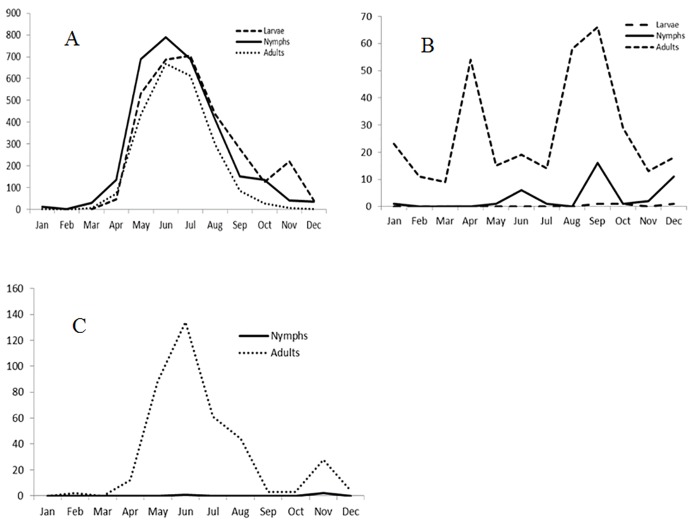
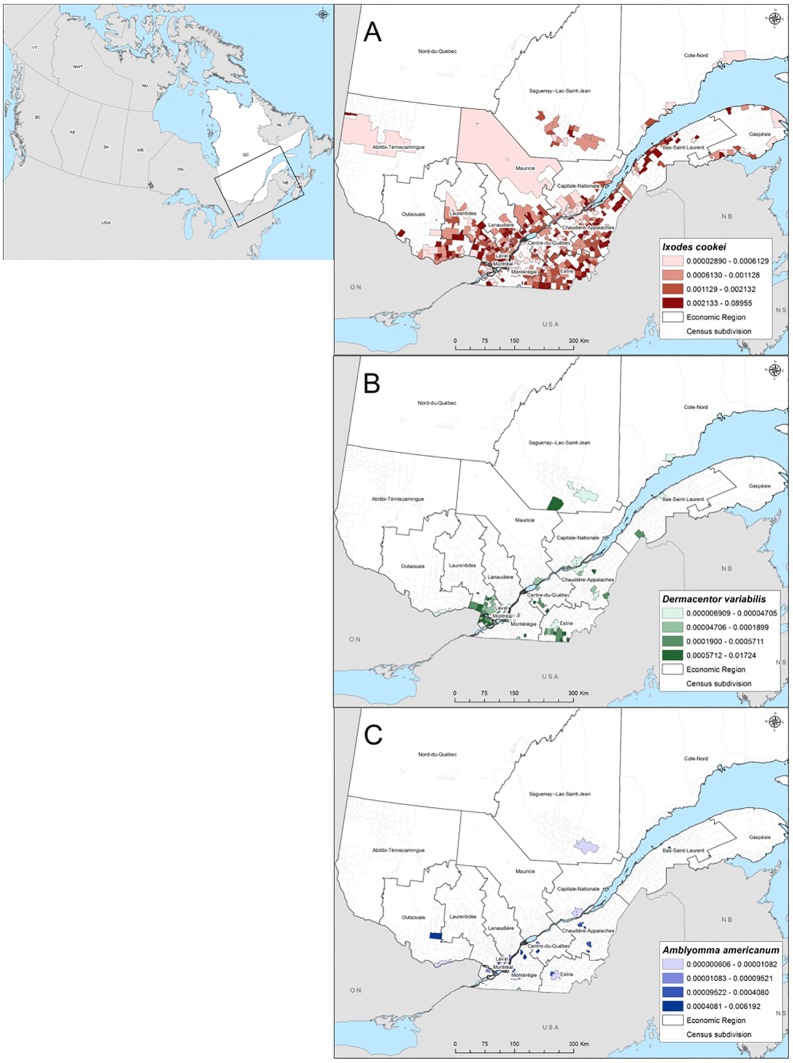
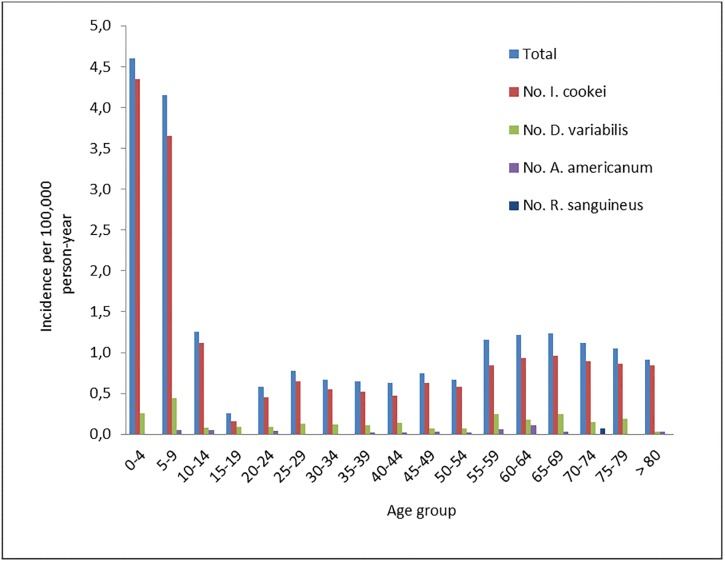
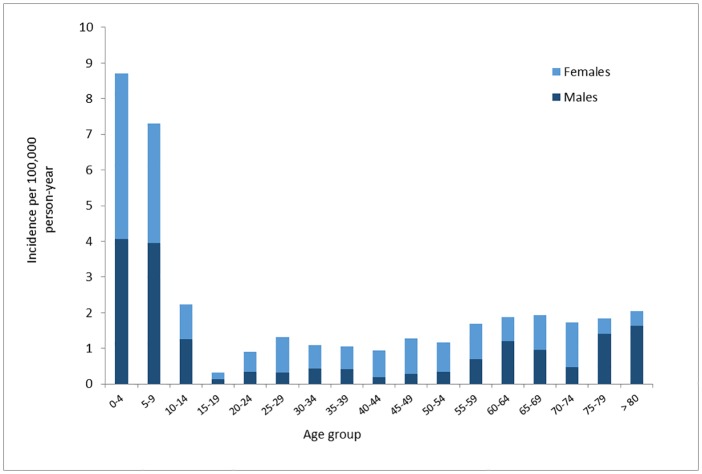
Climate change is driving emergence and establishment of Ixodes scapularis, the main vector of Lyme disease in Québec, Canada. As for the black-legged tick, I. scapularis Say, global warming may also favor northward expansion of other species of medically important ticks. The aims of this study were to determine (1) current diversity and abundance of ticks of public health significance other than I. scapularis, (2) sex and age of the human population bitten by these ticks (3), and the seasonal and geographic pattern of their occurrence. From 2007 to 2015, twelve tick species other than I. scapularis were submitted in the Québec passive tick surveillance program. Of these 9243 ticks, 91.2% were Ixodes cookei, 4.1% were Dermacentor variabilis, 4.0% were Rhipicephalus sanguineus and 0.7% were Amblyomma americanum. The combined annual proportion of submitted I. cookei, D. variabilis, R. sanguineus and A. americanum ticks in passive surveillance rose from 6.1% in 2007 to 16.0% in 2015 and an annual growing trend was observed for each tick species. The number of municipalities where I. cookei ticks were acquired rose from 104 to 197 during the same period. Of the 862 people bitten by these ticks, 43.3% were I. cookei ticks removed from children aged < 10 years. These findings demonstrate the need for surveillance of all the tick species of medical importance in Québec, particularly because climate may increase their abundance and geographic ranges, increasing the risk to the public of the diseases they transmit.
Conflict of interest statement
The authors have declared that no competing interests exist.
Figures
References
-
- Ogden NH, Lindsay LR, Beauchamp G, Charron D, Maarouf A, O’Callaghan CJ, et al. Investigation of relationships between temperature and developmental rates of tick Ixodes scapularis (Acari: Ixodidae) in the laboratory and field. J Med Entomol. 2004;41(4):622–33. - PubMed
-
- Barker S, Murrell A. Systematics and evolution of ticks with a list of valid genus and species names. Parasitology. 2004;129(S1):S15–S36. - PubMed
Publication types
MeSH terms
LinkOut - more resources
Full Text Sources
Other Literature Sources
Research Materials
