


Trends in smoking initiation in Europe over 40 years: A retrospective cohort study
- PMID: 30133533
- PMCID: PMC6104979
- DOI: 10.1371/journal.pone.0201881
Trends in smoking initiation in Europe over 40 years: A retrospective cohort study
Abstract
Background: Tobacco consumption is the largest avoidable health risk. Understanding changes of smoking over time and across populations is crucial to implementing health policies. We evaluated trends in smoking initiation between 1970 and 2009 in random samples of European populations.
Methods: We pooled data from six multicentre studies involved in the Ageing Lungs in European Cohorts consortium, including overall 119,104 subjects from 17 countries (range of median ages across studies: 33-52 years). We estimated retrospectively trends in the rates of smoking initiation (uptake of regular smoking) by age group, and tested birth cohort effects using Age-Period-Cohort (APC) modelling. We stratified all analyses by sex and region (North, East, South, West Europe).
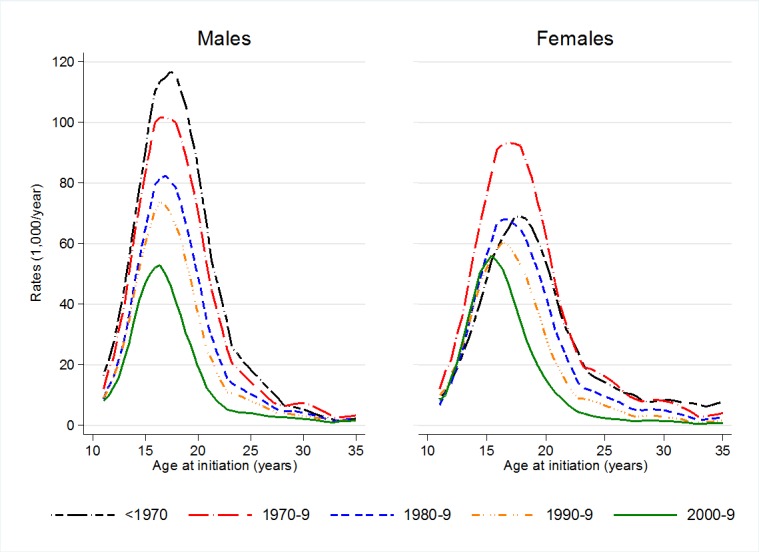
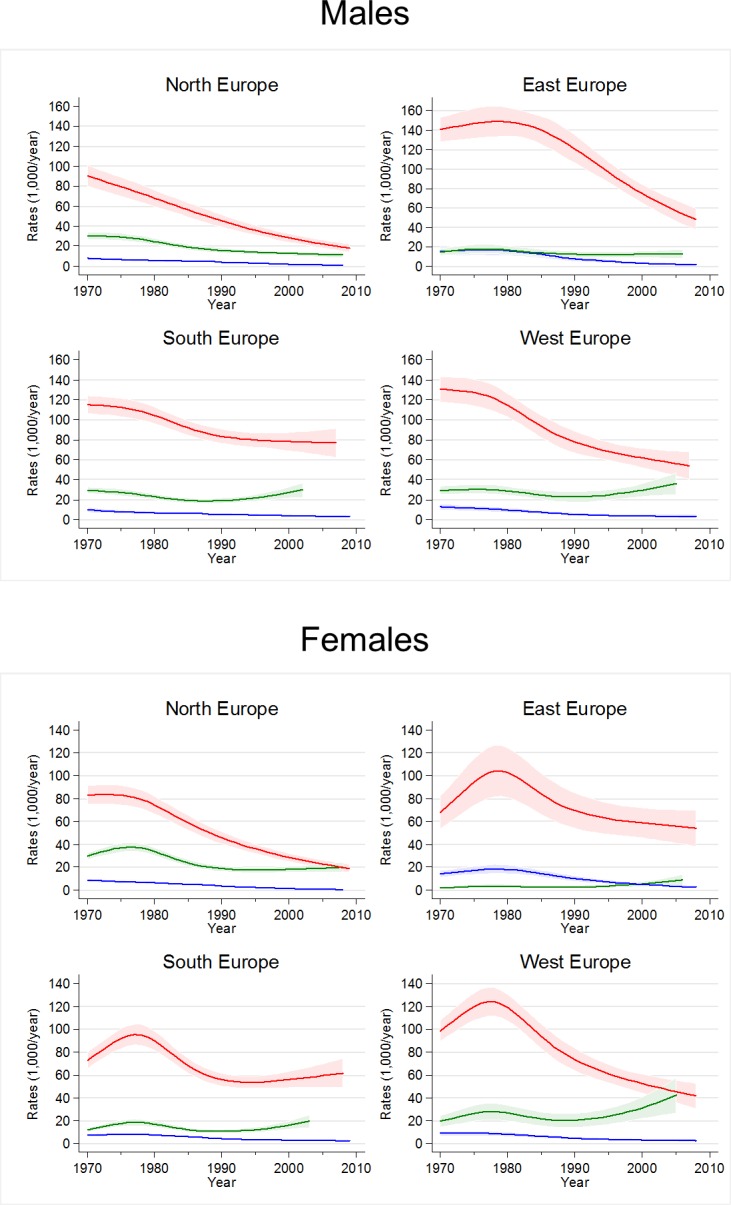
Results: Smoking initiation during late adolescence (16-20 years) declined for both sexes and in all regions (except for South Europe, where decline levelled off after 1990). By the late 2000s, rates of initiation during late adolescence were still high (40-80 per 1000/year) in East, South, and West Europe compared to North Europe (20 per 1000/year). Smoking initiation rates during early adolescence (11-15 years) showed a marked increase after 1990 in all regions (except for North European males) but especially in West Europe, where they reached 40 per 1000/year around 2005. APC models supported birth cohort effects in the youngest cohorts.
Conclusion: Smoking initiation is still unacceptably high among European adolescents, and increasing rates among those aged 15 or less deserve attention. Reducing initiation in adolescents is fundamental, since youngsters are particularly vulnerable to nicotine addiction and tobacco adverse effects.
Conflict of interest statement
TZ has received industry consulting, research grants and/or honoraria from: AstraZeneca, AbbVie, ALK, Almirall, Astellas, Bayer Health Care, Bencard, Berlin Chemie, FAES, HAL, Henkel, Kryolan, Leti, L'Oreal, Meda, Menarini, Merck, MSD, Novartis, Pfizer, Sanofi, Stallergenes, Takeda, Teva, UCB; TZ reports the following organizational affiliations: Committee member, WHO-Initiative “Allergic Rhinitis and its Impact on Asthma” (ARIA); Member of the Board, German Society for Allergy and Clinical Immunology (DGAKI); Head, European Centre for Allergy Research Foundation (ECARF); Secretary General, Global Allergy and Asthma European Network (GA2LEN); Member, Committee on Allergy Diagnosis and Molecular Allergology, World Allergy Organisation (WAO). All the other authors report no financial relationships with any organisations that might have an interest in the submitted work in the previous three years, and no other relationships or activities that could appear to have influenced the submitted work. These competing interests do not alter the authors' adherence to PLOS ONE policies on sharing data and materials. There are no restrictions to the sharing of data from this study.
Figures
References
-
- Eurobarometer, special report 429 (EB82.4): Attitudes of Europeans towards tobacco and electronic cigarettes. May 2015. Available from: http://ec.europa.eu/public_opinion/.
-
- World health organization (WHO). WHO report on the global tobacco epidemic, 2017: Monitoring tobacco use and prevention policies Geneva: World Health Organization; 2017. Licence: CC BY-NC-SA 3.0 IGO. Available from: http://www.who.int/tobacco/en.
-
- Mlinaric A, Popovic Grle S, Nadalin S, Skurla B, Munivrana H, Milosevic M. Passive smoking and respiratory allergies in adolescents. Eur Rev Med Pharmacol Sci. 2011;15:973–7. - PubMed
Publication types
MeSH terms
Grants and funding
LinkOut - more resources
Full Text Sources
Other Literature Sources
