


The etiology of idiopathic congenital talipes equinovarus: a systematic review
- PMID: 30134936
- PMCID: PMC6104023
- DOI: 10.1186/s13018-018-0913-z
The etiology of idiopathic congenital talipes equinovarus: a systematic review
Abstract
Background: Also known as clubfoot, idiopathic congenital talipes equinovarus (ICTEV) is the most common pediatric deformity and occurs in 1 in every 1000 live births. Even though it has been widely researched, the etiology of ICTEV remains poorly understood and is often described as being based on a multifactorial genesis. Genetic and environmental factors seem to have a major role in the development of this disease. Thus, the aim of this review is to analyze the available literature to document the current evidence on ICTEV etiology.
Methods: The literature on ICTEV etiology was systematically reviewed using the following inclusion criteria: studies of any level of evidence, reporting clinical or preclinical results, published in the last 20 years (1998-2018), and dealing with the etiology of ICTEV.
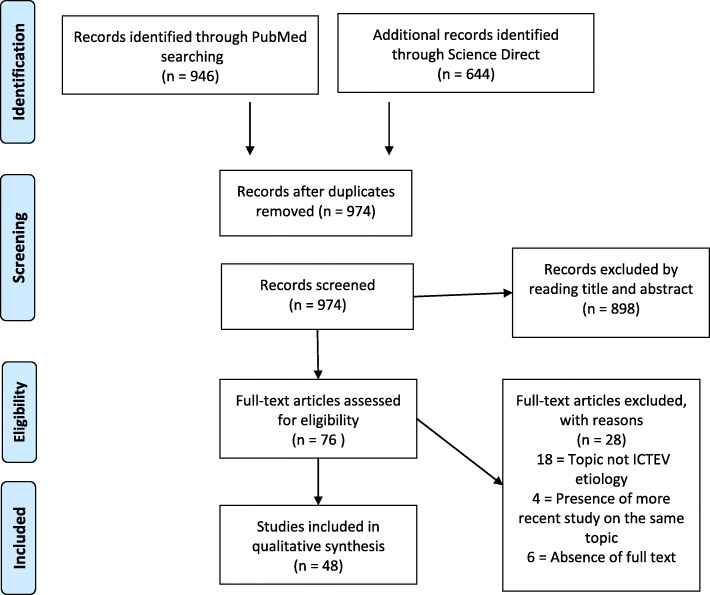
Results: A total of 48 articles were included. ICTEV etiology is still controversial. Several hypotheses have been researched, but none of them are decisive. Emerging evidence suggests a role of several pathways and gene families associated with limb development (HOX family; PITX1-TBX4), the apoptotic pathway (caspases), and muscle contractile protein (troponin and tropomyosin), but a major candidate gene has still not been identified. Strong recent evidence emerging from twin studies confirmed major roles of genetics and the environment in the disease pathogenesis.
Conclusions: The available literature on the etiology of ICTEV presents major limitations in terms of great heterogeneity and a lack of high-profile studies. Although many studies focus on the genetic background of the disease, there is lack of consensus on one or multiple targets. Genetics and smoking seem to be strongly associated with ICTEV etiology, but more studies are needed to understand the complex and multifactorial genesis of this common congenital lower-limb disease.
Keywords: Clubfoot; Etiology; Genetics; ICTEV; Pathogenesis; Risk factors.
Conflict of interest statement
Ethics approval and consent to participate
Not applicable
Consent for publication
Not applicable
Competing interests
The authors declare that they have no competing interests.
Publisher’s Note
Springer Nature remains neutral with regard to jurisdictional claims in published maps and institutional affiliations.
Figures
References
Publication types
MeSH terms
LinkOut - more resources
Full Text Sources
Other Literature Sources
