


Cancer Cell Glycocalyx and Its Significance in Cancer Progression
- PMID: 30135409
- PMCID: PMC6163906
- DOI: 10.3390/ijms19092484
Cancer Cell Glycocalyx and Its Significance in Cancer Progression
Abstract
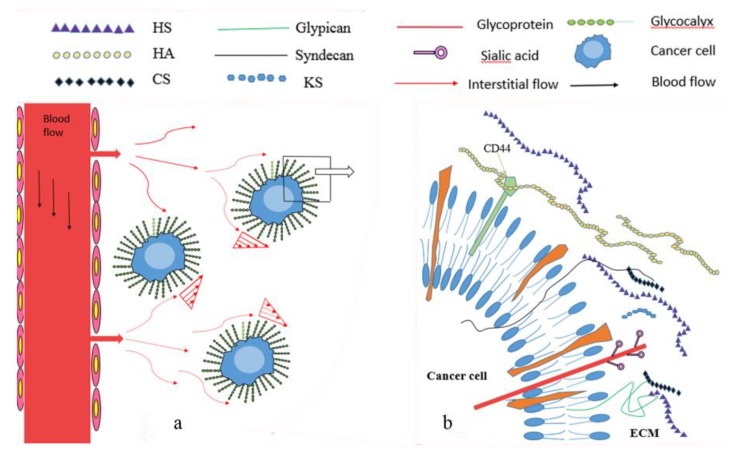
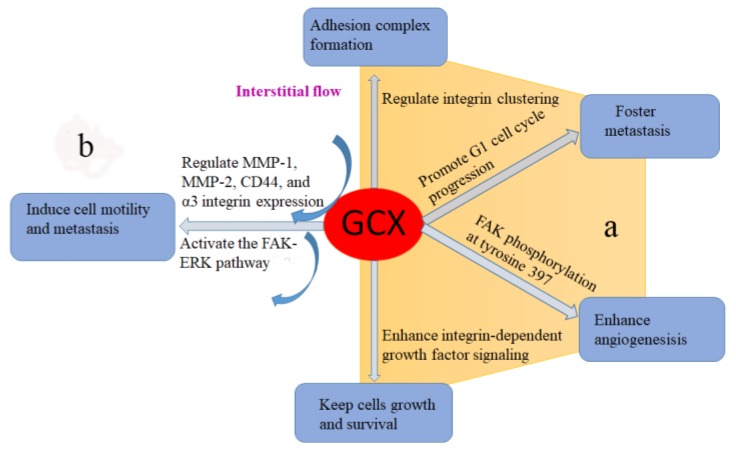
Cancer is a malignant tumor that threatens the health of human beings, and has become the leading cause of death in urban and rural residents in China. The glycocalyx is a layer of multifunctional glycans that covers the surfaces of a variety of cells, including vascular endothelial cells, smooth muscle cells, stem cells, epithelial, osteocytes, as well as cancer cells. The glycosylation and syndecan of cancer cell glycocalyx are unique. However, heparan sulfate (HS), hyaluronic acid (HA), and syndecan are all closely associated with the processes of cancer progression, including cell migration and metastasis, tumor cell adhesion, tumorigenesis, and tumor growth. The possible underlying mechanisms may be the interruption of its barrier function, its radical role in growth factor storage, signaling, and mechanotransduction. In the later sections, we discuss glycocalyx targeting therapeutic approaches reported in animal and clinical experiments. The study concludes that cancer cells' glycocalyx and its role in cancer progression are beginning to be known by more groups, and future studies should pay more attention to its mechanotransduction of interstitial flow-induced shear stress, seeking promising therapeutic targets with less toxicity but more specificity.
Keywords: cancer; glycocalyx; mechanotransduction.
Conflict of interest statement
The authors declare no conflict of interest.
Figures
References
-
- Shurer C.R., Colville M.J., Gupta V.K., Head S.E., Kai F., Lakins J.N., Paszek M.J. Genetically encoded toolbox for glycocalyx engineering: Tunable control of cell adhesion, survival, and cancer cell behaviors. Acs. Biomater. Sci. Eng. 2018;4:388–399. doi: 10.1021/acsbiomaterials.7b00037. - DOI - PMC - PubMed
Publication types
MeSH terms
Substances
LinkOut - more resources
Full Text Sources
Other Literature Sources
Medical
