


Inducing musical-interval learning by combining task practice with periods of stimulus exposure alone
- PMID: 30136042
- PMCID: PMC6384134
- DOI: 10.3758/s13414-018-1584-x
Inducing musical-interval learning by combining task practice with periods of stimulus exposure alone
Erratum in
-
Correction to: Attention, Perception, & Psychophysics, Volume 81, Number 1, January 2019.Atten Percept Psychophys. 2019 Jul;81(5):1741. doi: 10.3758/s13414-019-01690-y. Atten Percept Psychophys. 2019. PMID: 30790142 Free PMC article.
Abstract
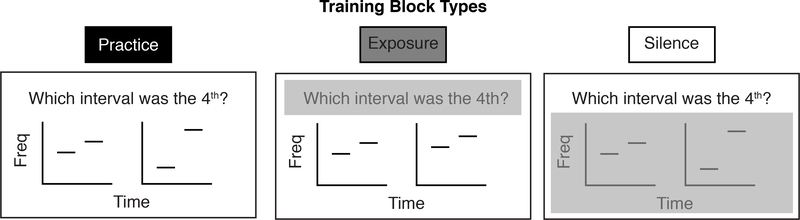
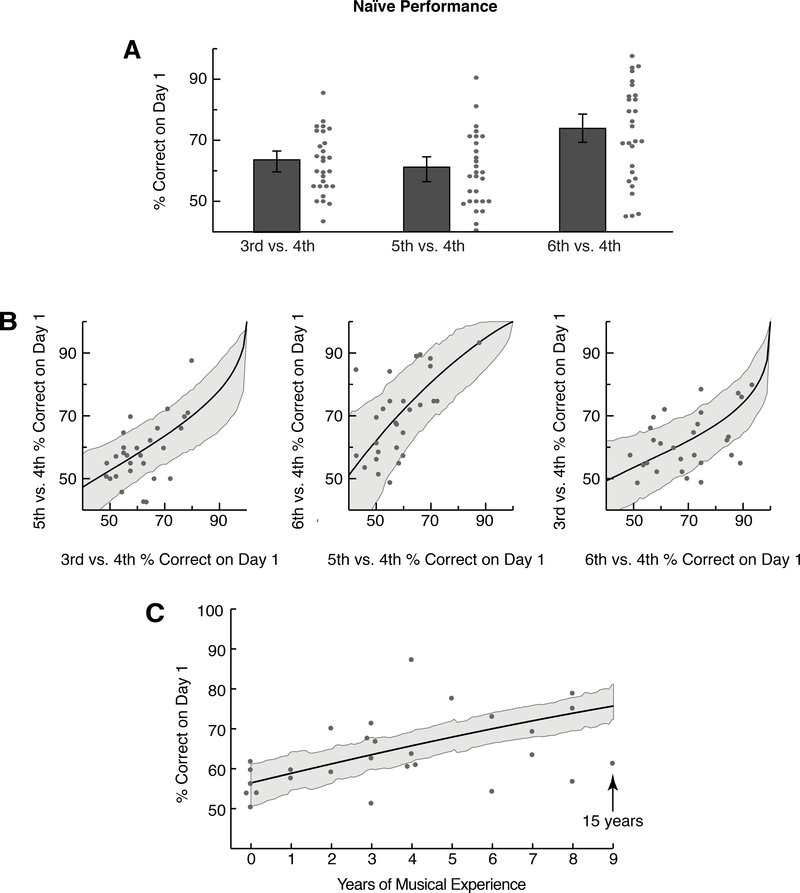
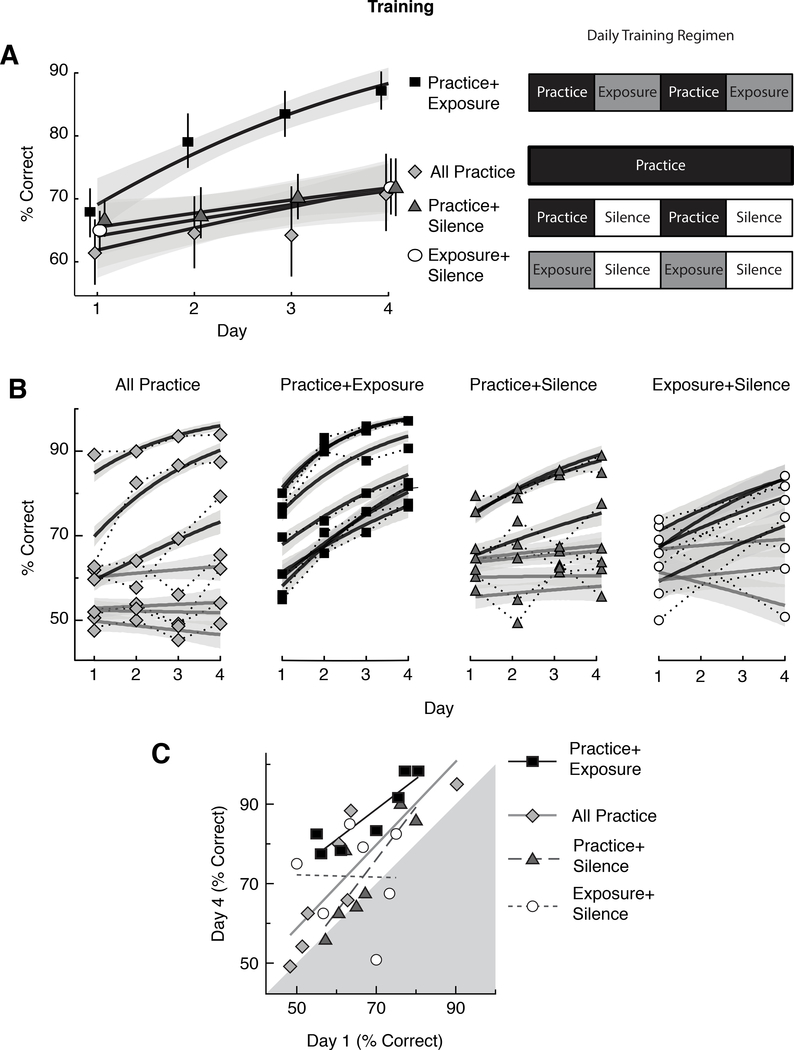
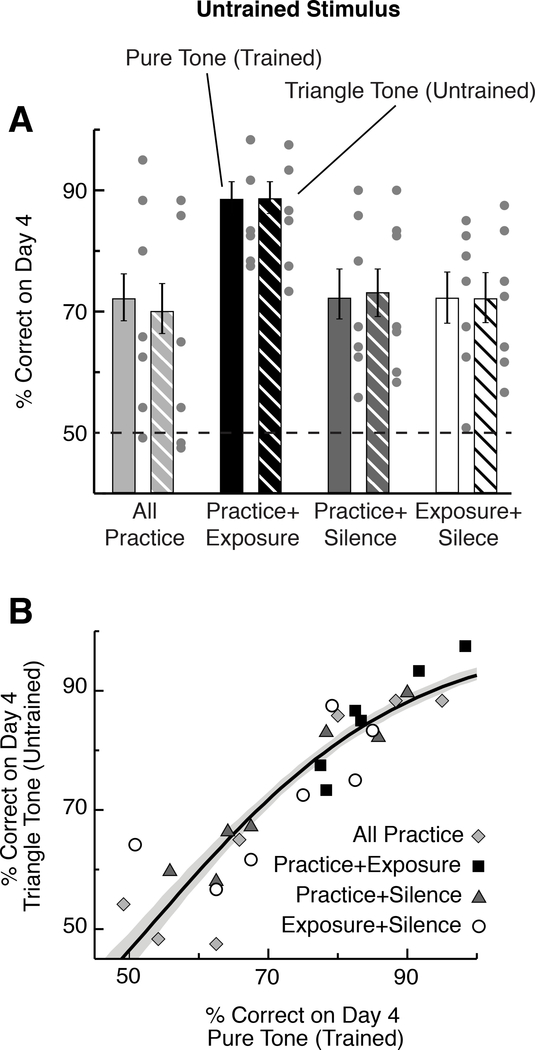
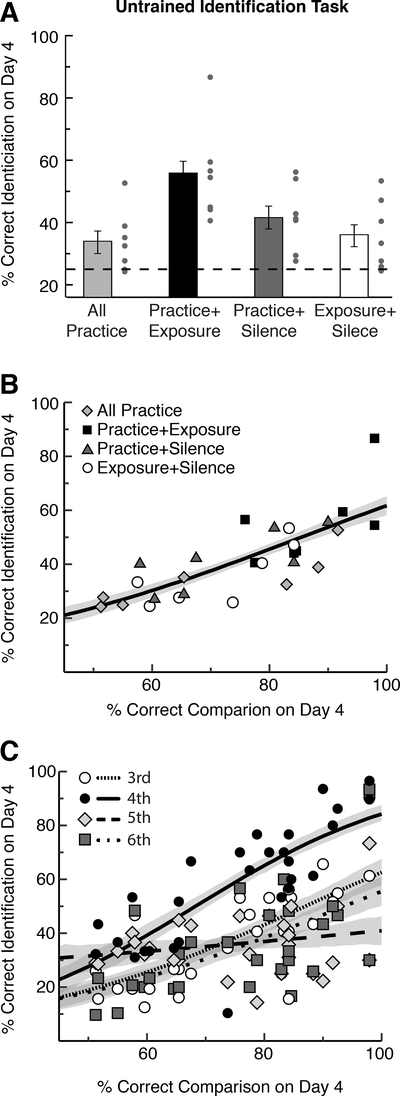
A key component of musical proficiency is the ability to discriminate between and identify musical intervals, or fixed ratios between pitches. Acquiring these skills requires training, but little is known about how to best arrange the trials within a training session. To address this issue, learning on a musical-interval comparison task was evaluated for two four-day training regimens that employed equal numbers of stimulus presentations per day. A regimen of continuous practice yielded no learning, but a regimen that combined practice and stimulus exposure alone generated clear improvement. Learning in the practice-plus-exposure regimen was due to the combination of the two experiences, because two control groups who received only either the practice or the exposure from that regimen did not learn. Posttest performance suggested that this improvement in comparison learning generalized to an untrained stimulus type and an untrained musical-interval identification task. Naïve comparison performance, but not learning, was better for larger pitch-ratio differences and for individuals with more musical experience. The reported benefits of the practice-plus-exposure regimen mirror the outcomes for fine-grained discrimination and speech tasks, suggesting that a general learning principle is involved. In practical terms, it appears that combining practice and stimulus exposure alone is a particularly effective configuration for improving musical-interval perception.
Keywords: Music cognition; Perceptual learning; Psychoacoustics; Sound recognition.
Figures
References
-
- Aberg KC, & Herzog MH (2009). Interleaving bisection stimuli – randomly or in sequence – does not disrupt perceptual learning, it just makes it more difficult. Vision Research, 49(21), 2591–2598. - PubMed
-
- Ahissar M, & Hochstein S (2004). The reverse hierarchy theory of visual perceptual learning. Trends in Cognitive Sciences, 8(10), 457–464. - PubMed
-
- Arenson MA (1984). Computer-based instruction in musicianship training: Some issues and answers. Computers and the Humanities, 18(3–4), 157–163.
-
- Ashby FG, & Maddox WT (2005). Human Category Learning. Annual Review of Psychology, 56(1), 149–178. - PubMed
MeSH terms
Grants and funding
LinkOut - more resources
Full Text Sources
Other Literature Sources
