


Pathways to mental health services for young people: a systematic review
- PMID: 30136192
- PMCID: PMC6182505
- DOI: 10.1007/s00127-018-1578-y
Pathways to mental health services for young people: a systematic review
Abstract
Purpose: While early access to appropriate care can minimise the sequelae of mental illnesses, little is known about how youths come to access mental healthcare. We therefore conducted a systematic review to synthesise literature on the pathways to care of youths across a range of mental health problems.
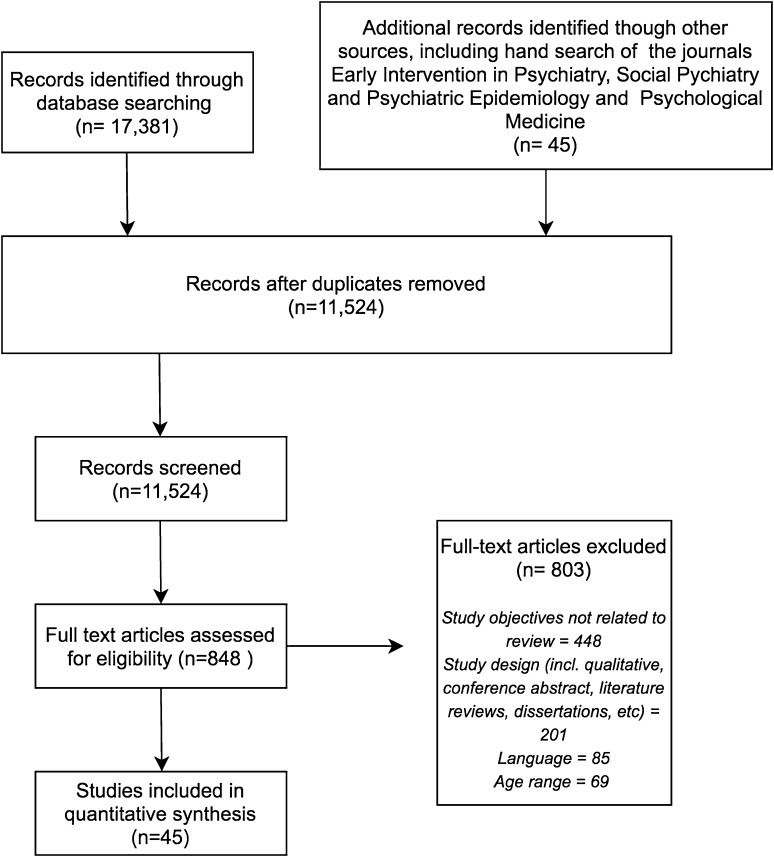
Methods: Studies were identified through searches of electronic databases (MEDLINE, PsycINFO, Embase, HealthSTAR and CINAHL), supplemented by backward and forward mapping and hand searching. We included studies on the pathways to mental healthcare of individuals aged 11-30 years. Two reviewers independently screened articles and extracted data.
Results: Forty-five studies from 26 countries met eligibility criteria. The majority of these studies were from settings that offered services for the early stages of psychosis, and others included inpatient and outpatient settings targeting wide-ranging mental health problems. Generally, youths' pathways to mental healthcare were complex, involved diverse contacts, and, sometimes, undue treatment delays. Across contexts, family/carers, general practitioners and emergency rooms featured prominently in care pathways. There was little standardization in the measurement of pathways.
Conclusions: Except in psychosis, youths' pathways to mental healthcare remain understudied. Pathways to care research may need to be reconceptualised to account for the often transient and overlapping nature of youth mental health presentations, and the possibility that what constitutes optimal care may vary. Despite these complexities, additional research, using standardized methodology, can yield a greater understanding of the help-seeking behaviours of youths and those acting on their behalf; service responses to help-seeking; and the determinants of pathways. This understanding is critical to inform ongoing initatives to transform youth mental healthcare.
Keywords: Help-seeking behaviour; Mental health services; Pathways to care; Treatment delays; Youth mental health.
Conflict of interest statement
The authors declare that they have no conflict of interest.
Figures
References
-
- Erskine H, Moffitt TE, Copeland W, Costello E, Ferrari A, Patton G, Degenhardt L, Vos T, Whiteford H, Scott J. A heavy burden on young minds: the global burden of mental and substance use disorders in children and youth. Psychol Med. 2015;45(7):1551–1563. doi: 10.1017/S0033291714002888. - DOI - PMC - PubMed
Publication types
MeSH terms
LinkOut - more resources
Full Text Sources
Other Literature Sources
Medical
Miscellaneous
