


Drugs for treating Buruli ulcer (Mycobacterium ulcerans disease)
- PMID: 30136733
- PMCID: PMC6513118
- DOI: 10.1002/14651858.CD012118.pub2
Drugs for treating Buruli ulcer (Mycobacterium ulcerans disease)
Abstract
Background: Buruli ulcer is a necrotizing cutaneous infection caused by infection with Mycobacterium ulcerans bacteria that occurs mainly in tropical and subtropical regions. The infection progresses from nodules under the skin to deep ulcers, often on the upper and lower limbs or on the face. If left undiagnosed and untreated, it can lead to lifelong disfigurement and disabilities. It is often treated with drugs and surgery.
Objectives: To summarize the evidence of drug treatments for treating Buruli ulcer.
Search methods: We searched the Cochrane Infectious Diseases Group Specialized Register; the Cochrane Central Register of Controlled Trials (CENTRAL), published in the Cochrane Library; MEDLINE (PubMed); Embase (Ovid); and LILACS (Latin American and Caribbean Health Sciences Literature; BIREME). We also searched the US National Institutes of Health Ongoing Trials Register (clinicaltrials.gov) and the World Health Organization (WHO) International Clinical Trials Registry Platform (ICTRP) (www.who.int/ictrp/search/en/). All searches were run up to 19 December 2017. We also checked the reference lists of articles identified by the literature search, and contacted leading researchers in this topic area to identify any unpublished data.
Selection criteria: We included randomized controlled trials (RCTs) that compared antibiotic therapy to placebo or alternative therapy such as surgery, or that compared different antibiotic regimens. We also included prospective observational studies that evaluated different antibiotic regimens with or without surgery.
Data collection and analysis: Two review authors independently applied the inclusion criteria, extracted the data, and assessed methodological quality. We calculated the risk ratio (RR) for dichotomous data with 95% confidence intervals (CI). We assessed the certainty of the evidence using the GRADE approach.
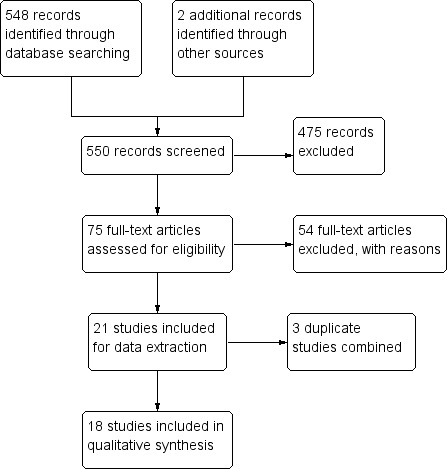
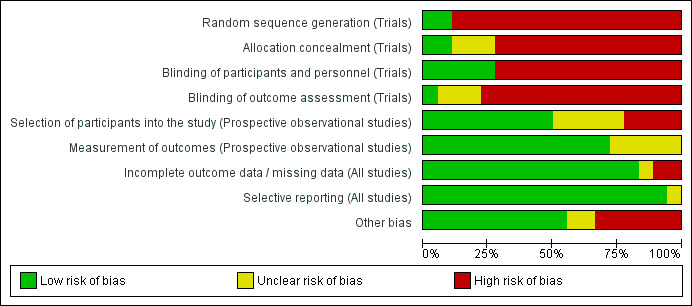
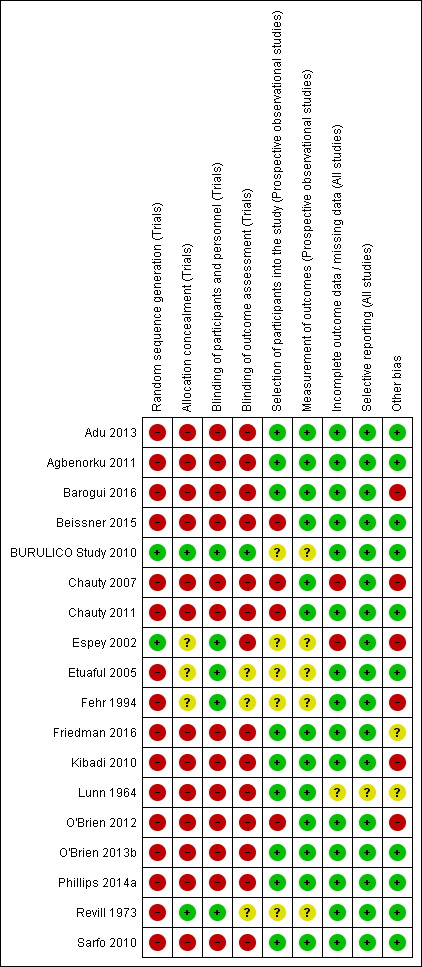
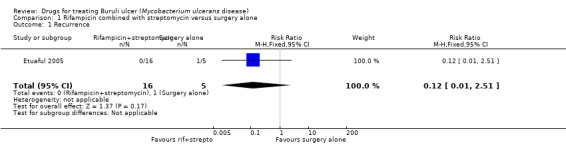
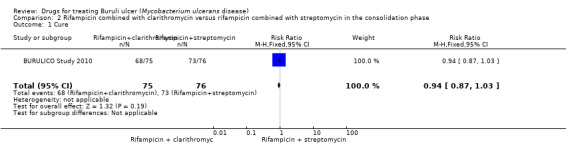
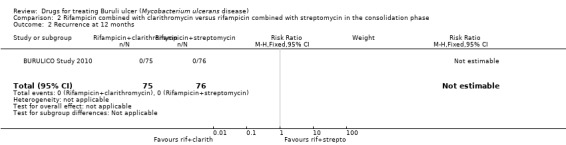
Main results: We included a total of 18 studies: five RCTs involving a total of 319 participants, ranging from 12 participants to 151 participants, and 13 prospective observational studies, with 1665 participants. Studies evaluated various drugs usually in addition to surgery, and were carried out across eight countries in areas with high Buruli ulcer endemicity in West Africa and Australia. Only one RCT reported adequate methods to minimize bias. Regarding monotherapy, one RCT and one observational study evaluated clofazimine, and one RCT evaluated sulfamethoxazole/trimethoprim. All three studies had small sample sizes, and no treatment effect was demonstrated. The remaining studies examined combination therapy.Rifampicin combined with streptomycinWe found one RCT and six observational studies which evaluated rifampicin combined with streptomycin for different lengths of treatment (2, 4, 8, or 12 weeks) (941 participants). The RCT did not demonstrate a difference between the drugs added to surgery compared with surgery alone for recurrence at 12 months, but was underpowered (RR 0.12, 95% CI 0.01 to 2.51; 21 participants; very low-certainty evidence).An additional five single-arm observational studies with 828 participants using this regimen for eight weeks with surgery (given to either all participants or to a select group) reported healing rates ranging from 84.5% to 100%, assessed between six weeks and one year. Four observational studies reported healing rates for participants who received the regimen alone without surgery, reporting healing rates ranging from 48% to 95% assessed between eight weeks and one year.Rifampicin combined with clarithromycinTwo observational studies administered combined rifampicin and clarithromycin. One study evaluated the regimen alone (no surgery) for eight weeks and reported a healing rate of 50% at 12 months (30 participants). Another study evaluated the regimen administered for various durations (as determined by the clinicians, durations unspecified) with surgery and reported a healing rate of 100% at 12 months (21 participants).Rifampicin with streptomycin initially, changing to rifampicin with clarithromycin in consolidation phaseOne RCT evaluated this regimen (four weeks in each phase) against continuing with rifampicin and streptomycin in the consolidation phase (total eight weeks). All included participants had small lesions, and healing rates were above 90% in both groups without surgery (healing rate at 12 months RR 0.94, 95% CI 0.87 to 1.03; 151 participants; low-certainty evidence). One single-arm observational study evaluating the substitution of streptomycin with clarithromycin in the consolidation phase (6 weeks, total 8 weeks) without surgery given to a select group showed a healing rate of 98% at 12 months (41 participants).Novel combination therapyTwo large prospective studies in Australia evaluated some novel regimens. One study evaluating rifampicin combined with either ciprofloxacin, clarithromycin, or moxifloxacin without surgery reported a healing rate of 76.5% at 12 months (132 participants). Another study evaluating combinations of two to three drugs from rifampicin, ciprofloxacin, clarithromycin, ethambutol, moxifloxacin, or amikacin with surgery reported a healing rate of 100% (90 participants).Adverse effects were reported in only three RCTs (158 participants) and eight prospective observational studies (878 participants), and were consistent with what is already known about the adverse effect profile of these drugs. Paradoxical reactions (clinical deterioration after treatment caused by enhanced immune response to M ulcerans) were evaluated in six prospective observational studies (822 participants), and the incidence of paradoxical reactions ranged from 1.9% to 26%.
Authors' conclusions: While the antibiotic combination treatments evaluated appear to be effective, we found insufficient evidence showing that any particular drug is more effective than another. How different sizes, lesions, and stages of the disease may contribute to healing and which kind of lesions are in need of surgery are unclear based on the included studies. Guideline development needs to consider these factors in designing practical treatment regimens. Forthcoming trials using clarithromycin with rifampicin and other trials of new regimens that also address these factors will help to identify the best regimens.
Conflict of interest statement
Rie Roselyne Yotsu acts as a WHO consultant for leprosy and also has financial support for an epidemiological study on Buruli ulcer in Cote d'Ivoire and in Ghana. However, there are no financial relationships with any organizations that might have an interest in the submitted work in the previous three years; and no other relationships or activities that could appear to have influenced the submitted work.
Marty Richardson has no known conflicts of interest.
Norihisa Ishii has no known conflicts of interest.
Figures



Comment in
-
Treatment for Buruli ulcer: the long and winding road to antimicrobials-first.Cochrane Database Syst Rev. 2018 Dec 17;12(12):ED000128. doi: 10.1002/14651858.ED000128. Cochrane Database Syst Rev. 2018. PMID: 30556580 Free PMC article. No abstract available.
References
References to studies included in this review
Adu 2013 {published data only}
-
- Adu EJ. Management of complications of Mycobacterium ulcerans disease: a three‐year review. International Journal of Mycobacteriology 2013;2(4):206‐10. - PubMed
Agbenorku 2011 {published data only}
-
- Agbenorku P, Agbenorku M, Amankwa A, Tuuli L, Saunderson P. Factors enhancing the control of Buruli ulcer in the Bomfa communities, Ghana. Transactions of the Royal Society of Tropical Medicine and Hygiene 2011;105(8):459‐65. - PubMed
Barogui 2016 {published data only}
Beissner 2015 {published data only}
BURULICO Study 2010 {published data only}
-
- Nienhuis WA, Stienstra Y, Thompson WA, Awuah PC, Abass KM, Tuah W, et al. Antimicrobial treatment for early, limited Mycobacterium ulcerans infection: a randomized controlled trial. Lancet 2010;375(9715):664‐72. - PubMed
Chauty 2007 {published data only}
Chauty 2011 {published data only}
-
- Chauty A, Ardant MF, Marsollier L, Pluschke G, Landier J, Adeye A, et al. Oral treatment for Mycobacterium ulcerans infection: results from a pilot study in Benin. Clinical Infectious Diseases 2011;52(1):94‐6. - PubMed
Espey 2002 {published data only}
-
- Espey DK, Djomand G, Diomande I, Dosso M, Saki MZ, Kanga JM, et al. A pilot study of treatment of Buruli ulcer with rifampin and dapsone. International Journal of Infectious Diseases 2002;6(1):60‐5. - PubMed
Etuaful 2005 {published data only}
Fehr 1994 {published data only}
-
- Fehr H, Egger M, Senn I. Cotrimoxazol in the treatment of Mycobacterium ulcerans infection (Buruli ulcer) in West Africa. Tropical Doctor 1994;24(2):61‐3. - PubMed
Friedman 2016 {published data only}
Kibadi 2010 {published data only}
Lunn 1964 {published data only}
-
- Lunn HF, Rees RJW. Treatment of mycobacterial skin ulcers in Uganda with a Riminophenazine derivative (B.663). Lancet 1964;1(7327):247‐9. - PubMed
O'Brien 2012 {published data only}
-
- O'Brien DP, Hughes AJ, Cheng AC, Henry MJ, Callan P, McDonald A, et al. Outcomes for Mycobacterium ulcerans infection with combined surgery and antibiotic therapy: findings from a south‐eastern Australian case series. Medical Journal of Australia 2007;186(2):58‐61. - PubMed
O'Brien 2013b {published data only}
Phillips 2014a {published data only}
-
- Phillips RO, Sarfo FS, Abass MK, Abotsi J, Wilson T, Forson M, et al. Clinical and bacteriological efficacy of rifampin‐streptomycin combination for two weeks followed by rifampin and clarithromycin for six weeks for treatment of Mycobacterium ulcerans disease. Antimicrobial Agents and Chemotherapy 2014;58(2):1161‐6. - PMC - PubMed
Revill 1973 {published data only}
-
- Revill WD, Morrow RH, Pike MC, Ateng J. A controlled trial of the treatment of Mycobacterium ulcerans infection with clofazimine. Lancet 1973;2(7834):873‐7. - PubMed
References to studies excluded from this review
Addison 2015 {published data only}
-
- Addison NO, Pfau S, Koka E, Aboagye S, Pluschke G, Yeboah‐Manu D, et al. Diagnosis and management of Buruli ulcer patients at a health centre in Ghana. 9th European Congress on Tropical Medicine and International Health; 2015 Sept 6‐10; Basel, Switzerland. 2015:244.
Adjei 1998 {published data only}
-
- Adjei O, Evans MR, Asiedu A. Phenytoin in the treatment of Buruli ulcer. Transactions of the Royal Society of Tropical Medicine and Hygiene 1998;92(1):108‐9. - PubMed
Adou 2009 {published data only}
-
- Adou L. Buruli ulcer re‐emergent infection. Bacteriologia, Virusologia, Parazitologia, Epidemiologia 2009;54(2):125‐33. - PubMed
Adu 2011 {published data only}
Adu 2015 {published data only}
-
- Adu EJ, Ampadu E. Mycobacterium ulcerans disease in the middle belt of Ghana: an eight‐year review from six endemic districts. International Journal of Mycobacteriology 2015;4(2):138‐42. - PubMed
Aguiar 1997 {published data only}
-
- Aguiar J, Stenou C. Buruli ulcers in rural areas of Benin: management of 635 cases. Medicine Tropical (Mars) 1997;57(1):83‐90. - PubMed
Alferink 2013 {published data only}
Alffenaar 2010 {published data only}
Anonymous 2010 {published data only}
-
- Anonymous. Buruli ulcer. A disabling infection. Prescrire International 2010;19(110):261‐2. - PubMed
Arens 2015 {published data only}
-
- Arens N, Nitschke J, Wiedemann FX, Piten E, Gadah D, Amekuse K, et al. Treatment outcome of patients with Buruli ulcer disease ‐ a clinical follow‐up study from Togo. 9th European Congress on Tropical Medicine and International Health (Basel, Switzerland). 2015:244‐5.
Azanmasso 2013 {published data only}
-
- Azanmasso H, Addy Lolla B, Diagne NS, Kpadonou GT, Alagnide E, Lmidmani F, et al. Interest of followed children operated for Buruli ulcer in Benin. 28e Congres de Medecine Physique et de Readaptation (Reims, France). 2013:e284‐5.
Bamberger 2011 {published data only}
-
- Bamberger D, Jantzer N, Leidner K, Arend J, Efferth T. Fighting mycobacterial infections by antibiotics, phytochemicals and vaccines. Microbes and Infection 2011;13(7):613‐23. - PubMed
Barogui 2009 {published data only}
-
- Barogui Y, Johnson RC, Werf TS, Sopoh G, Dossou A, Dijkstra PU, et al. Functional limitations after surgical or antibiotic treatment for Buruli ulcer in Benin. American Journal of Tropical Medicine and Hygiene 2009;81(1):82‐7. - PubMed
Barogui 2013 {published data only}
Cornet 1992 {published data only}
-
- Cornet L, Richard‐Kadio M, N'Guessan HA, Yapo P, Hossoko H, Dick R, et al. Treatment of Buruli's ulcers by excision‐graft. Bulletin de la Societe de Pathologie Exotique 1992;85(5):355‐8. - PubMed
Cowan 2015 {published data only}
Darie 1993 {published data only}
-
- Darie H, Guyadec T, Touze JE. Epidemiological and clinical aspects of Buruli ulcer in Ivory Coast. 124 recent cases. Bulletin de la Societe de Pathologie Exotique 1993;86(4):272‐6. - PubMed
Debacker 2005 {published data only}
de Bergeyck 1980 {published data only}
-
- Bergeyck E, Janssens PG, Muynck A. Radiological abnormalities of the ileum associated with the use of clofazimine (Lamprene; B663) in the treatment of skin ulceration due to Mycobacterium ulcerans. Leprosy Review 1980;51(3):221‐8. - PubMed
Friedman 2012 {published data only}
Gordon 2010 {published data only}
Guerra 2008 {published data only}
Josse 1994 {published data only}
-
- Josse R, Guédénon A, Aguiar J, Anagonou S, Zinsou C, Prost C, et al. Buruli's ulcer, a pathology little known in Benin. Apropos of 227 cases. Bulletin de la Societe de Pathologie Exotique 1994;87(3):170‐5. - PubMed
Kanga 2003 {published data only}
-
- Kanga JM, Kacou DE, Sangare A, Dabila Y, Asse NH, Djakeaux S. Recurrence after surgical treatment of Buruli ulcer in Cote d'Ivoire. Bulletin de la Societe de Pathologie Exotique 2003;96(5):406‐9. - PubMed
Kibadi 2007 {published data only}
-
- Kibadi K. Streptomycin injections for the treatment of Mycobacterium ulcerans (Buruli ulcer) in a rural health zone in the Democratic Republic of the Congo. Sante 2007;17(3):173‐6. - PubMed
Klis 2014a {published data only}
Klis 2014b {published data only}
Klis 2014c {published data only}
Klis 2014d {published data only}
-
- Klis S, Werf TS, Phillips RO, Sarfo FS, Wansbrough‐Jones M, Stienstra Y. Oral treatment for patients with Buruli ulcer co‐infected with HIV: think twice. AIDS 2014;28(5):797‐8. - PubMed
Klis 2016 {published data only}
-
- Klis S, Kingma RA, Tuah W, Werf TS, Stienstra Y. Clinical outcomes of Ghanaian Buruli ulcer patients who defaulted from antimicrobial therapy. Tropical Medicine & International Health 2016;21(9):1191‐6. - PubMed
Kotey 2011 {published data only}
-
- Kotey NK, Ampadu X. Antibiotic treatment outcomes of Buruli ulcer in Akwapem South and Suhum‐Kraboa‐Coaltar districts of Eastern region, Ghana. 7th European Congress on Tropical Medicine and International Health (Barcelona, Spain). 2011:195.
Lunn 1965 {published data only}
-
- Lunn HF, Connor DH, Wilks NE, Barnley GR, Kamunvi F, Clancey JK, et al. Buruli (mycobacterial) ulceration in Uganda. (A new focus of Buruli ulcer in Madi District, Uganda): report of a field study. East African Medical Journal 1965;42:275‐88. - PubMed
Marion 2015 {published data only}
Milánkovits 2010 {published data only}
-
- Milánkovits M. Combined local and vaginal therapy in Buruli ulcer. Orvosi Hetilap 2010;151(35):1434‐5. - PubMed
Mou 2015 {published data only}
-
- Mou F, Um Boock A, Awah PK, Mbah E, Koin J, Nichter M. Developing a Buruli ulcer community of practice in Bankim Cameroon as a model for BU outreach in Africa. 9th European Congress on Tropical Medicine and International Health (Basel, Switzerland). 2015:101.
Nienhuis 2012 {published data only}
-
- Nienhuis WA, Stienstra Y, Abass KM, Tuah W, Thompson WA, Awuah PC, et al. Paradoxical responses after start of antimicrobial treatment in Mycobacterium ulcerans infection. Clinical Infectious Diseases 2012;54(4):519‐26. - PubMed
O'Brien 2014 {published data only}
Oluwasanmi 1975 {published data only}
-
- Oluwasanmi JO, Itayemi SO, Alabi GO. Buruli (mycobacterial) ulcers in Caucasians in Nigeria. British Journal of Plastic Surgery 1975;28(2):111‐3. - PubMed
Pfau 2015 {published data only}
-
- Pfau S, Addison NO, Pluschke G, Yeboah‐Manu D, Junghanss T. Chronic ulcers in Buruli ulcer patients following specific treatment in a district hospital in Ghana. 9th European Congress on Tropical Medicine and International Health (Basel, Switzerland). 2015:243‐4.
Phanzu 2006 {published data only}
-
- Phanzu DM, Bafende EA, Dunda BK, Imposo DB, Kibadi AK, Nsiangana SZ, et al. Mycobacterium ulcerans disease (Buruli ulcer) in a rural hospital in Bas‐Congo, Democratic Republic of Congo, 2002‐2004. American Journal of Tropical Medicine and Hygiene 2006;75(2):311‐4. - PubMed
Phanzu 2011 {published data only}
Phillips 2004 {published data only}
Phillips 2014b {published data only}
Ruf 2011 {published data only}
Ruf 2015 {published data only}
-
- Ruf MT, Andreoli A, Sopoh GE, Schmid P, Pluschke G. Immunohistochemical monitoring of wound healing in Buruli ulcer patients treated with RIF/STR. 9th European Congress on Tropical Medicine and International Health (Basel, Switzerland). 2015:241.
Saka 2013 {published data only}
-
- Saka B, Landoh DE, Kobara B, Djadou KE, Yaya I, Yékplé KB, et al. Profile of Buruli ulcer treated at the National Reference Centre of Togo: a study of 119 cases. Bulletin de la Societe de Pathologie Exotique 2013;106(1):32‐6. - PubMed
Schunk 2009 {published data only}
-
- Schunk M, Thompson W, Klutse E, Nitschke J, Opare‐Asamoah K, Thompson R, et al. Outcome of patients with Buruli ulcer after surgical treatment with or without antimycobacterial treatment in Ghana. American Journal of Tropical Medicine and Hygiene 2009;81(1):75‐81. - PubMed
Schütte 2009 {published data only}
-
- Schütte D, Umboock A, Pluschke G. Phagocytosis of Mycobacterium ulcerans in the course of rifampicin and streptomycin chemotherapy in Buruli ulcer lesions. British Journal of Dermatology 2009;160(2):273‐83. - PubMed
Stienstra 2012 {published data only}
-
- Stienstra Y, Barogui Y, Klis S, Bankole HS, Sopoh G, Mamo S, et al. Towards rational use of antibiotics for suspected secondary infections in Buruli ulcer patients. 61st Annual Meeting of the American Society of Tropical Medicine and Hygiene (Atlanta, GA United States). 2012; Vol. 87 (5 suppl. 1):235.
Teelken 2003 {published data only}
-
- Teelken MA, Stienstra Y, Ellen DE, Quarshie E, Klutse E, Graaf WT, et al. Buruli ulcer: differences in treatment outcome between two centres in Ghana. Acta Tropica 2003;88(1):51‐6. - PubMed
van der Werf 1989 {published data only}
-
- Werf TS, Graaf WT, Groothuis DG, Knell AJ. Mycobacterium ulcerans infection in Ashanti region, Ghana. Transactions of the Royal Society of Tropical Medicine and Hygiene 1989;83(3):410‐3. - PubMed
Vignier 2014 {published data only}
-
- Vignier N, Kempf M, Vignes D, Gousseff M, Alexandre M, Mechai F, et al. Buruli ulcer acquired in Mali: a rare and atypical situation. Travel Medicine and Infectious Disease 2014;12(6 Pt B):781‐2. - PubMed
Vuagnat 2011 {published data only}
-
- Vuagnat H, Tientcheu G, Comte E. Buruli ulcer treatment in Cameroon, measuring the implementation of a rehabilitation program in a low resource setting. 2011 American Congress of Rehabilitation Medicine, ACRM ‐ American Society of Neurorehabilitation, ASNR Annual Conference (Atlanta, GA United States). 2011:1733‐4.
Yeboah‐Manu 2013 {published data only}
-
- Yeboah‐Manu D, Kpeli GS, Ruf MT, Asan‐Ampah K, Quenin‐Fosu K, Owusu‐Mireku E, et al. Assessment of bacterial burden of Buruli ulcer (BU) lesions: a call for clear guidelines on wound care module for BU case management. 62nd Annual Meeting of the American Society of Tropical Medicine and Hygiene, ASTMH 2012 (Washington, DC United States). 2013; Vol. 89 (5 SUPPL. 1):28‐9.
References to ongoing studies
NCT01432925 {published and unpublished data}
-
- NCT01432925. Timing of surgical intervention in Buruli ulcer patients treated with antibiotics (Burulitime) [Timing of the decision on surgical intervention for Buruli ulcer patients treated with rifampicin/streptomycin]. clinicaltrials.gov/ct2/show/NCT01432925 (first received 13 September 2011).
NCT01659437 {published and unpublished data}
-
- NCT01659437. WHO drug study for Buruli ulcer‐comparison of SR8 and CR8 [Randomized controlled trial comparing efficacy of 8 weeks treatment with clarithromycin and rifampicin versus streptomycin and rifampicin for Buruli ulcer (M. ulcerans infection)]. clinicaltrials.gov/ct2/show/NCT01659437 (first received 7 August 2012).
Additional references
Amofah 1998
-
- Amofah G, Asamoah S, Afram‐Gyening C. Effectiveness of excision of pre‐ulcerative Buruli lesions in field situations in a rural district in Ghana. Tropical Doctor 1998;28(2):81‐3. - PubMed
Asiedu 1998
-
- Asiedu K, Etuaful S. Socioeconomic implications of Buruli ulcer in Ghana: a three‐year review. American Journal of Tropical Medicine and Hygiene 1998;59(6):1015‐22. - PubMed
Boyd 2012
-
- Boyd SC, Athan E, Friedman ND, Hughes A, Walton A, Callan P, et al. Epidemiology, clinical features and diagnosis of Mycobacterium ulcerans in an Australian population. Medical Journal of Australia 2012;196(5):341‐4. - PubMed
Bradley 1971
-
- Bradley DJ, for the Uganda Buruli study group. Epidemiology of Mycobacterium ulcerans infection (Buruli ulcer) at Kinyara, Uganda. Transactions of the Royal Society of Tropical Medicine and Hygiene 1971;65(6):763‐75. - PubMed
Bär 1998
-
- Bär W, Rüsch‐Gerdes S, Richter E, Marquéz de Bär G, Dittmer C, Papsdorf H, et al. Mycobacterium ulcerans infection in a child from Angola: diagnosis by direct detection and culture. Tropical Medicine & International Health 1998;3(3):189‐96. - PubMed
Clancey 1961
-
- Clancey JK, Dodge OG, Lunn HF, Oduori ML. Mycobacterial skin ulcers in Uganda. Lancet 1961;2(7209):951‐4. - PubMed
Couppié 2015
-
- Couppié P, Douine M, Gozlan RE, Reynaud Y, Morris A, Sanhueza D, et al. Mycobacterium ulcerans (Buruli ulcer) infection in French Guiana in 2015; epidemiological assessment and status of research. WHO Meeting on Buruli ulcer: Control and Research. Geneva: World Health Organization, 23‐25 March 2015:65.
Darie 1994
-
- Darie H, Djakeaux S, Cautoclaud A. Therapeutic approach in Mycobacterium ulcerans infections [Approche thérapeutique des infections à Mycobacterium ulcerans]. Bulletin de la Société de Pathologie Exotique 1994;87(1):19‐21. - PubMed
Eddyani 2004
Evans 2003
-
- Evans MR, Mawdsley J, Bull R, Lockwood DN, Thangaraj H, Shanahan D, et al. Buruli ulcer in a visitor to London. British Journal of Dermatology 2003;149(4):907‐9. - PubMed
Ezzedine 2009
Faber 2000
-
- Faber WR, Arias‐Bouda LM, Zeegelaar JE, Kolk AH, Fonteyne PA, Toonstra J, et al. First reported case of Mycobacterium ulcerans infection in a patient from China. Transactions of the Royal Society of Tropical Medicine and Hygiene 2000;94(3):277‐9. - PubMed
Farber 1967
-
- Farber ER, Tsang A. Mycobacterial ("Buruli") ulcer in a Peace Corps worker. Archives of Surgery 1967;95(2):297‐300. - PubMed
Friedman 2013
Gordon 2011
GRADEpro GDT 2015 [Computer program]
-
- McMaster University (developed by Evidence Prime, Inc.). GRADEpro GDT. Version (accessed 6 August 2016). Hamilton (ON): McMaster University (developed by Evidence Prime, Inc.), 2015.
Grietens 2008
Higgins 2011
-
- Higgins JPT, Altman DG, Stern JAC on behalf of the Cochrane Statistical Methods Group and the Cochrane Bias Methods Group. Chapter 8: Assessing risk of bias in included studies. In: Higgins JP, Green S, editor(s). Cochrane Handbook for Systematic Reviews of Interventions Version 5.1.0 (updated March 2011). The Cochrane Collaboration, 2011. Available from handbook.cochrane.org.
Igo 1988
-
- Igo JD, Murthy DP. Mycobacterium ulcerans infections in Papua New Guinea: correlation of clinical, histological, and microbiologic features. American Journal of Tropical Medicine and Hygiene 1988;38(2):391‐2. - PubMed
Johnson 2005a
Johnson 2005b
-
- Johnson RC, Sopoh GE, Boko M, Zinsou C, Gbovi J, Makoutode M, et al. Distribution of Mycobacterium ulcerans (Buruli ulcer) in the district of Lalo in Benin [Distribution de l'infection à Mycobacterium ulcerans (Ulcère de Buruli) dans la commune de Lalo au Bénin]. Tropical Medicine & International Health 2005;10(9):863‐71. - PubMed
Joseph 2003
-
- Sister Joseph. Mycobacterium ulcerans in Papua New Guinea, 2002. In: Report of the 6th WHO Advisory Group Meeting on Buruli Ulcer, 10‐13 March 2003, WHO headquarters, Geneva, Switzerland; p44‐7. apps.who.int/iris/bitstream/10665/68508/1/WHO_CDS_CPE_GBUI_2003.8.pdf (accessed prior to 5 February 2016). [WHO/CDS/CPE/GBUI/2003.8]
Junghanss 2009
Juni 2001
Kibadi 2006
-
- Kibadi AK. Relapses after surgical treatment of Buruli ulcer in Africa [Les rechutes après traitement de l'ulcère de Buruli par la chirurgie en Afrique]. Bulletin de la Société de Pathologie Exotique 2006;99(4):230‐5. - PubMed
Klis 2014
Klutse 2003
-
- Klutse EY, Adjei I, Ampadu E, Arthur L. Management of Buruli ulcer cases with topical application of phenytoin powder. In: Report of the 6th WHO Advisory Group Meeting on Buruli ulcer. 10‐13 March 2003, WHO headquarters, Geneva, Switzerland; p.103‐12. apps.who.int/iris/bitstream/10665/68508/1/WHO_CDS_CPE_GBUI_2003.8.pdf (accessed prior to 5 February 2016). [WHO/CDS/CPE/GBUI/2003.8]
Krieg 1975
-
- Krieg RE, Wolcott JH, Confer A. Treatment of Mycobacterium ulcerans infection by hyperbaric oxygenation. Aviation, Space, and Environmental Medicine 1975;46(10):1241‐5. - PubMed
Krieg 1979
-
- Krieg RE, Wolcott JH, Meyers WM. Mycobacterium ulcerans infection: treatment with rifampin, hyperbaric oxygenation, and heat. Aviation, Space, and Environmental Medicine 1979;50(9):888‐92. - PubMed
MacCallum 1948
-
- MacCallum P, Tolhurst JC, Buckle G, Sissons HA. A new mycobacterial infection in man. Journal of Pathology and Bacteriology 1948;60(1):93‐122. - PubMed
Marsollier 2002
Marsollier 2003
Marston 1995
-
- Marston BJ, Diallo MO, Horsburgh CR Jr, Diomande I, Saki MZ, Kanga JM, et al. Emergence of Buruli ulcer disease in the Daloa region of Cote d'Ivoire. American Journal of Tropical Medicine and Hygiene 1995;52(3):219‐24. - PubMed
Merritt 2010
Meyers 1974
-
- Meyers WM, Shelly WM, Connor DH. Heat treatment of Mycobacterium ulcerans infections without surgical excision. American Journal of Tropical Medicine and Hygiene 1974;23(5):924‐9. - PubMed
Nienhuis 2010
-
- Nienhuis WA, Stienstra Y, Thompson WA, Awuah PC, Abass KM, Tuah W, et al. Antimicrobial treatment for early, limited Mycobacterium ulcerans infection: a randomized controlled trial. Lancet 2010;375(9715):664‐72. - PubMed
O'Brien 2007
-
- O'Brien DP, Hughes AJ, Cheng AC, Henry MJ, Callan P, McDonald A, et al. Outcomes for Mycobacterium ulcerans infection with combined surgery and antibiotic therapy: findings from a south‐eastern Australian case series. Medical Journal of Australia 2007;186(2):58‐61. - PubMed
O'Brien 2009
-
- O'Brien DP, Robson ME, Callan PP, McDonald AH. 'Paradoxical' immune‐mediated reactions to Mycobacterium ulcerans during antibiotic treatment: a result of treatment success, not failure. Medical Journal of Australia 2009;191(10):564‐6. - PubMed
O'Brien 2013a
-
- O'Brien DP, Walton A, Hughes AJ, Friedman ND, McDonald A, Callan P, et al. Risk factors for recurrent Mycobacterium ulcerans disease after exclusive surgical treatment in an Australian cohort. Medical Journal of Australia 2013;198(8):436‐9. - PubMed
Phillips 2004a
Phillips 2004b
RevMan 2014 [Computer program]
-
- Nordic Cochrane Centre, The Cochrane Collaboration. Review Manager 5 (RevMan 5). Version 5.3. Copenhagen: Nordic Cochrane Centre, The Cochrane Collaboration, 2014.
Semret 1999
-
- Semret M, Koromihis G, MacLean JD, Libman M, Ward BJ. Mycobacterium ulcerans infection (Buruli ulcer): first reported case in a traveler. American Journal of Tropical Medicine and Hygiene 1999;61(5):689‐93. - PubMed
Sizaire 2006
-
- Sizaire V, Nackers F, Comte E, Portaels F. Mycobacterium ulcerans infection: control, diagnosis, and treatment. Lancet Infectious Diseases 2006;6(5):288‐96. - PubMed
Sterne 2014
-
- Sterne JAC, Higgins JPT, Reeves BC on behalf of the development group for ACROBAT‐NRSI. A Cochrane Risk of Bias Assessment Tool for Non‐Randomized Studies of Interventions (ACROBAT‐NRSI), Version 1.0.0. Available from: www.riskofbias.info (accessed prior to 8 August 2017).
Sugawara 2015
-
- Sugawara M, Ishii N, Nakanaga K, Suzuki K, Umebayashi Y, Makigami K, et al. Exploration of a standard treatment for Buruli ulcer through a comprehensive analysis of all Japanese cases. Journal of Dermatology 2015;42:588‐95. - PubMed
Tai 2018
Tuffour 2015
-
- Tuffour J, Owusu‐Mireku E, Ruf M, Aboagye S, Kpeli G, Akuoku V, et al. Challenges associated with management of Buruli ulcer/human immunodeficiency virus coinfection in a treatment center in Ghana: a case series study. American Journal of Tropical Medicine and Hygiene 2015;93(2):216‐23. - PMC - PubMed
Uganda Buruli Group 1970
van der Werf 1999
-
- Werf TS, Graaf WT, Tappero JW, Asiedu K. Mycobacterium ulcerans infection. Lancet 1999;354(9183):1013‐8. - PubMed
van der Werf 2003
-
- Werf TS, Stinear T, Stienstra Y, Graaf WT, Small PL. Mycolactones and Mycobacterium ulcerans disease. Lancet 2003;362(9389):1062‐4. - PubMed
van Oye 1950
-
- Oye E, Ballion M. Is it necessary to take into account a new infection from acid‐resistant bacilli in Africa? Preliminary note [Faudra‐t‐il tenir compte d’une nouvelle affection à bacilles acido‐résistants en Afrique? Note préliminaire]. Annales de la Société Belge de Médecine Tropicale 1950;30(3):619‐27. - PubMed
Velding 2014
Vincent 2014a
-
- Vincent QB, Ardant MF, Adeye A, Goundote A, Saint‐André JP, Cottin J, et al. Clinical epidemiology of laboratory‐confirmed Buruli ulcer in Benin: a cohort study. Lancet Global Health 2014;2(7):e422‐30. - PubMed
Vincent 2014b
-
- Vincent QB, Ardant M, Marsollier L, Chauty A, Alcais A, Franco‐Beninese Buruli Research Group. HIV infection and Buruli ulcer in Africa. Lancet Infectious Diseases 2014;14(9):796‐7. - PubMed
Vogel 2016
Vouking 2013
Wansbrough‐Jones 2006
-
- Wansbrough‐Jones M, Phillips R. Buruli ulcer: emerging from obscurity. Lancet 2006;367(9525):1849‐58. - PubMed
WHO 2004
-
- Global Buruli Ulcer Initiative, World Health Organization. Provisional Guidance on the Role of Specific Antibiotics in the Management of Mycobacterium ulcerans Disease (Buruli Ulcer). Geneva: World Health Organization, 2004.
WHO 2012
-
- Global Buruli Ulcer Inititative, World Health Organization. Treatment of Mycobacterium Ulcerans Disease (Buruli Ulcer): Guidance for Health Workers. Geneva: World Health Organization, 2012.
WHO 2013
-
- World Health Organization's Strategic and Technical Advisory Group for Neglected Tropical Diseases. Sustaining the Drive to Overcome the Global Impact of Neglected Tropical Diseases. Second WHO Report on Neglected Tropical Diseases. Geneva: World Health Organization, 2013.
WHO 2014
-
- Global Buruli Ulcer Initiative, World Health Organization. Laboratory Diagnosis of Buruli Ulcer. A Manual for Health Care Providers. Geneva: World Health Organization, 2014.
WHO 2017
-
- Global Buruli Ulcer Initiative, World Health Organization. Buruli ulcer (Mycobacterium ulcerans infection): fact sheet. www.who.int/mediacentre/factsheets/fs199/en/ (accessed prior to 28 February 2017).
Yotsu 2012
-
- Yotsu RR, Nakanaga K, Hoshino Y, Suzuki K, Ishii N. Buruli ulcer and current situation in Japan: a new emerging cutaneous Mycobacterium infection. Journal of Dermatology 2012;39(7):587‐93. - PubMed
Yotsu 2015
-
- Yotsu RR, Murase C, Sugawara M, Suzuki K, Nakanaga K, Ishii N, et al. Revisiting Buruli ulcer. Journal of Dermatology 2015;42(11):1033‐41. - PubMed
Publication types
MeSH terms
Substances
LinkOut - more resources
Full Text Sources
Other Literature Sources
Medical
Research Materials
