


Typhoid and paratyphoid fever: a call to action
- PMID: 30138141
- PMCID: PMC6319573
- DOI: 10.1097/QCO.0000000000000479
Typhoid and paratyphoid fever: a call to action
Erratum in
-
Typhoid and Paratyphoid Fever - A Call to Action: Erratum.Curr Opin Infect Dis. 2019 Jun;32(3):293. doi: 10.1097/01.qco.0000554690.24247.24. Curr Opin Infect Dis. 2019. PMID: 31021958 Free PMC article. No abstract available.
Abstract
Purpose of review: Enteric fever remains a major global-health concern, estimated to be responsible for between 11.9 and 26.9 million cases annually. Long-term prevention of enteric fever will require improved access to safe drinking water combined with investment in sanitation and hygiene interventions. In the short-to-medium term, new control strategies for typhoid fever have arrived in the form of typhoid Vi-conjugate vaccines (TCVs), offering hope that disease control can be achieved in the near future.
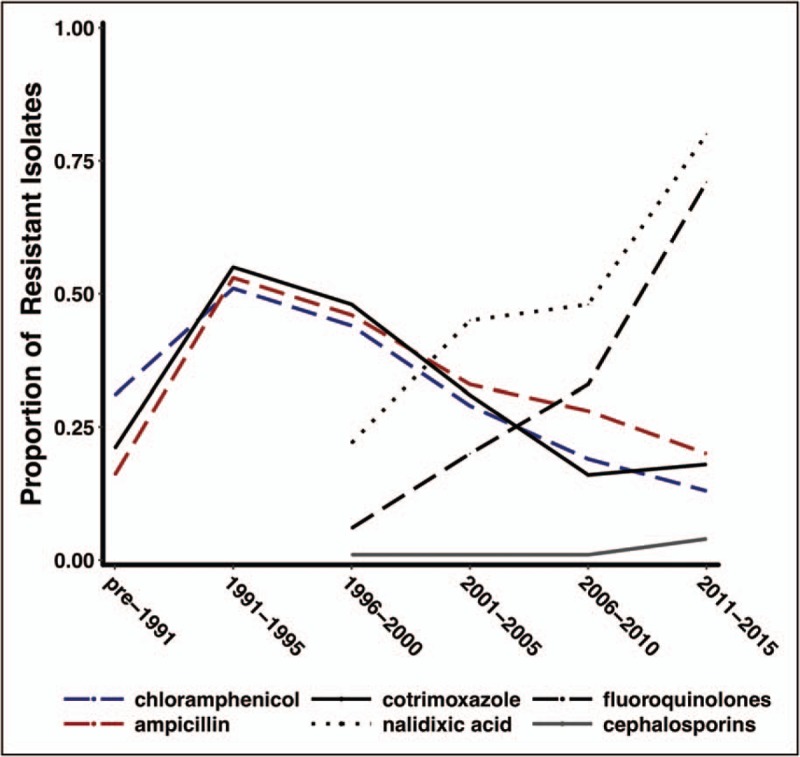
Recent findings: The diagnosis of enteric fever is complicated by its nonspecific clinical presentation, coupled with the low sensitivity of commonly used diagnostics. Investment in diagnostics has the potential to improve management, to refine estimates of disease burden and to facilitate vaccine impact studies. A new generation of reliable, diagnostic tests is needed that are simultaneously accessible, cost-effective, sensitive, and specific. The emergence and global dissemination of multidrug-resistant, fluoroquinolone-resistant, and extensively drug-resistant (XDR) strains of Salmonella Typhi emphasizes the importance of continued surveillance and appropriate antibiotic stewardship, integrated into a global strategy to address antimicrobial resistance (AMR). Current empirical treatment guidelines are out of date and should be updated to respond to local trends in AMR, so as to guide treatment choices in the absence of robust diagnostics and laboratory facilities. In September 2017, the WHO Strategic Advisory Group of Experts (SAGE) immunization recommended the programmatic use of TCVs in high burden countries. Ongoing and future studies should aim to study the impact of these vaccines in a diverse range of setting and to support the deployment of TCVs in high-burden countries.
Summary: The advent of new generation TCVs offers us a practical and affordable public-health tool that - for the first time - can be integrated into routine childhood immunization programmes. In this review, we advocate for the deployment of TCVs in line with WHO recommendations, to improve child health and limit the spread of antibiotic-resistant S. Typhi.
Figures

References
-
- Parry CM, Hien TT, Dougan G, et al. Typhoid fever. N Engl J Med 2002; 347:1770–1782. - PubMed
-
- Dobinson HC, Gibani MM, Jones C, et al. Evaluation of the clinical and microbiological response to salmonella paratyphi a infection in the first paratyphoid human challenge model. Clin Infect Dis 2017; 64:1066–1073. - PMC - PubMed
-
Study describing the establishment of the first S. Paratyphi controlled human infection model, providing a platform for the future assessment of paratyphoid vaccines.
-
- Maskey AP, Day JN, Phung Quoc T, et al. Salmonella enterica serovar Paratyphi A and S. enterica serovar Typhi cause indistinguishable clinical syndromes in Kathmandu, Nepal. Clin Infect Dis 2006; 42:1247–1253. - PubMed
Publication types
MeSH terms
Substances
Grants and funding
LinkOut - more resources
Full Text Sources
Other Literature Sources
Research Materials
Miscellaneous
