


Symptom Map of Endocrine Therapy for Breast Cancer: A Scoping Review
- PMID: 30138143
- PMCID: PMC6935534
- DOI: 10.1097/NCC.0000000000000632
Symptom Map of Endocrine Therapy for Breast Cancer: A Scoping Review
Abstract
Background: Multiple symptoms associated with endocrine therapy have a detrimental impact on medication adherence and quality of life.
Objective: The purpose of this scoping review is to map the symptoms during endocrine therapy for breast cancer to provide implications for current practice and suggestions for future research.
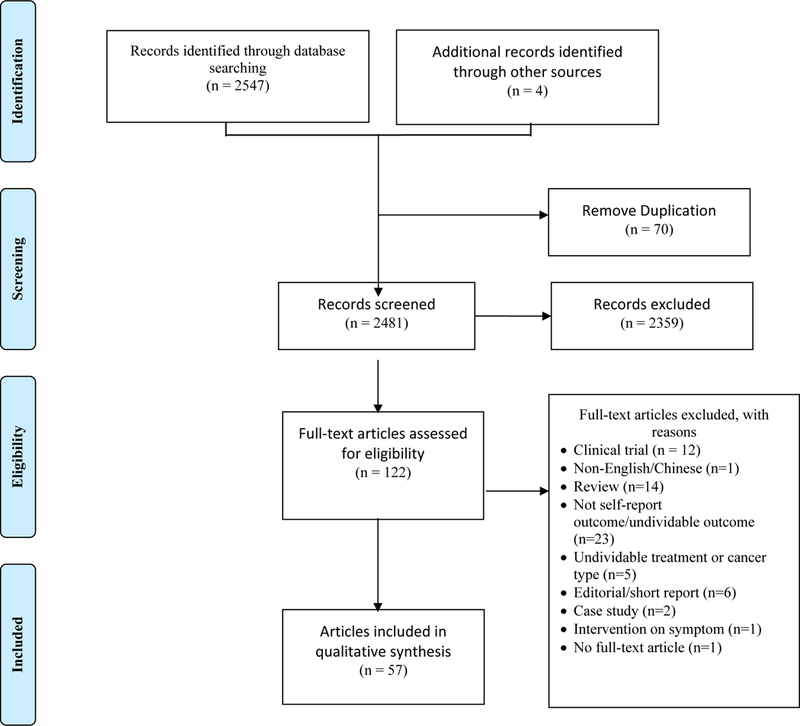
Methods: The PubMed, CINAHL, and China Science Periodical Databases were searched to identify related studies published in English and Chinese languages. References of included articles were reviewed for additional eligible studies. Of the 2551 articles identified, 57 articles met inclusion criteria and were included in this scoping review.
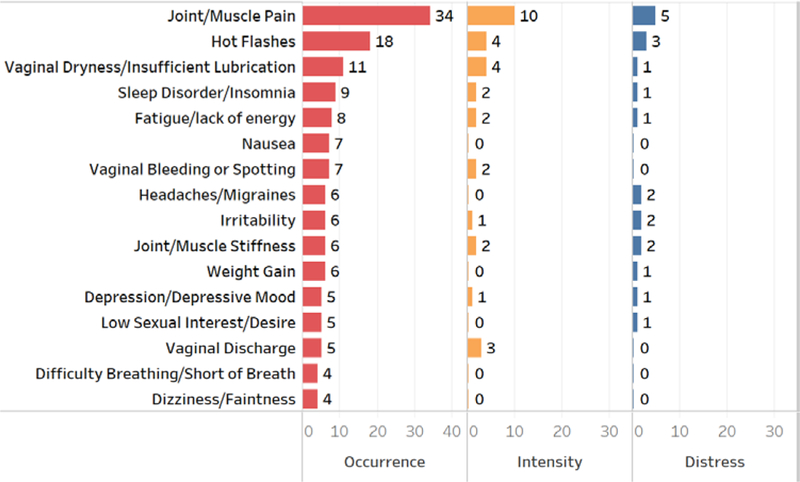
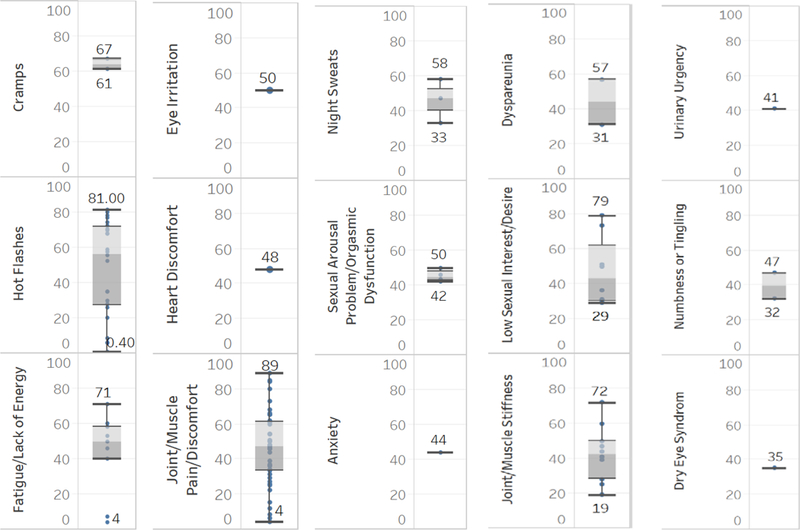
Results: Evidence for the 16 most studied symptoms and 15 most prevalent symptoms were synthesized. Five key symptoms associated with endocrine therapy were identified, including joint/muscle pain, hot flashes, low sexual interest/desire, joint/muscle stiffness, and fatigue/lack of energy. Rarely studied but highly prevalent symptoms and other gaps in the symptom science during endocrine therapy for breast cancer were identified.
Conclusion: Nurses caring for women receiving endocrine therapy for breast cancer should assess the 5 key symptoms identified. There remain substantial gaps in the science related to the symptom experience during endocrine therapy for breast cancer. Future studies should focus on the domains of symptom intensity and distress, specific understudied symptoms, symptom clusters, and development of symptom assessment instruments specific to symptoms associated with endocrine therapy.
Implications for practice: This scoping review identified 5 well-studied and highly prevalent symptoms that should be assessed in women with breast cancer receiving endocrine therapy.
Figures
References
-
- Siegel RL, Miller KD, Jemal A. Cancer statistics, 2017. CA Cancer J Clin. 2017;67(1): 7–30. - PubMed
-
- Chen W, Zheng R, Baade PD, et al. Cancer statistics in China, 2015. CA Cancer J Clin. 2016;66(2):115–132. - PubMed
-
- Early Breast Cancer Trialists’ Collaborative Group. Effects of chemotherapy and hormonal therapy for early breast cancer on recurrence and 15-year survival: an overview of the randomised trials. Lancet. 2005;365(9472):1687–1717. - PubMed
-
- Romera JL, Hernández TD, Fernández IP, et al. Update on adjuvant hormonal treatment of early breast cancer. Adv Ther. 2011;28(S6):1–18. - PubMed
Publication types
MeSH terms
Grants and funding
LinkOut - more resources
Full Text Sources
Other Literature Sources
Medical
Miscellaneous
