. 2018 Nov;20(6):822-835.
doi: 10.1016/j.jmoldx.2018.06.007. Epub 2018 Aug 21.

Analytical Validation of Clinical Whole-Genome and Transcriptome Sequencing of Patient-Derived Tumors for Reporting Targetable Variants in Cancer

Affiliations

Analytical Validation of Clinical Whole-Genome and Transcriptome Sequencing of Patient-Derived Tumors for Reporting Targetable Variants in Cancer

Kazimierz O Wrzeszczynski et al. J Mol Diagn. 2018 Nov.

Abstract

We developed and validated a clinical whole-genome and transcriptome sequencing (WGTS) assay that provides a comprehensive genomic profile of a patient's tumor. The ability to fully capture the mappable genome with sufficient sequencing coverage to precisely call DNA somatic single nucleotide variants, insertions/deletions, copy number variants, structural variants, and RNA gene fusions was analyzed. New York State's Department of Health next-generation DNA sequencing guidelines were expanded for establishing performance validation applicable to whole-genome and transcriptome sequencing. Whole-genome sequencing laboratory protocols were validated for the Illumina HiSeq X Ten platform and RNA sequencing for Illumina HiSeq2500 platform for fresh or frozen and formalin-fixed, paraffin-embedded tumor samples. Various bioinformatics tools were also tested, and CIs for sensitivity and specificity thresholds in calling clinically significant somatic aberrations were determined. The validation was performed on a set of 125 tumor normal pairs. RNA sequencing was performed to call fusions and to confirm the DNA variants or exonic alterations. Here, we present our results and WGTS standards for variant allele frequency, reproducibility, analytical sensitivity, and present limit of detection analysis for single nucleotide variant calling, copy number identification, and structural variants. We show that The New York Genome Center WGTS clinical assay can provide a comprehensive patient variant discovery approach suitable for directed oncologic therapeutic applications.


Figures

Figure 1
Figure 1
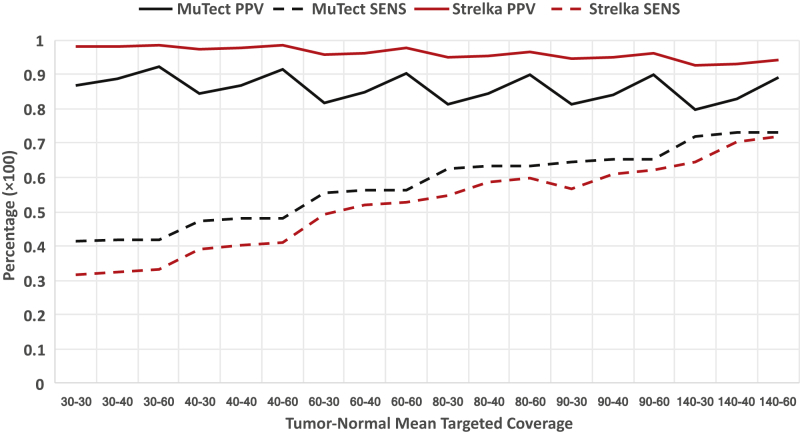
Positive predictive value (PPV) and sensitivity (SENS) for tumor/normal sequencing depth. Virtual tumor experiment PPV (solid line) and SENS (dotted line) percentages for single nucleotide variant callers MuTect (version 1.1.7) (black lines) and Strelka (version 1.0.14) (red lines) over a range of tumor/normal sequencing coverage. PPV increases with increased normal sequencing depth. SENS increases with increased tumor sequencing depth.
Figure 2
Figure 2
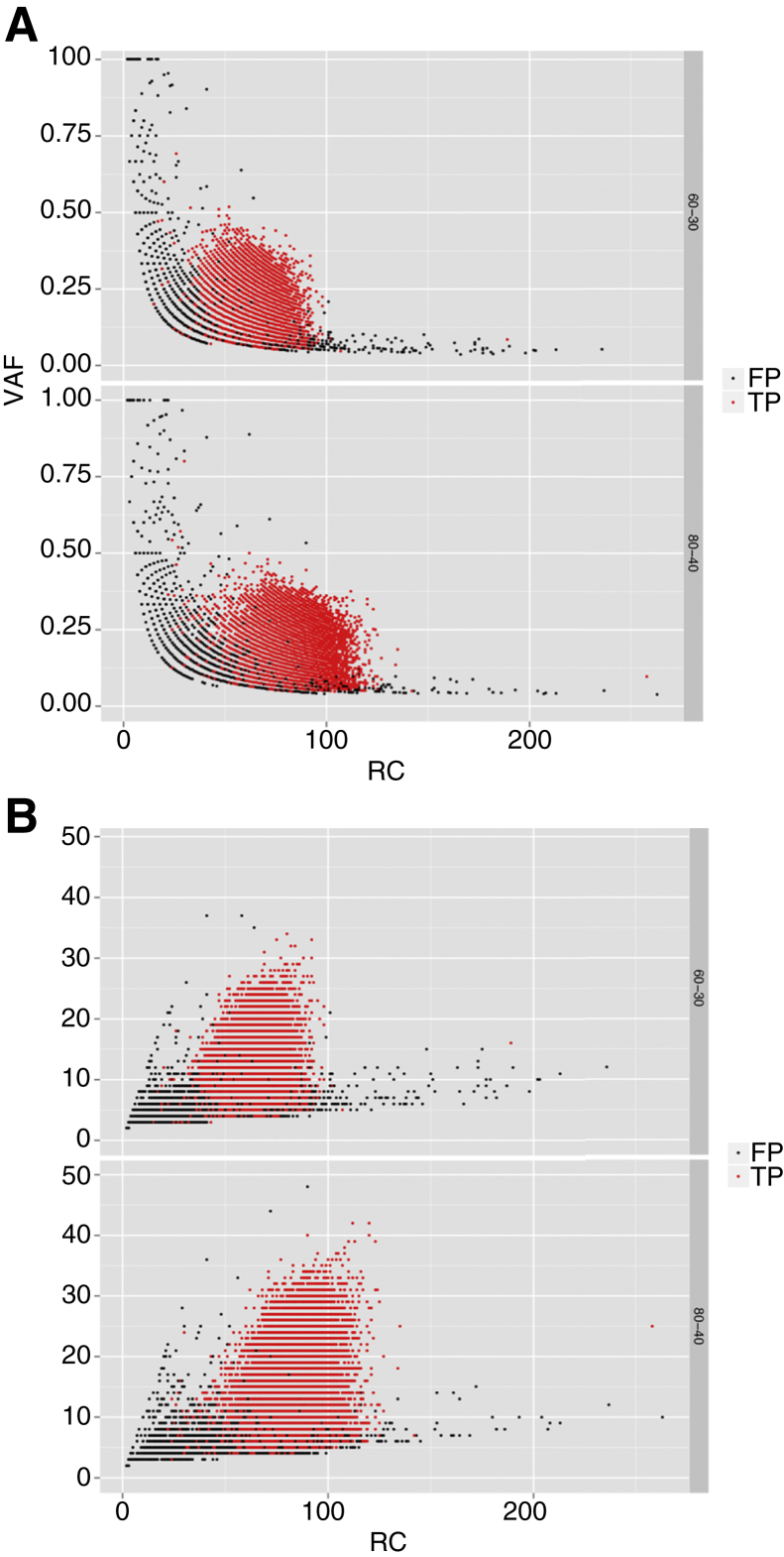
Virtual tumor variant allele frequency (VAF) and alternate allele read count versus read count (RC). A: VAF of true positive (TP; red dots) and false positive (FP; black dots) calls made by MuTect versus total RC at tumor/normal coverage (60×:30×, 80×:40×). B: Alternate allele read count of TP (red dots) and FP (black dots) calls made by MuTect (B) versus total RC at tumor/normal coverage (60×:30×, 80×:40×).
Figure 3
Figure 3
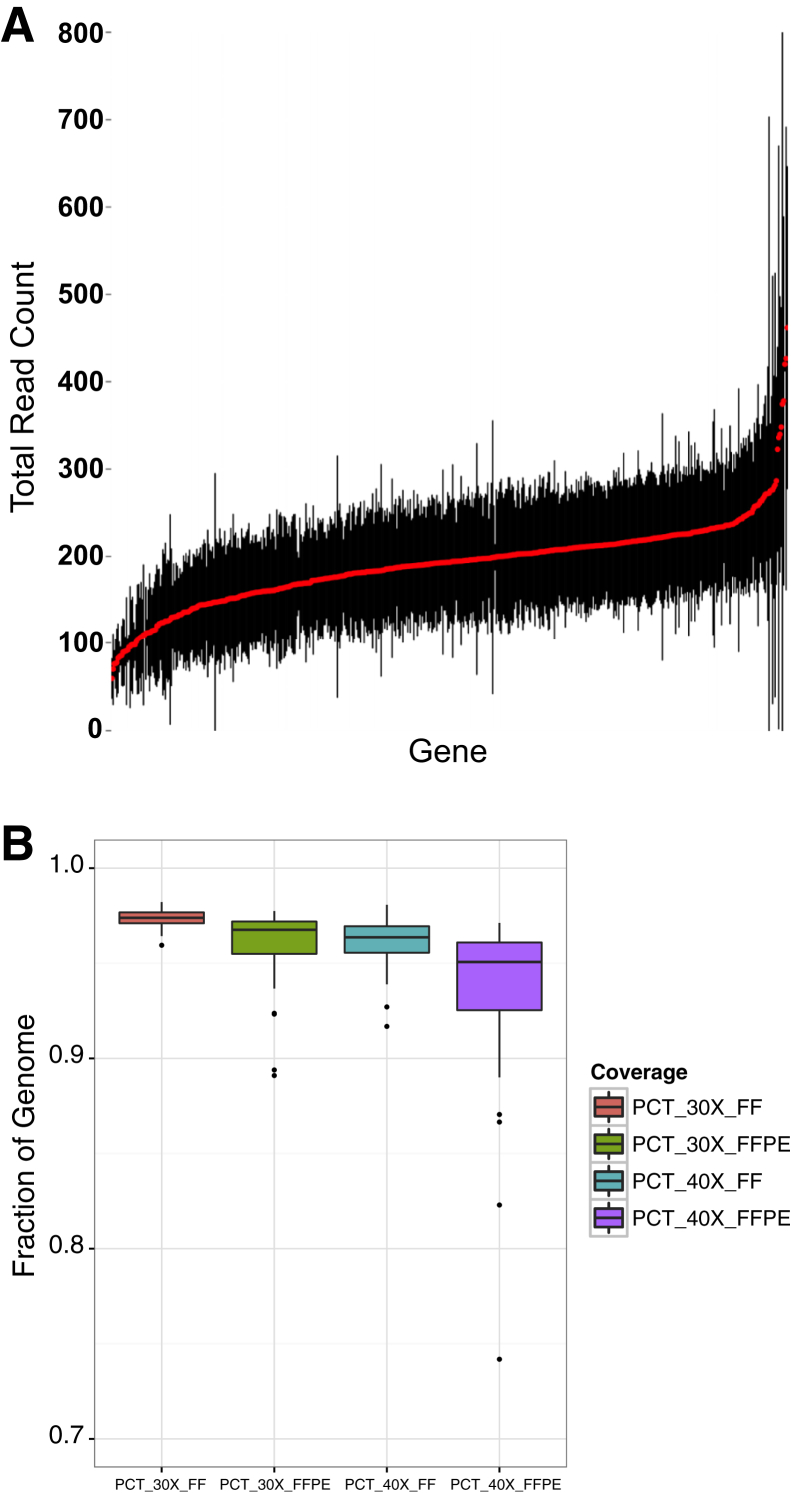
Whole-genome sequencing coverage. A: Representation of the coverage (mean and SD) for all variants in cancer census genes based on our validation sample data. Red filled circles indicate mean coverage of genes in our validation sample set. Black lines indicate SD limits from mean. Mean coverage per gene when targeting 80× is shown. B: Percentage of genome sequencing coverage for all 64 samples at 30× read depth (PCT_30X) and 40× read depth (PCT_40X). FF, fresh or frozen; FFPE, formalin-fixed, paraffin-embedded.
Figure 4
Figure 4
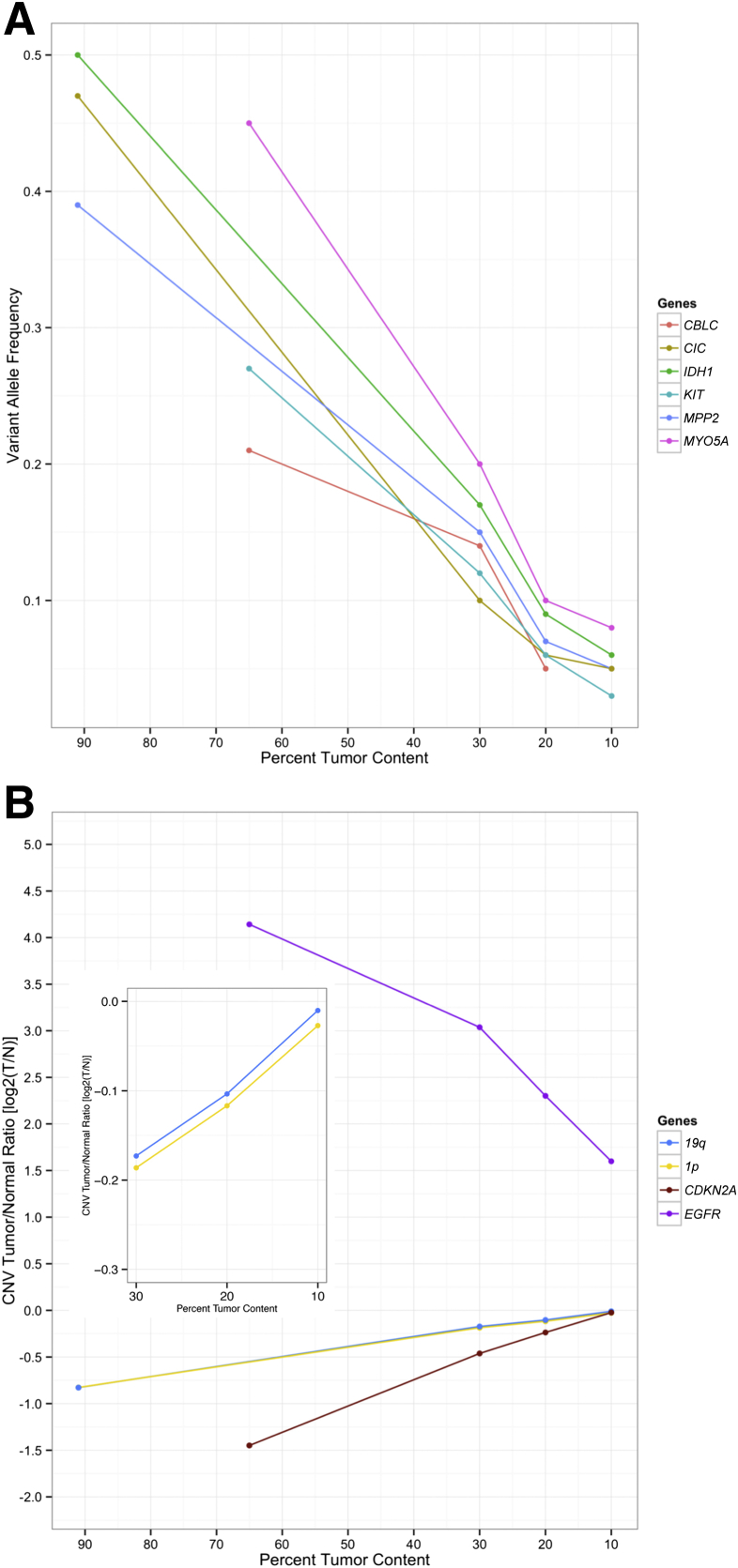
Limit of detection. A and B: Selected sample-specific variants of single nucleotide variant (SNV) and insertion/deletion (indel) (A) and copy number variant (CNV) (B) at 30%, 20%, and 10% tumor content in two samples, respectively. A: Variant allele frequencies in two samples [frozen and formalin-fixed, paraffin-embedded (FFPE)] with original tumor content of 91% and 65%, respectively, are shown with decreasing tumor content. B: Copy number log2(tumor/normal; T/N) of one focal amplification (EGFR, FFPE sample) and three deletions [two whole arm (1p, 19q, frozen sample) and one focal deletion (CDKN2A, FFPE sample)]. Inset shows 19q and 1p CNV log2(T/N) values at 30% to 10% tumor content for better resolution.
Figure 5
Figure 5
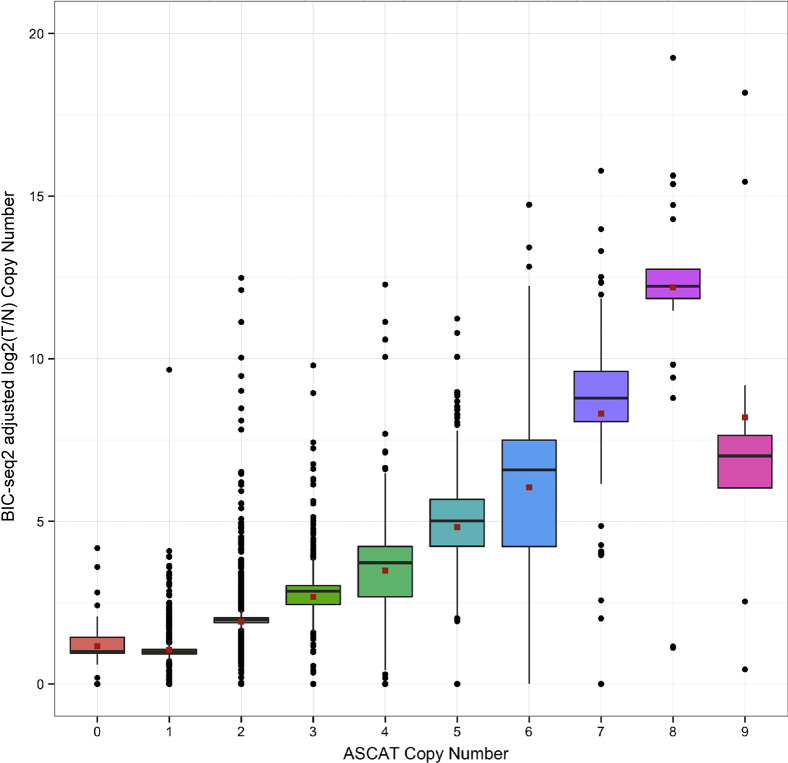
DNA whole-genome sequencing (WGS) copy number correlation to genotyping chip copy number. The correlation of allele-specific copy number analysis of tumors (ASCAT) discrete copy number per gene to copy number per gene identified by DNA WGS is shown for 40 samples with tumor purity of 30%. The red squares represent the mean values in the distributions. The correlation of the mean values was r = 0.89, with total correlation at r = 0.70. The plot is shown with a y axis range limited to 0,30 copy number. T/N, tumor/normal.
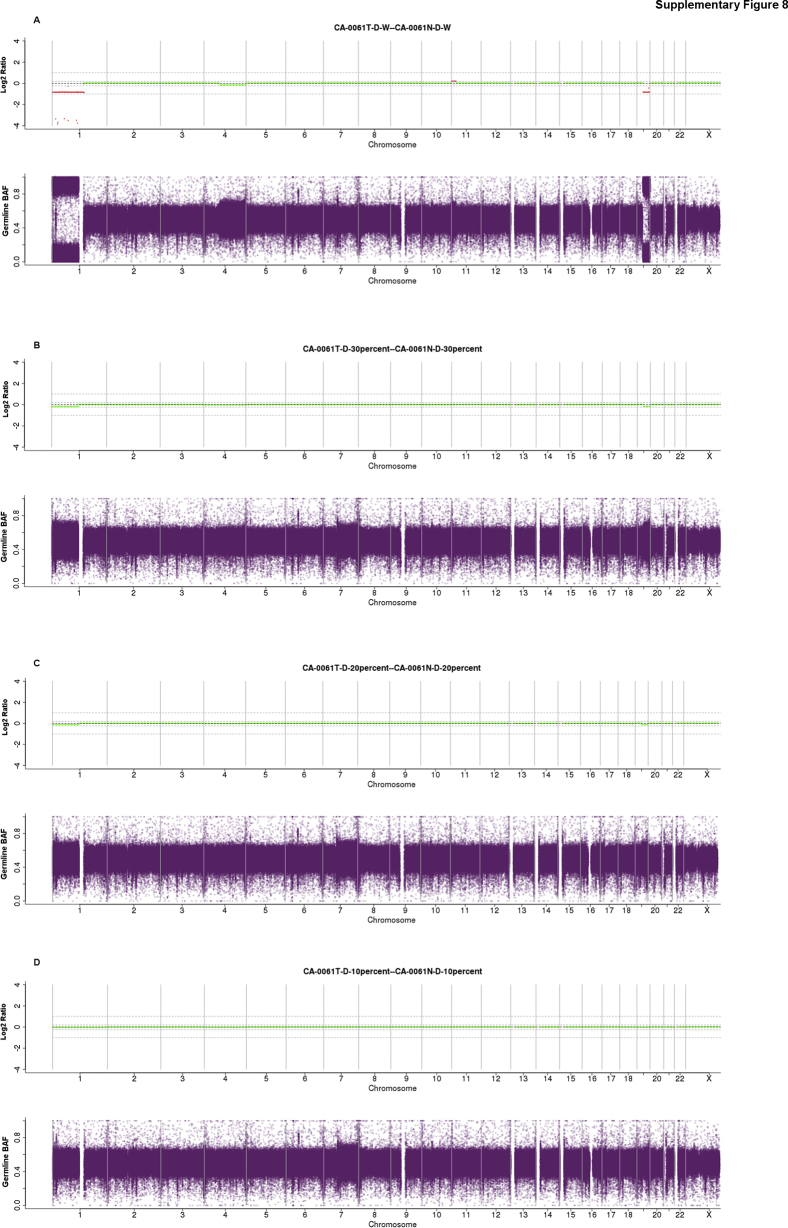
Supplemental Figure S8
Copy number and B-allele frequency plots for tumor sample dilutions (frozen sample, CA-0061T). The frozen sample CA-0061 was diluted three times with its corresponding normal genomic DNA. Copy number log2 (tumor/normal; T/N) ratio and B-allele frequency across the genome are represented as called by NBIC-Seq for the original and dilution samples. A: Original tissue sample (90% tumor purity). B: Dilutions to 30% to 25% tumor content. C: 20% tumor content. D: 10% tumor content.
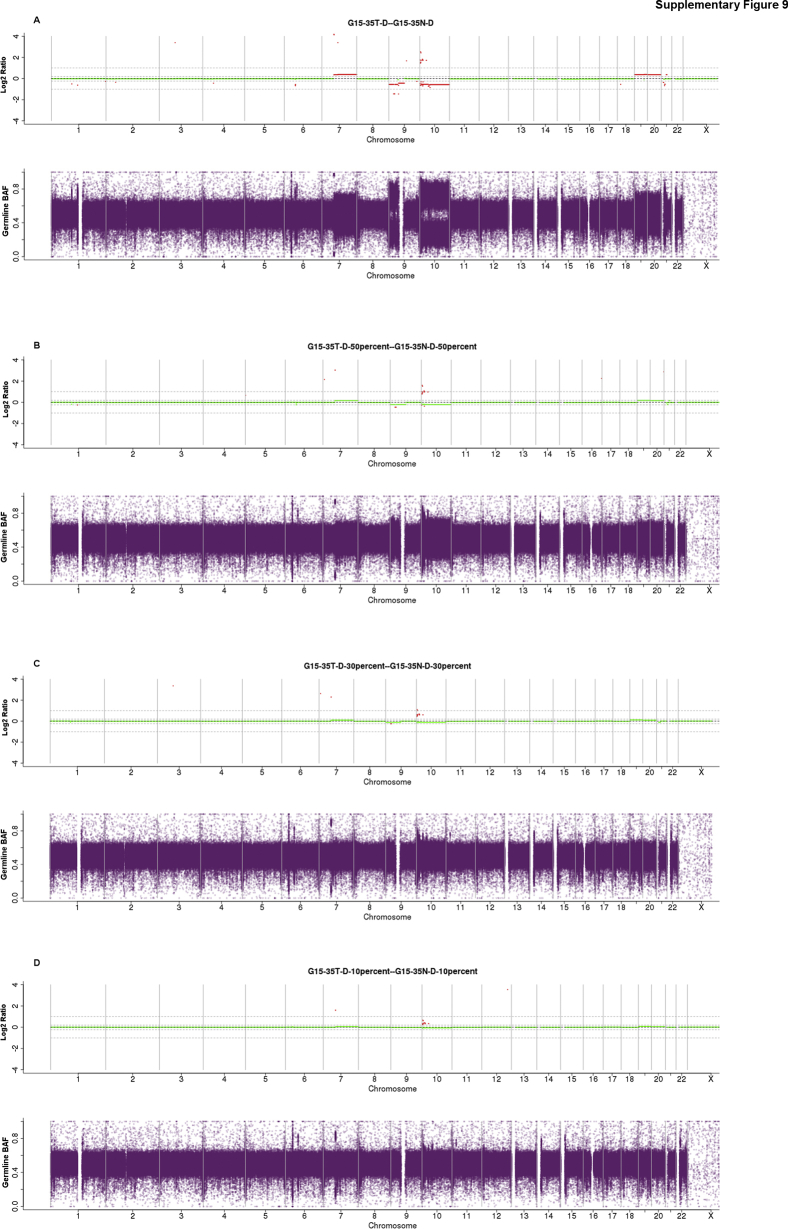
Supplemental Figure S9
Copy number and B-allele frequency plots for tumor sample dilutions (formalin-fixed, paraffin-embedded sample, G15-31T). The formalin-fixed, paraffin-embedded G15-35T was diluted three times with its corresponding normal genomic DNA. Copy number log2 (tumor/normal; T/N) ratio and B-allele frequency across the genome are represented as called by NBIC-Seq for the original and dilution samples. A: Original tissue sample (60% to 65% tumor purity). B: Dilutions to 30% tumor content. C: 20% to 15% tumor content. D: 10% tumor content.
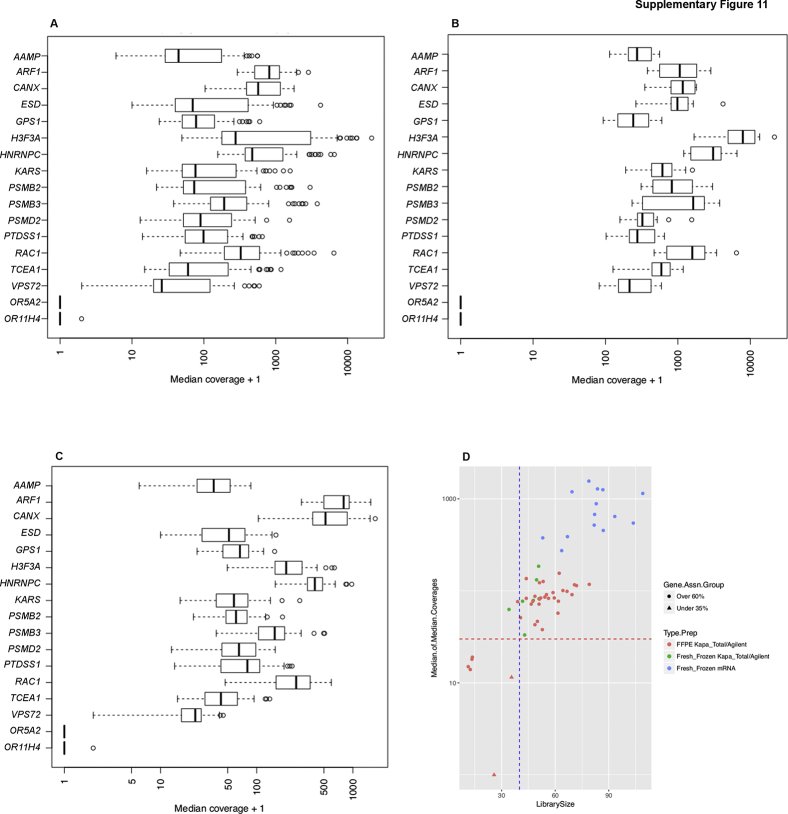
Supplemental Figure S11
RNA sequencing coverage. A: Median coverage of 15 housekeeping genes plus two olfactory genes (ORA5A2 and OR11H4) used as control in all samples. B: Median coverage of 15 housekeeping genes from mRNA-prepared libraries. C: Median coverage of 15 housekeeping genes from total RNA-prepared libraries. Libraries prepared from mRNA samples exhibit greater coverage than libraries prepared from total RNA samples. D: A minimum library size of 40 million reads (vertical blue line) provides minimum median coverage of 30 reads for the housekeeping genes (horizontal red line), independent of input sample type.

References

    1. AACR Project GENIE Consortium AACR Project GENIE: powering precision medicine through an international consortium. Cancer Discov. 2017;7:818–831. - PMC - PubMed
    1. Massard C., Michiels S., Ferte C., Le Deley M.C., Lacroix L., Hollebecque A., Verlingue L., Ileana E., Rosellini S., Ammari S., Ngo-Camus M., Bahleda R., Gazzah A., Varga A., Postel-Vinay S., Loriot Y., Even C., Breuskin I., Auger N., Job B., De Baere T., Deschamps F., Vielh P., Scoazec J.Y., Lazar V., Richon C., Ribrag V., Deutsch E., Angevin E., Vassal G., Eggermont A., Andre F., Soria J.C. High-throughput genomics and clinical outcome in hard-to-treat advanced cancers: results of the MOSCATO 01 trial. Cancer Discov. 2017;7:586–595. - PubMed
    1. Zehir A., Benayed R., Shah R.H., Syed A., Middha S., Kim H.R. Mutational landscape of metastatic cancer revealed from prospective clinical sequencing of 10,000 patients. Nat Med. 2017;23:703–713. - PMC - PubMed
    1. Coyne G.O., Takebe N., Chen A.P. Defining precision: the precision medicine initiative trials NCI-MPACT and NCI-MATCH. Curr Probl Cancer. 2017;41:182–193. - PubMed
    1. Simon R., Roychowdhury S. Implementing personalized cancer genomics in clinical trials. Nat Rev Drug Discov. 2013;12:358–369. - PubMed

Publication types