


Hypoxia and Fatigue Impair Rapid Torque Development of Knee Extensors in Elite Alpine Skiers
- PMID: 30140231
- PMCID: PMC6094991
- DOI: 10.3389/fphys.2018.00962
Hypoxia and Fatigue Impair Rapid Torque Development of Knee Extensors in Elite Alpine Skiers
Abstract
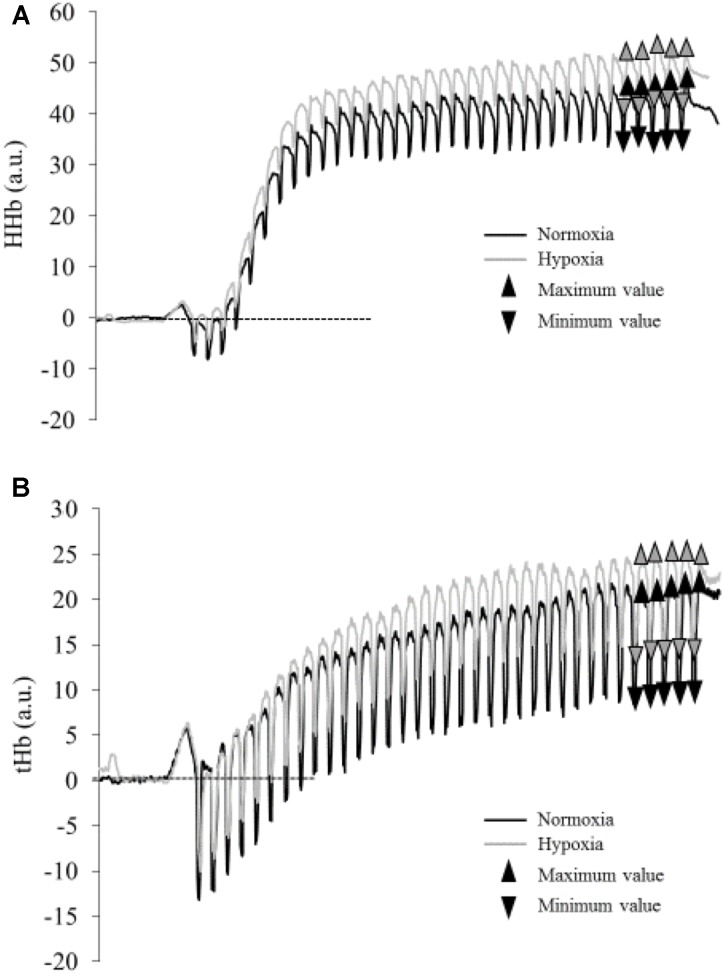
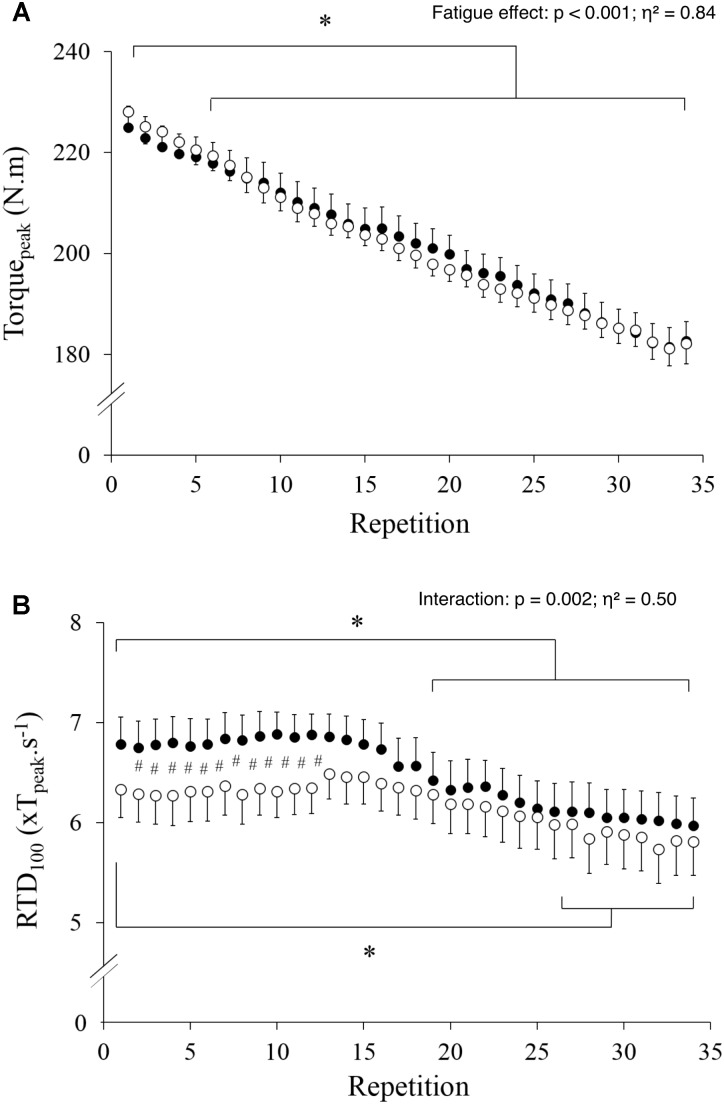
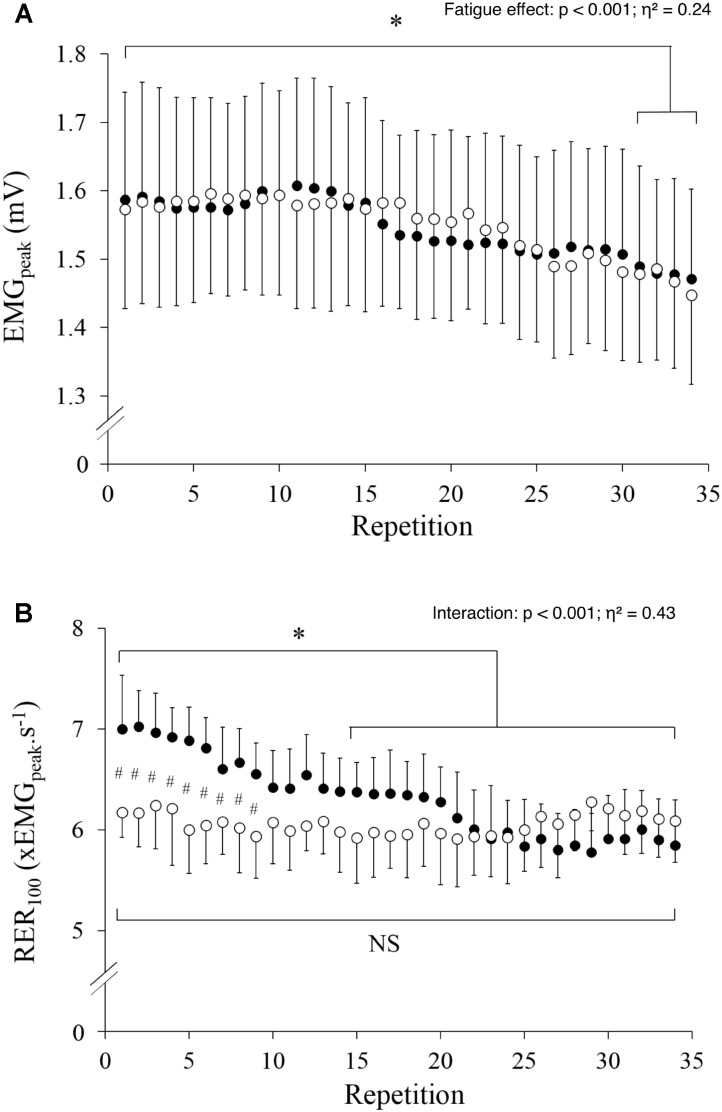
This study examined the effects of acute hypoxia on maximal and explosive torque and fatigability in knee extensors of skiers. Twenty-two elite male alpine skiers performed 35 maximal, repeated isokinetic knee extensions at 180°s-1 (total exercise duration 61.25 s) in normoxia (NOR, FiO2 0.21) and normobaric hypoxia (HYP, FiO2 0.13) in a randomized, single-blind design. Peak torque and rate of torque development (RTD) from 0 to 100 ms and associated Vastus Lateralis peak EMG activity and rate of EMG rise (RER) were determined for each contraction. Relative changes in deoxyhemoglobin concentration of the VL muscle were monitored by near-infrared spectroscopy. Peak torque and peak EMG activity did not differ between conditions and decreased similarly with fatigue (p < 0.001), with peak torque decreasing continuously but EMG activity decreasing significantly after 30 contractions only. Compared to NOR, RTD, and RER values were lower in HYP during the first 12 and 9 contractions, respectively (both p < 0.05). Deoxyhemoglobin concentration during the last five contractions was higher in HYP than NOR (p = 0.050) but the delta between maximal and minimal deoxyhemoglobin for each contraction was similar in HYP and NOR suggesting a similar muscle O2 utilization. Post-exercise heart rate (138 ± 24 bpm) and blood lactate concentration (5.8 ± 3.1 mmol.l-1) did not differ between conditions. Arterial oxygen saturation was significantly lower (84 ± 4 vs. 98 ± 1%, p < 0.001) and ratings of perceived exertion higher (6 ± 1 vs. 5 ± 1, p < 0.001) in HYP than NOR. In summary, hypoxia limits RTD via a decrease in neural drive in elite alpine skiers undertaking maximal repeated isokinetic knee extensions, but the effect of hypoxic exposure is negated as fatigue develops. Isokinetic testing protocols for elite alpine skiers should incorporate RTD and RER measurements as they display a higher sensitivity than peak torque and EMG activity.
Keywords: isokinetic; maximal torque production; near-infrared spectroscopy; neural drive; repeated knee extensions; simulated altitude.
Figures
References
-
- Abe T., Kawakami Y., Ikegawa S., Kanehisa H., Fukunaga T. (1992). Isometric and isokinetic knee joint performance in Japanese alpine ski racers. J. Sports Med. Phys. Fitness 32 353–357. - PubMed
-
- Akutsu T., Kiryu T., Ushiyama Y., Murayama T. (2008). Evaluation of functional activities during skiing exercise by knee joint angles and surface EMG signals. Trans. Soc. Instrum. Control Eng. 44 905–910. 10.9746/ve.sicetr1965.44.905 - DOI
LinkOut - more resources
Full Text Sources
Other Literature Sources
