


Current Management of Pancreatic Neuroendocrine Tumors: From Demolitive Surgery to Observation
- PMID: 30140282
- PMCID: PMC6081603
- DOI: 10.1155/2018/9647247
Current Management of Pancreatic Neuroendocrine Tumors: From Demolitive Surgery to Observation
Abstract
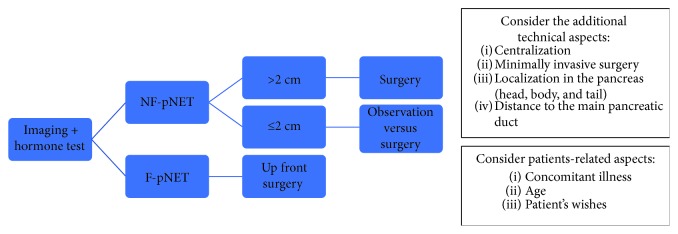
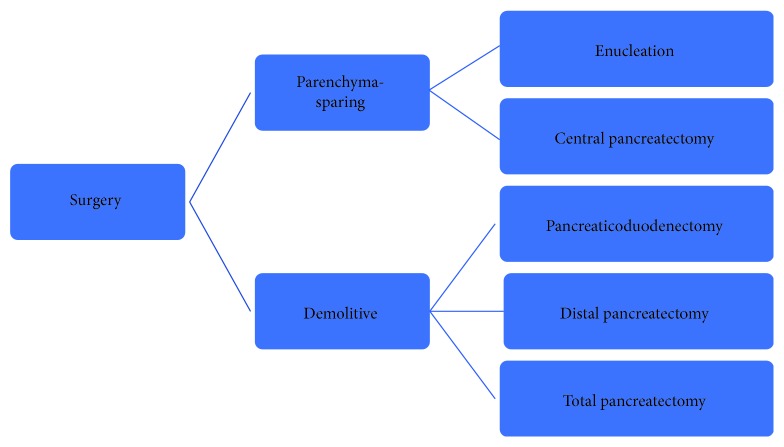
Incidental diagnosis of pancreatic neuroendocrine tumors (PanNETs) greatly increased in the last years. In particular, more frequent diagnosis of small PanNETs leads to many challenging clinical decisions. These tumors are mostly indolent, although a percentage (up to 39%) may reveal an aggressive behaviour despite the small size. Therefore, there is still no unanimity about the best management of tumor smaller than 2 cm. The risks of under/overtreatment should be carefully evaluated with the patient and balanced with the potential morbidities related to surgery. The importance of the Ki-67 index as a prognostic factor is still debated as well. Whenever technically feasible, parenchyma-sparing surgeries lead to the best chance of organ preservation. Lymphadenectomy seems to be another important prognostic issue and, according to recent findings, should be performed in noninsulinoma patients. In the case of enucleation of the lesion, a lymph nodal sampling should always be considered. The relatively recent introduction of minimally invasive techniques (robotic) is a valuable option to deal with these tumors. The current management of PanNETs is analysed throughout the many available published guidelines and evidences with the aim of helping clinicians in the difficult decision-making process.
Figures
References
Publication types
LinkOut - more resources
Full Text Sources
Other Literature Sources
