


Robot-assisted radical cystectomy with intracorporeal urinary diversion - The new 'gold standard'? Evidence from a systematic review
- PMID: 30140466
- PMCID: PMC6104669
- DOI: 10.1016/j.aju.2018.01.006
Robot-assisted radical cystectomy with intracorporeal urinary diversion - The new 'gold standard'? Evidence from a systematic review
Abstract
Objective: To investigate whether a totally intracorporeally radical cystectomy (RC) can be considered the new 'gold standard' in bladder cancer, as open RC (ORC) is the current 'gold standard' for surgical treatment of muscle-invasive and high-grade non-muscle-invasive bladder cancer. However, robot-assisted radical cystectomy (RARC) is becoming the preferred surgical approach in many centres as it seems to maintain the oncological control of open surgery whilst offering improved perioperative benefits.
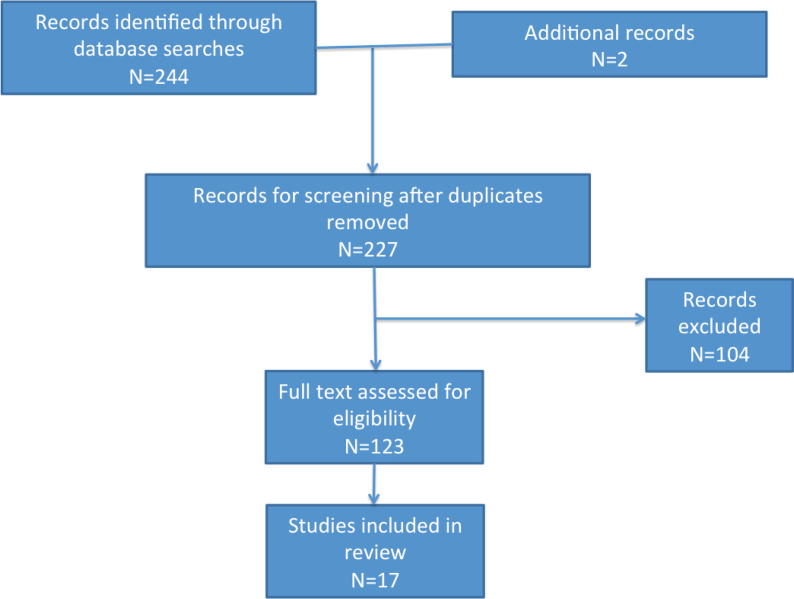
Materials and methods: A review of the literature was conducted using the Pubmed/MEDLINE, ISI Web of Knowledge and Cochrane Databases to identify studies that included both ORC and RARC with intracorporeal and extracorporeal urinary diversion (UD) published up to July 2017.
Results: Evidence from four single-centre randomised controlled trials and now the multicentre Randomized Trial of Open versus Robotic Cystectomy (RAZOR) trial demonstrate the oncological equivalence of RARC to ORC. The only convincing evidence for the superiority of RARC is in the area of blood loss and transfusion rates. However, the UD procedure in these trials was performed extracorporeally and, to realise the full benefits of RARC, a totally intracorporeal approach is needed. Intracorporeal UDs (ICUDs) have been shown to be technically feasible by a few expert centres and have demonstrated some improved short-term perioperative outcomes compared to extracorporeal UDs.
Conclusions: Although initial outcomes appear promising, RARC with ICUD is far from gaining 'gold standard' status. Further studies are needed to confirm that outcomes are reproducible widely. Furthermore, the benefits of a totally intracorporeal approach must be confirmed in randomised controlled trials.
Keywords: (EC)(IC)UD, (extracorporeal) (intracorporeal)urinary diversion; (N)MIBC, (non-) muscle-invasive bladder cancer; (O)(RA)RC, (open) (robot-assisted)radical cystectomy; Bladder cancer; EORTC, European Organisation for the Research and Treatment of Cancer; Extracorporeal urinary diversion; HR, hazard ratio; HRQOL, health-related quality of life; Intracorporeal urinary diversion; LOS, length of stay; RAZOR, Randomized Trial of Open versus Robotic Cystectomy; RCT, randomised controlled trial; Radical cystectomy; Robotics.
References
-
- Shabsigh A., Korets R., Vora K.C., Brooks C.M., Cronin A.M., Savage C. Defining early morbidity of radical cystectomy for patients with bladder cancer using a standardized reporting methodology. Eur Urol. 2009;55:164–174. - PubMed
-
- Hu J.C., Chugtai B., O’Malley P., Halpern J.A., Mao J., Scherr D.S. Perioperative outcomes, health care costs and survival after robotic-assisted versus open radical cystectomy: a national comparative effectiveness study. Eur Urol. 2016;70:195–202. - PubMed
-
- Collins J.W., Wiklund N.P. Totally intracorporeal robot-assisted radical cystectomy: optimizing total outcomes. BJU Int. 2014;114:326–333. - PubMed
-
- Stein J.P., Lieskovsky G., Cote R., Groshen S., Feng A.C., Boyd S. Radical cystectomy in the treatment of invasive bladder cancer: long-term results in 1,054 patients. J Clin Oncol. 2001;19:666–675. - PubMed
Publication types
LinkOut - more resources
Full Text Sources
Other Literature Sources
