


Level of Compliance in Orthokeratology
- PMID: 30142103
- PMCID: PMC6116798
- DOI: 10.1097/ICL.0000000000000516
Level of Compliance in Orthokeratology
Abstract
Objectives: To investigate the level of compliance with orthokeratology (ortho-k) guidelines and the main behaviors of poor compliance to guide clinical care.
Methods: A questionnaire was sent to ortho-k patients in the Eye Hospital of Wenzhou Medical University (EHWMU) in Mainland China who were prescribed ortho-k lenses after January 2013 and have worn ortho-k lenses for more than 1 year to determine the compliance rate for eight wear and care behaviors. Follow-up visit compliance was then investigated among these patients using a retrospective survey.
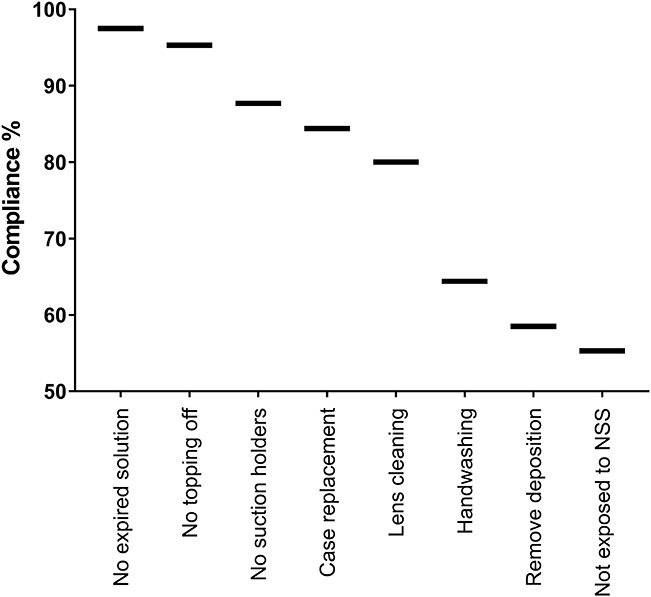
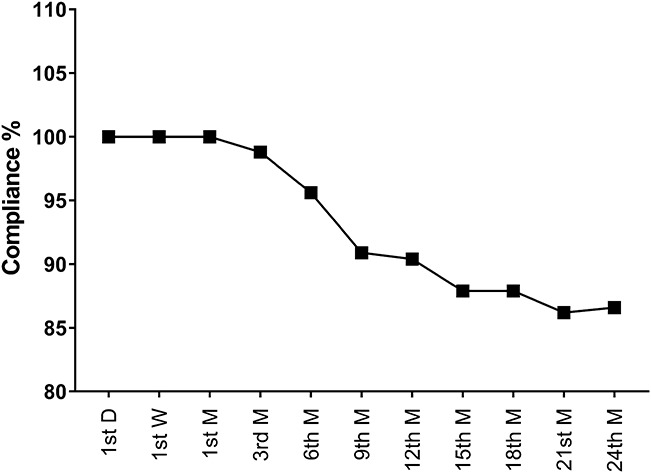
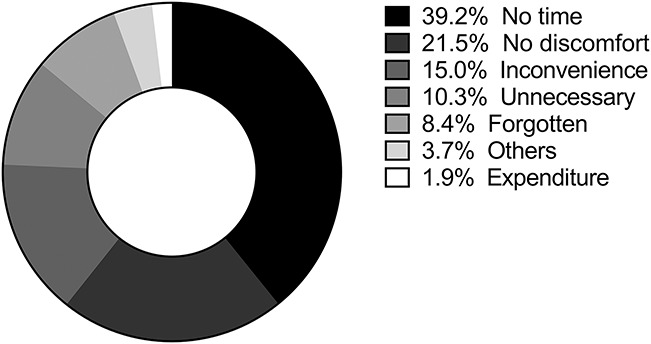
Results: A total of 1,500 questionnaires were distributed, and 405 patients responded. The mean age of the patients was 13.1±3.9 years (range 9-22 years); 60.5% of the patients were female, and 98.3% were younger than 18 years. The full compliance rate was 14.1%, the compliance rate for wear and care behaviors was 18.5%, and the compliance rate for follow-up visits was 63.3%. The three highest noncompliance categories for wear and care behaviors were exposure to nonsterile solution, not removing lens depositions according to the eye care practitioners' (ECPs) recommendations and inadequate hand washing. No correlation was observed between the compliance for wear and care behaviors and age, sex, and wearing experience. The follow-up visit compliance rate significantly decreased from the third month to the ninth month. The common reasons for discontinuing follow-up were lack of time, no symptoms, and inconvenience.
Conclusions: The level of compliance with ortho-k lens wear in Mainland China is not high, necessitating ECPs to stress to patients the details of wear and care behaviors, especially avoiding exposing lenses to nonsterile solution. Improving monitoring of follow-up visits, particularly within the first 9 months of wearing ortho-k lenses, is needed.
Conflict of interest statement
The authors have no funding or conflicts of interest to disclose.
Figures
References
-
- Hiraoka T, Kakita T, Okamoto F, et al. Long-term effect of overnight orthokeratology on axial length elongation in childhood myopia: A 5-year follow-up study. Invest Ophthalmol Vis Sci 2012;53:3913–3919. - PubMed
-
- Xie P, Guo X. Chinese experiences on orthokeratology. Eye Contact Lens 2016;42:43–47. - PubMed
MeSH terms
Substances
LinkOut - more resources
Full Text Sources
Other Literature Sources
Medical
