


Noninvasive pulmonary nodule characterization using transcutaneous bioconductance: Preliminary results of an observational study
- PMID: 30142805
- PMCID: PMC6113006
- DOI: 10.1097/MD.0000000000011924
Noninvasive pulmonary nodule characterization using transcutaneous bioconductance: Preliminary results of an observational study
Erratum in
-
Noninvasive pulmonary nodule characterization using transcutaneous bioconductance: Preliminary results of an observational study: Erratum.Medicine (Baltimore). 2019 Nov;98(45):e17972. doi: 10.1097/MD.0000000000017972. Medicine (Baltimore). 2019. PMID: 31702686 Free PMC article. No abstract available.
Abstract
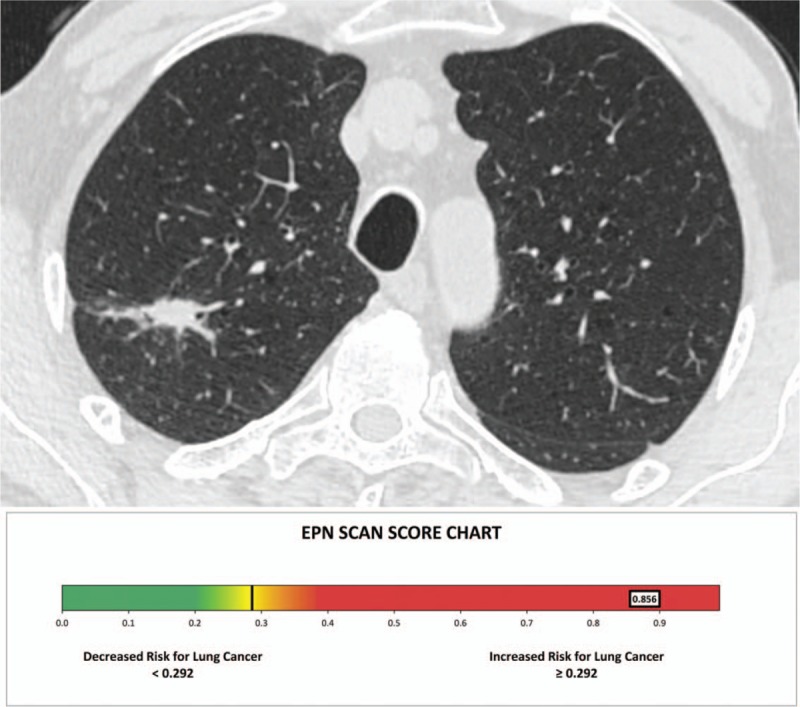
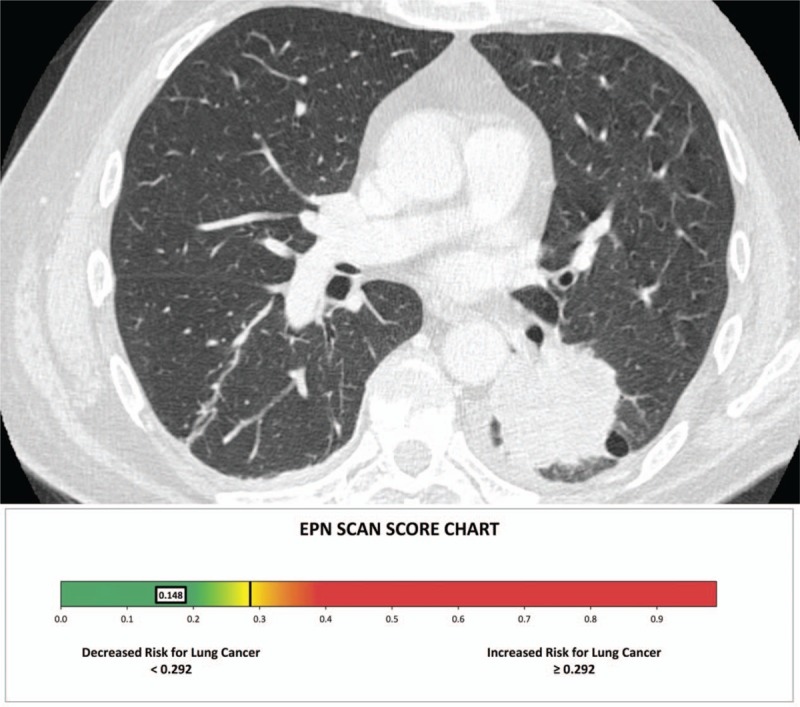
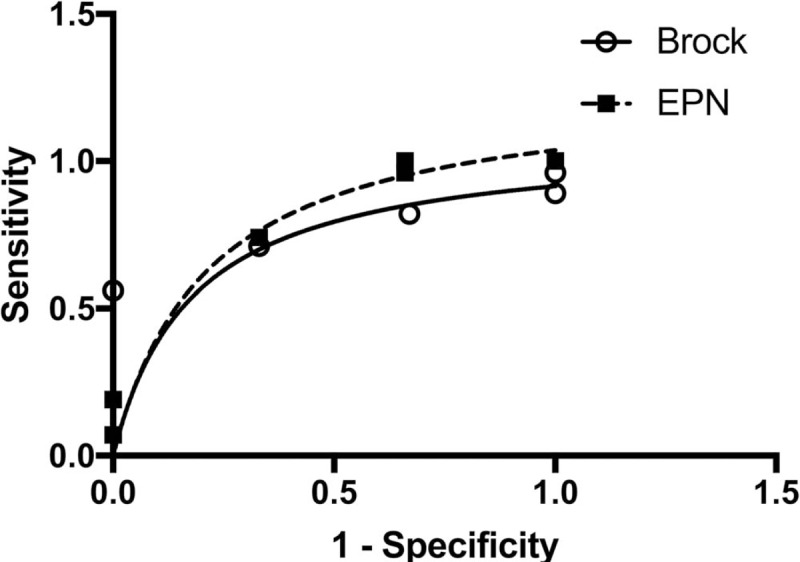
We sought to assess the use of an electro pulmonary nodule (EPN) scanner (FreshMedx, Salt Lake City, UT) in the noninvasive characterization of pulmonary nodules using transcutaneous bioconductance.Monocentric prospective study including patients with a pulmonary nodule identified on a chest computed tomography scan. Study protocol approved by the institutional review board and written consent was obtained for every patient. 32 patients (12 females and 20 males), average age 65 years, and average lesion size 33.1 mm (range: 9-123 mm). Data collection by a trained physician, 62 skin surface measurements on the chest, arms, and hands bilaterally. Results were anonymized and mailed to a central data center for analysis and compared to histopathology.Pathology results obtained by percutaneous biopsy (n = 14), surgical biopsy (n = 1), or surgical resection (n = 17) showed 29 malignant lesions (adenocarcinoma n = 21, squamous cell carcinoma n = 5, typical carcinoid n = 1, metastasis n = 2), and 3 benign lesions (necrotic granuloma n = 1, no malignant cells on biopsy n = 2). EPN scanner results had a specificity of 66.67% (95% confidence interval [CI] 0.09-0.99), sensitivity 72.41% (95% CI 0.53-0.87), positive predictive value 95.45% (95% CI 0.81-0.99), and a negative predictive value 20.00% (95% CI 0.08-0.40).This pilot study showed a high positive predictive value of the EPN scanner, allowing aggressive management of lung nodules characterized as malignant. The low negative predictive value warrants further investigation of nodules that are characterized as benign.
Conflict of interest statement
The authors have no funding and conflicts of interest to disclose.
Figures
References
-
- Centers for Disease Control and Prevention: http://www.cdc.gov/cancer/international/statistics.htm.
-
- Bartholmai BJ, Koo CW, Johnson GB, et al. Pulmonary nodule characterization, including computer analysis and quantitative features. J Thorac Imaging 2015;30:139–56. - PubMed
-
- Tammemagi MC, Schmidt H, Martel S, et al. Participant selection for lung cancer screening by risk modelling (the Pan-Canadian Early Detection of Lung Cancer [PanCan] study): a single-arm, prospective study. Lancet Oncol 2017;18:1523–31. - PubMed
-
- Blad B, Baldetorp B. Impedance spectra of tumour tissue in comparison with normal tissue; a possible clinical application for electrical impedance tomography. Physiol Meas 1996;17(Suppl 4A):A105–15. - PubMed
Publication types
MeSH terms
LinkOut - more resources
Full Text Sources
Other Literature Sources
