


Profiling DNA Methylation Based on Next-Generation Sequencing Approaches: New Insights and Clinical Applications
- PMID: 30142958
- PMCID: PMC6162482
- DOI: 10.3390/genes9090429
Profiling DNA Methylation Based on Next-Generation Sequencing Approaches: New Insights and Clinical Applications
Abstract
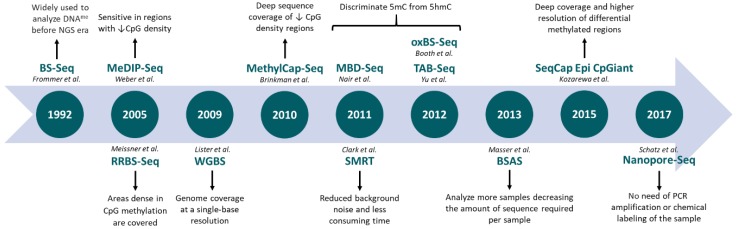
DNA methylation is an epigenetic modification that plays a pivotal role in regulating gene expression and, consequently, influences a wide variety of biological processes and diseases. The advances in next-generation sequencing technologies allow for genome-wide profiling of methyl marks both at a single-nucleotide and at a single-cell resolution. These profiling approaches vary in many aspects, such as DNA input, resolution, coverage, and bioinformatics analysis. Thus, the selection of the most feasible method according with the project's purpose requires in-depth knowledge of those techniques. Currently, high-throughput sequencing techniques are intensively used in epigenomics profiling, which ultimately aims to find novel biomarkers for detection, diagnosis prognosis, and prediction of response to therapy, as well as to discover new targets for personalized treatments. Here, we present, in brief, a portrayal of next-generation sequencing methodologies' evolution for profiling DNA methylation, highlighting its potential for translational medicine and presenting significant findings in several diseases.
Keywords: DNA methylation; epigenomics; next-generation sequencing; single-cell resolution.
Conflict of interest statement
The authors declare they have no competing interest.
Figures
References
Publication types
LinkOut - more resources
Full Text Sources
Other Literature Sources
