


Depression, malnutrition, and health-related quality of life among Nepali older patients
- PMID: 30143004
- PMCID: PMC6109328
- DOI: 10.1186/s12877-018-0881-5
Depression, malnutrition, and health-related quality of life among Nepali older patients
Abstract
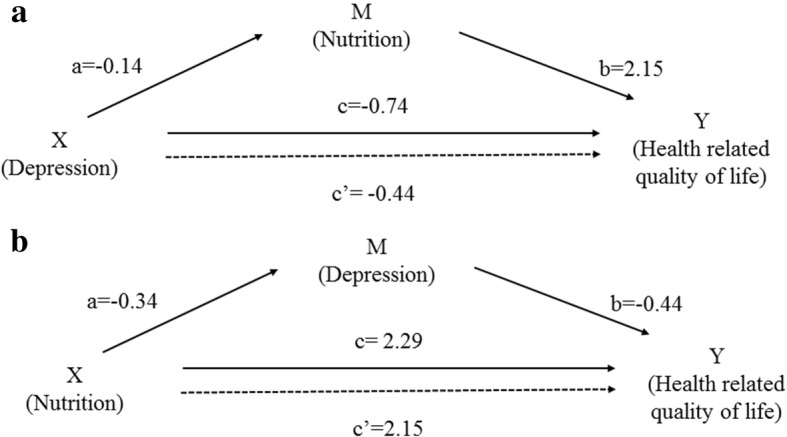
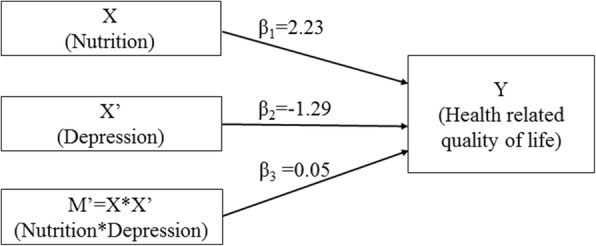
Background: Little is known about the health, nutrition, and quality of life of the aging population in Nepal. Consequently, we aimed to assess the nutritional status, depression and health-related quality of life (HRQOL) of Nepali older patients and evaluate the associated factors. Furthermore, a secondary aim was to investigate the proposed mediation-moderation models between depression, nutrition, and HRQOL.
Methods: A cross-sectional survey was conducted from January-April of 2017 among 289 Nepali older patients in an outpatient clinic at Nepal Medical College in Kathmandu. Nutritional status, depression and HRQOL were assessed using a mini nutritional assessment, geriatric depression scales, and the European quality of life tool, respectively. Linear regression models were used to find the factors associated with nutritional status, depression, and HRQOL. The potential mediating and moderating role of nutritional status on the relationship between depression and HRQOL was explored; likewise, for depression on the relationship between nutritional status and HRQOL.
Results: The prevalence of malnutrition and depression was 10% and 57.4% respectively; depression-malnutrition comorbidity was 7%. After adjusting for age and gender, nutritional score (β = 2.87; BCa 95%CI = 2.12, 3.62) was positively associated and depression score (β = - 1.23; BCa 95%CI = - 1.72, - 0.72) was negatively associated with HRQOL. After controlling for covariates, nutritional status mediated 41% of the total effect of depression on HRQOL, while depression mediated 6.0% of the total effect of the nutrition on HRQOL.
Conclusions: A sizeable proportion of older patients had malnutrition and depression. Given that nutritional status had a significant direct (independently) and indirect (as a mediator) effect on HRQOL, we believe that nutritional screening and optimal nutrition among the older patients can make a significant contribution to the health and well-being of Nepali older patients. Nonetheless, these findings should be replicated in prospective studies before generalization.
Keywords: Depression; Elderly; MNA; Mediation; Moderation; Nepal; Nutritional assessment; Quality of life.
Conflict of interest statement
Ethics approval and consent to participate
This study received approval from the Institutional Review Committee at NMCTH. A detailed verbal explanation of the purpose of the study as well as the procedures to be followed, including the collection of anthropometric measurements, was given to each respondent. Subsequently, participants were requested to provide written consent. No monitory incentives were provided.
Consent for publication
Not applicable.
Competing interests
The authors declare that they have no competing interests.
Publisher’s Note
Springer Nature remains neutral with regard to jurisdictional claims in published maps and institutional affiliations.
Figures
References
-
- Central Bureau of Statistics . Nepal - National Population Census 2001, Tenth census. Kathmandu: National Planning Commission Secretariat, Government of Nepal; 2001.
-
- Central Bureau of Statistics . National Population and Housing Census 2011 (National Report) Kathmandu: National Planning Commission Secretariat, Government of Nepal, National Planning Commission Secretariat; 2012.
-
- Geriatric Center Nepal. Status Report on Elderly People (60+) in Nepal on Health, Nutrition and Social Status Focusing on Research Needs. Kathmandu: Geriatric Center Nepal and Ministry of Health and Population, Government of Nepal; 2010. Available at: http://ageingnepal.org/wp-content/uploads/2015/05/Status-of-older-people....
MeSH terms
LinkOut - more resources
Full Text Sources
Other Literature Sources
Medical
Miscellaneous
