A Role for Tryptophan-2,3-dioxygenase in CD8 T-cell Suppression and Evidence of Tryptophan Catabolism in Breast Cancer Patient Plasma
- PMID: 30143553
- PMCID: PMC6318037
- DOI: 10.1158/1541-7786.MCR-18-0362
A Role for Tryptophan-2,3-dioxygenase in CD8 T-cell Suppression and Evidence of Tryptophan Catabolism in Breast Cancer Patient Plasma
Abstract
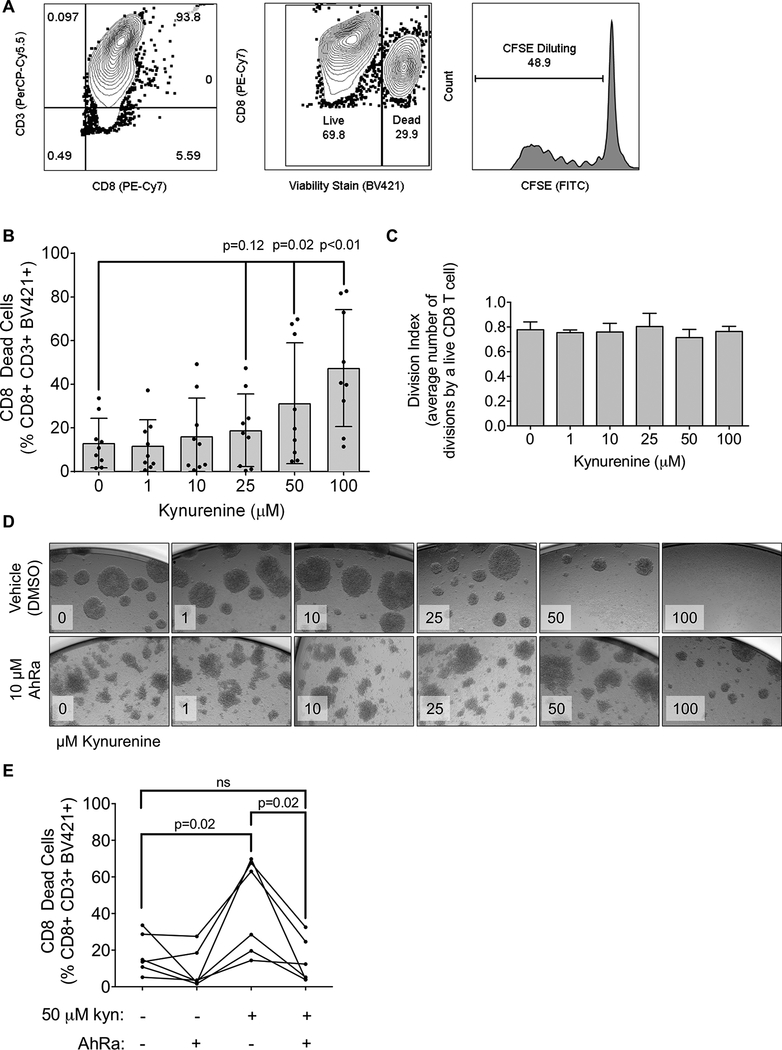
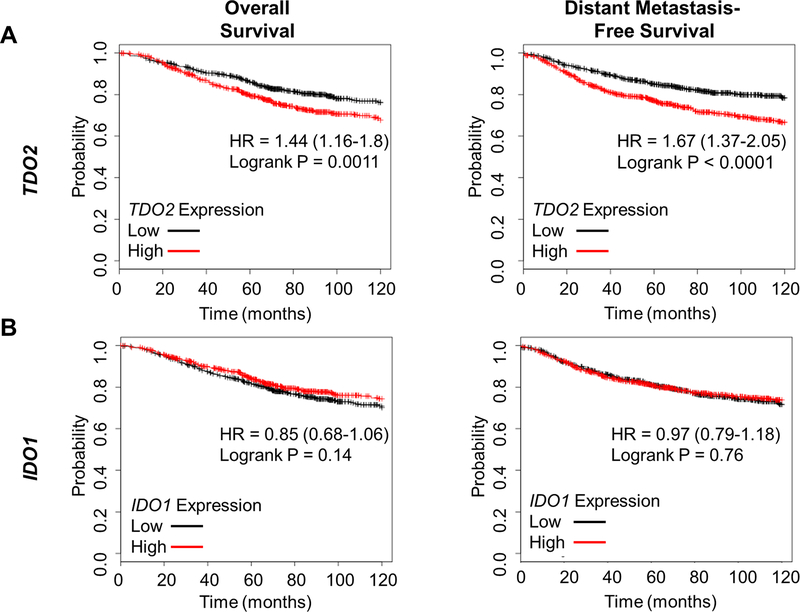
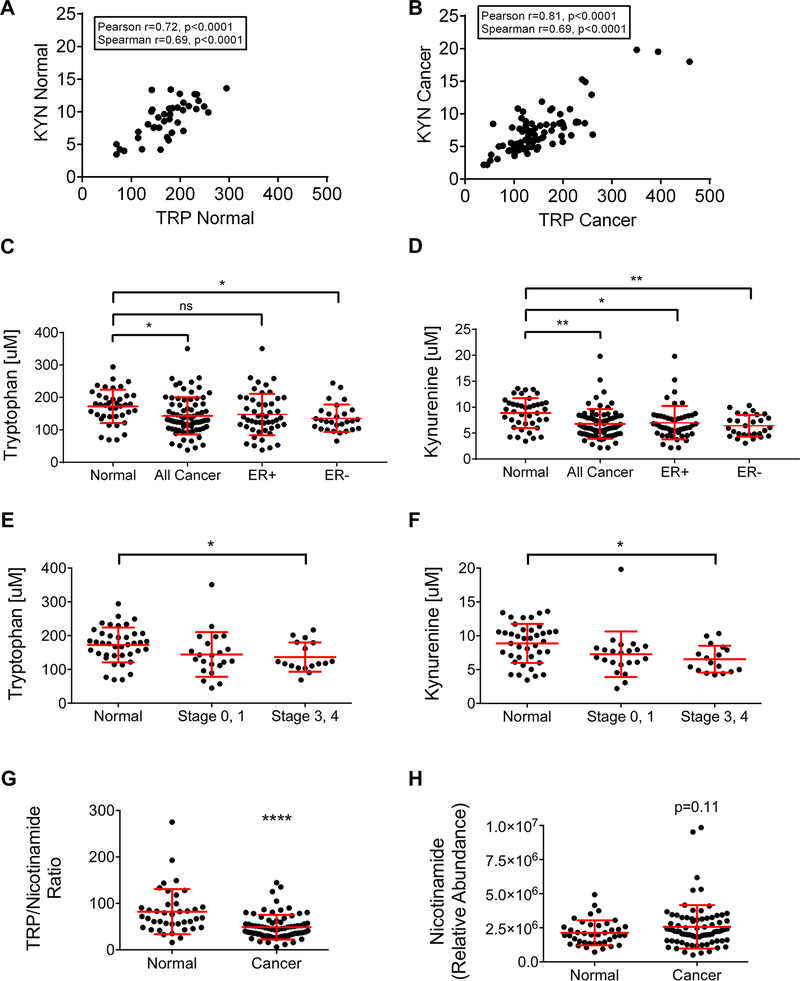
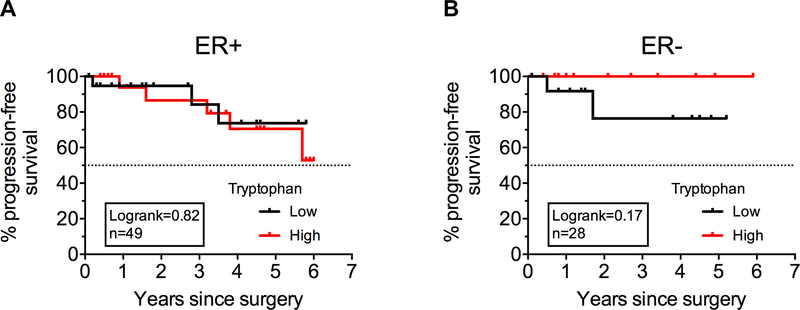
Tryptophan catabolism is an attractive target for reducing tumor progression and improving antitumor immunity in multiple cancers. Tumor infiltration by CD8 T cells correlates with improved prognosis in triple-negative breast cancer (TNBC) and a significant effort is underway to improve CD8 T-cell antitumor activity. In this study, primary human immune cells were isolated from the peripheral blood of patients and used to demonstrate that the tryptophan catabolite kynurenine induces CD8 T-cell death. Furthermore, it is demonstrated that anchorage-independent TNBC utilizes the tryptophan-catabolizing enzyme tryptophan 2,3-dioxygenase (TDO) to inhibit CD8 T-cell viability. Publicly available data revealed that high TDO2, the gene encoding TDO, correlates with poor breast cancer clinical outcomes, including overall survival and distant metastasis-free survival, while expression of the gene encoding the more commonly studied tryptophan-catabolizing enzyme, IDO1 did not. Metabolomic analysis, using quantitative mass spectrometry, of tryptophan and its catabolites, including kynurenine, in the plasma from presurgical breast cancer patients (n = 77) and 40 cancer-free donors (n = 40) indicated a strong correlation between substrate and catabolite in both groups. Interestingly, both tryptophan and kynurenine were lower in the plasma from patients with breast cancer compared with controls, particularly in women with estrogen receptor (ER)-negative and stage III and IV breast cancer. IMPLICATIONS: This study underscores the importance of tryptophan catabolism, particularly in aggressive disease, and suggests that future pharmacologic efforts should focus on developing drugs that target both TDO and IDO1.
©2018 American Association for Cancer Research.
Conflict of interest statement
Conflict of Interest Disclosure Statement
The authors declare no conflicts of interest.
Figures

References
-
- Liedtke C, Mazouni C, Hess KR, Andre F, Tordai A, Mejia JA, et al. Response to neoadjuvant therapy and long-term survival in patients with triple-negative breast cancer. Journal of clinical oncology : official journal of the American Society of Clinical Oncology. 2008;26(8):1275–81. - PubMed
-
- Aaltomaa S, Lipponen P, Eskelinen M, Kosma VM, Marin S, Alhava E, et al. Lymphocyte infiltrates as a prognostic variable in female breast cancer. Eur J Cancer. 1992;28A(4–5):859–64. - PubMed
-
- Denkert C, von Minckwitz G, Brase JC, Sinn BV, Gade S, Kronenwett R, et al. Tumor-infiltrating lymphocytes and response to neoadjuvant chemotherapy with or without carboplatin in human epidermal growth factor receptor 2-positive and triple-negative primary breast cancers. J Clin Oncol. 2015;33(9):983–91. - PubMed
-
- Miyashita M, Sasano H, Tamaki K, Hirakawa H, Takahashi Y, Nakagawa S, et al. Prognostic significance of tumor-infiltrating CD8+ and FOXP3+ lymphocytes in residual tumors and alterations in these parameters after neoadjuvant chemotherapy in triple-negative breast cancer: a retrospective multicenter study. Breast cancer research : BCR. 2015;17:124. - PMC - PubMed
-
- Ali HR, Glont SE, Blows FM, Provenzano E, Dawson SJ, Liu B, et al. PD-L1 protein expression in breast cancer is rare, enriched in basal-like tumours and associated with infiltrating lymphocytes. Ann Oncol. 2015;26(7):1488–93. - PubMed
Publication types
MeSH terms
Substances
Grants and funding
LinkOut - more resources
Full Text Sources
Other Literature Sources
Medical
Research Materials