


Factors promoting vulnerability to dysregulated stress reactivity and stress-related disease
- PMID: 30144202
- PMCID: PMC6181794
- DOI: 10.1111/jne.12641
Factors promoting vulnerability to dysregulated stress reactivity and stress-related disease
Abstract
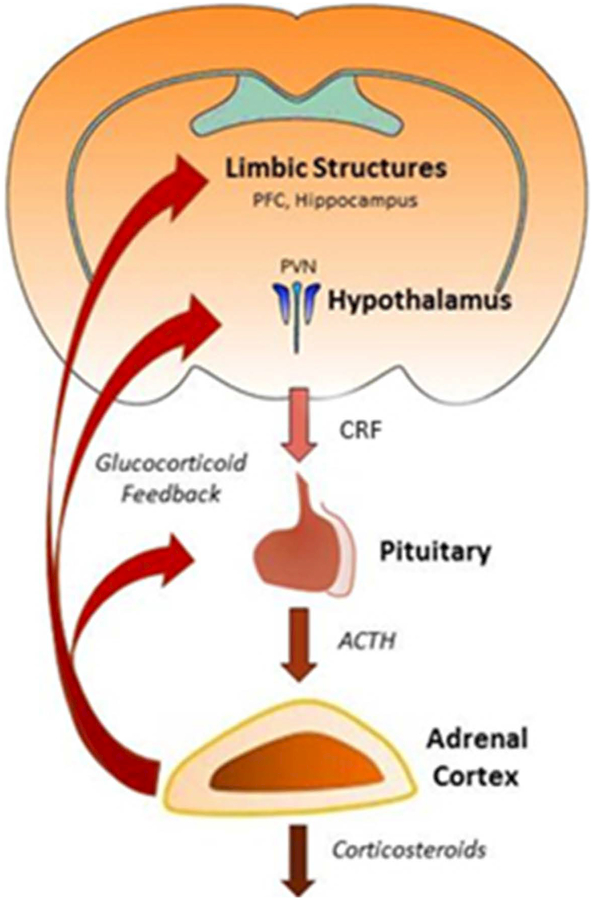
Effective coordination of the biological stress response is integral for the behavioural well-being of an organism. Stress reactivity is coordinated by an interplay of the neuroendocrine system and the sympathetic nervous system. The hypothalamic-pituitary-adrenal (HPA) axis plays a key role in orchestrating the bodily responses to stress, and the activity of the axis can be modified by a wide range of experiential events. This review focuses on several factors that influence subsequent HPA axis reactivity. Some of these factors include early-life adversity, exposure to chronic stress, immune activation and traumatic brain injury. The central premise is that each of these experiences serves as a general vulnerability factor that accelerates future HPA axis reactivity in ways that make individuals more sensitive to stress challenges, therefore feeding forward into the exacerbation of ongoing (or greater susceptibility toward) future stress-related disease states, especially as they pertain to negative affect and overall brain health.
Keywords: anxiety; depression; glucocorticoids; inflammation; oxytocin; stress; traumatic brain injury.
© 2018 British Society for Neuroendocrinology.
Figures


References
-
- Cannon WB, Bodily Changes in Pain, Hunger, Fear and Rage. 1915, New York: Applegate and Co.
-
- Cannon WB, Wisdom of the Body. 1932, New York: Norton.
-
- Bernard C, An Introduction to the Study of Experimental Medicine, ed. D. ed. 1865: Macmillan and Co., Ltd.
-
- McEwen BS, Physiology and neurobiology of stress and adaptation: central role of the brain. Physiol Rev, 2007. 87(3): p. 873–904. - PubMed
Publication types
MeSH terms
Grants and funding
LinkOut - more resources
Full Text Sources
Other Literature Sources
Medical
