Review
. 2019 Feb:74:65-71.
doi: 10.1016/j.alcohol.2018.05.004. Epub 2018 Aug 23.

Bioinformatic and biological avenues for understanding alcohol use disorder

Affiliations
Review

Bioinformatic and biological avenues for understanding alcohol use disorder

Emily K Grantham et al. Alcohol. 2019 Feb.

Abstract

Alcohol Use Disorder (AUD) is a multifarious psychiatric condition resulting from complex relationships between genetics, gene expression, neuroadaptations, and environmental influences. Understanding these complex relationships is essential to uncovering the mechanisms involved in the development and progression of AUD, with the ultimate goal of devising effective behavioral and therapeutic interventions. Technical advances in the fields of omics-based research and bioinformatics have yielded insights into gene interactions, biological networks, and cellular responses across humans and animal models. This review highlights several of the newly developed sequencing methodologies and resultant discoveries in neuroscience, as well as the importance of a multi-faceted and integrative approach for determining causal factors in AUD.

Keywords: Alcohol; Bioinformatics; Drug repurposing; Gene expression; RNA-seq.


Figures

Fig. 1.
Fig. 1.
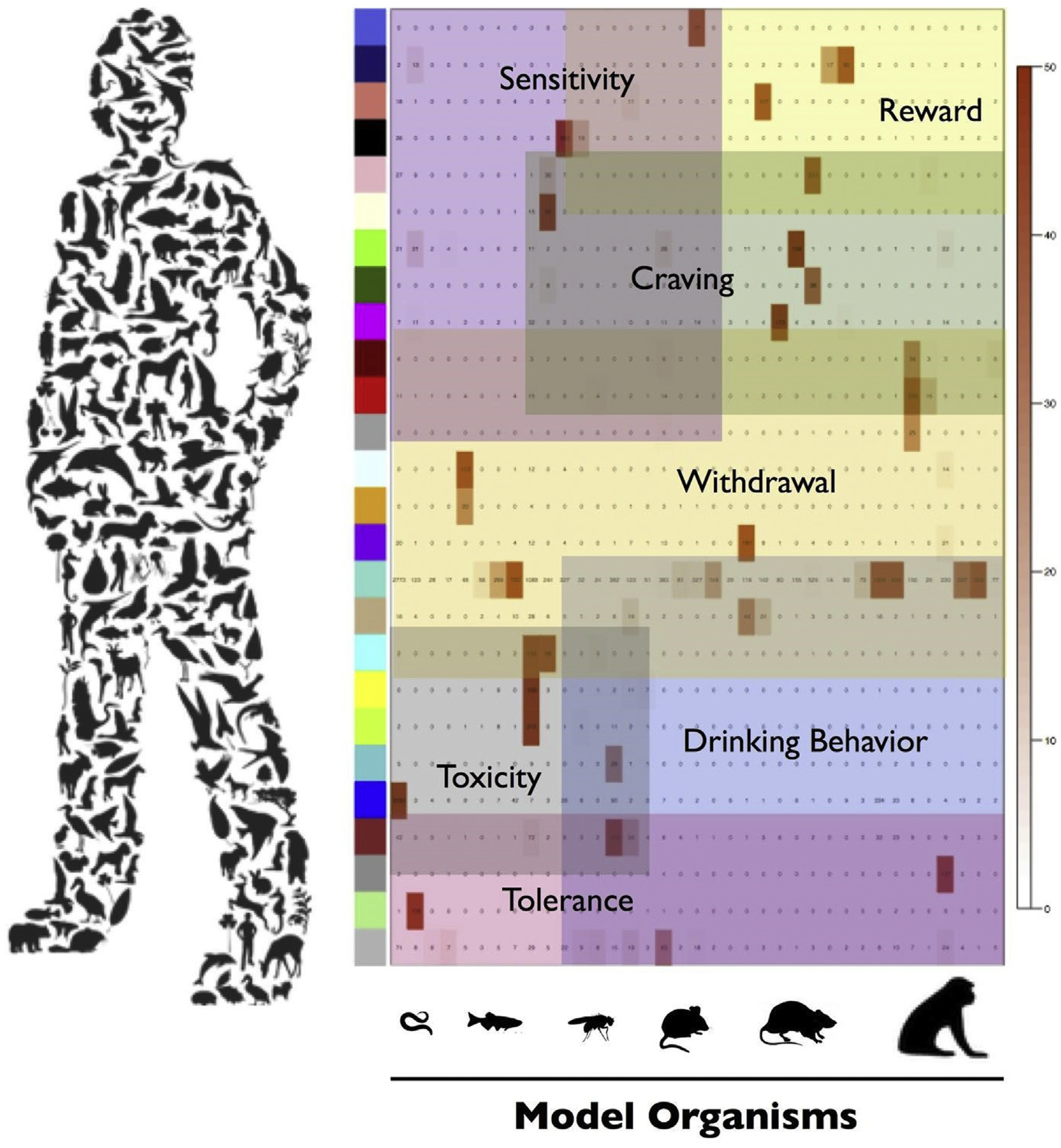
Schematic representation for the human medical diagnosis of alcohol use disorder (AUD) in relation to different animal models used in biomedical research. An AUD diagnosis encapsulates many different phenotypic traits (e.g., ‘craving’ and ‘withdrawal’). Genome-wide studies of model organisms that address latent features of AUD can help decipher coordinated biological activity of interrelated modules found in humans (colored blocks along y-axis).

References

    1. Agrawal RG, Hewetson A, George CM, Syapin PJ, & Bergeson SE (2011). Minocycline reduces ethanol drinking. Brain, Behavior, and Immunity, 25(Suppl1), S165–S169. 10.1016/j.bbi.2011.03.002. - DOI - PMC - PubMed
    1. Bae T, Tomasini L, Mariani J, Zhou B, Roychowdhury T, Franjic D, et al. (2018). Different mutational rates and mechanisms in human cells at pregastrulation and neurogenesis. Science, 359, 550–555. 10.1126/science.aan8690. - DOI - PMC - PubMed
    1. Blednov YA, Ponomarev I, Geil C, Bergeson S, Koob GF, & Harris RA (2012). Neuroimmune regulation of alcohol consumption: Behavioral validation of genes obtained from genomic studies. Addiction Biology, 17, 108–120. 10.1111/j.1369-1600.2010.00284.x. - DOI - PMC - PubMed
    1. Breen G, Li Q, Roth BL, O’Donnell P, Didriksen M, Dolmetsch R, et al. (2016). Translating genome-wide association findings into new therapeutics for psychiatry. Nature Neuroscience, 19, 1392–1396. 10.1038/nn.4411. - DOI - PMC - PubMed
    1. Brown AA, Viñuela A, Delaneau O, Spector TD, Small KS, & Dermitzakis ET (2017). Predicting causal variants affecting expression by using whole-genome sequencing and RNA-seq from multiple human tissues. Nature Genetics, 49, 1747–1751. 10.1038/ng.3979. - DOI - PubMed

Publication types