


Progressive myoclonus ataxia: Time for a new definition?
- PMID: 30145808
- PMCID: PMC6175171
- DOI: 10.1002/mds.27412
Progressive myoclonus ataxia: Time for a new definition?
Abstract
Background: The clinical demarcation of the syndrome progressive myoclonus ataxia is unclear, leading to a lack of recognition and difficult differentiation from other neurological syndromes.
Objectives: The objective of this study was to apply a refined definition of progressive myoclonus ataxia and describe the clinical characteristics in patients with progressive myoclonus ataxia and with isolated cortical myoclonus.
Methods: A retro- and prospective analysis was performed in our tertiary referral center between 1994 and 2014. Inclusion criteria for progressive myoclonus ataxia patients were the presence of myoclonus and ataxia with or without infrequent (all types, treatment responsive) epileptic seizures. Inclusion criteria for isolated cortical myoclonus was the presence of isolated cortical myoclonus. Clinical and electrophysiological characteristics data were systematically scored.
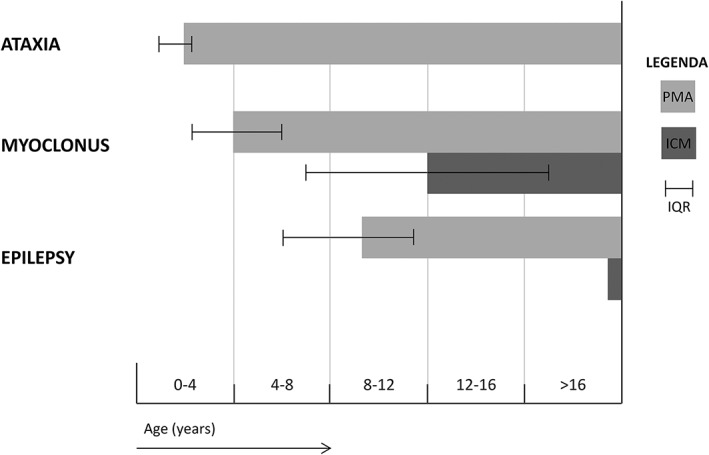
Results: A total of 14 progressive myoclonus ataxia patients (males, 7; females, 7), median age 14.5 years, and 8 isolated cortical myoclonus patients (males, 2; females, 6), median age 23.5 years, were identified. In 93% of the progressive myoclonus ataxia patients, ataxia started first (median 2 years) followed by myoclonus (4 years) and finally infrequent epilepsy (9.3 years), with a progressive course in 93%. In 64% of the progressive myoclonus ataxia patients, a genetic underlying etiology was identified, including 3 not earlier reported causative progressive myoclonus ataxia genes. In isolated cortical myoclonus patients, myoclonus started at (median) 12 years with progression over time in 63% and a single epileptic seizure in 1 patient. No genetic causes were identified.
Conclusion: Using a refined definition, we could create a rather homogenous progressive myoclonus ataxia group. Patients with isolated cortical myoclonus have a different course and do not appear to evolve in progressive myoclonus ataxia. The refined progressive myoclonus ataxia definition is a successful first step toward creating a separate syndrome for both clinical practice and future genetic research. © 2018 The Authors. Movement Disorders published by Wiley Periodicals, Inc. on behalf of International Parkinson and Movement Disorder Society.
Keywords: Ramsay Hunt; ataxia; isolated cortical myoclonus; myoclonus; progressive myoclonus ataxia.
© 2018 The Authors. Movement Disorders published by Wiley Periodicals, Inc. on behalf of International Parkinson and Movement Disorder Society.
Figures
References
-
- Aicardi J, Andermann E, Andermann F, et al. Classification of progressive myoclonus epilepsies and related disorders. Ann Neurol 1990;28:113‐116. - PubMed
-
- Hunt JR. Dyssynergia cerebellaris myoclonica—primary atrophy of the dentate system: a contribution to the pathology and symptomatology of the cerebellum. Brain 1921;44:490‐538.
-
- Zutt R, Tijssen MAJ, Elting JW. Myoclonus In: Wolters E, ed. Parkinson Disease and Other Movement Disorders. 1st ed. Amsterdam, The Netherlands: VU University Press; 2014:513‐533.
-
- Borg M. Symptomatic myoclonus. Neurophysiol Clin 2006;36:309‐318. - PubMed
-
- Andermann F, Berkovic S, Carpenter S, Andermann E. The Ramsay Hunt syndrome is no longer a useful diagnostic category. Mov Disord 1989;4:13‐17. - PubMed
MeSH terms
LinkOut - more resources
Full Text Sources
Other Literature Sources
