Effects of transport stress on physiological responses and milk production in lactating dairy cows
- PMID: 30145870
- PMCID: PMC6409474
- DOI: 10.5713/ajas.18.0108
Effects of transport stress on physiological responses and milk production in lactating dairy cows
Abstract
Objective: This study was conducted to investigate the effect of transport stress on physiological and hematological responses and milk performance in lactating dairy cows.
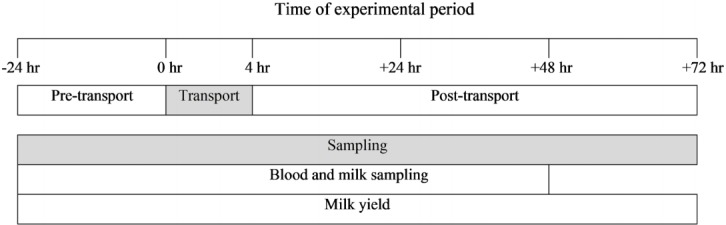
Methods: Ten lactating dairy cows were randomly divided into 2 groups. The treatment group (TG) was transported 200 km for 4 h by truck, and the control group (NTG) was restrained by stanchion for 4 h in Konkuk University farm. Blood and milk samples were collected at 24 h pre-transport; 1, 2, and 4 h during transport; and 2, 24, and 48 h post-transport. Milk yields were measured at 24 h pre-transport, 0 h during transport, and 24, 48, and 72 h post-transport.
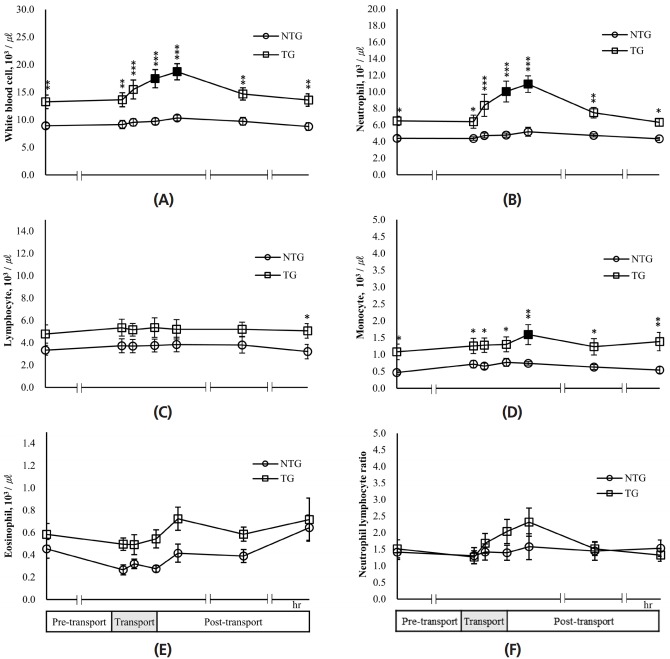
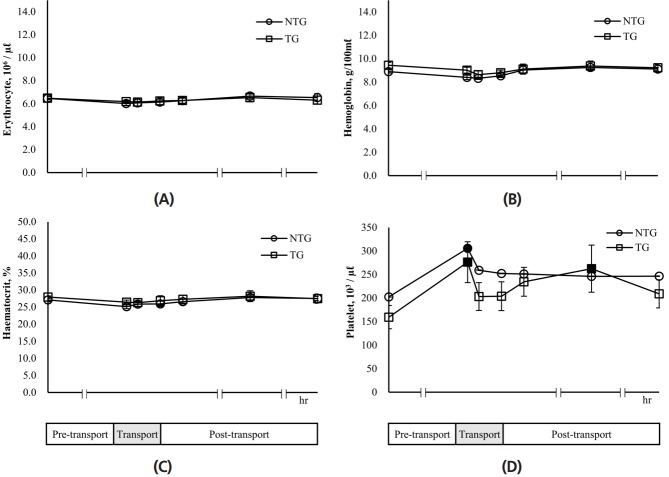
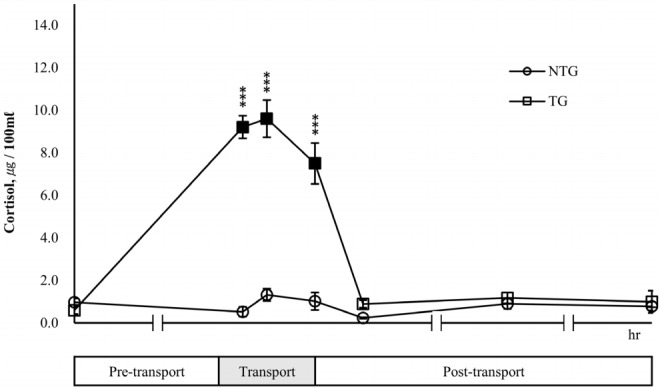
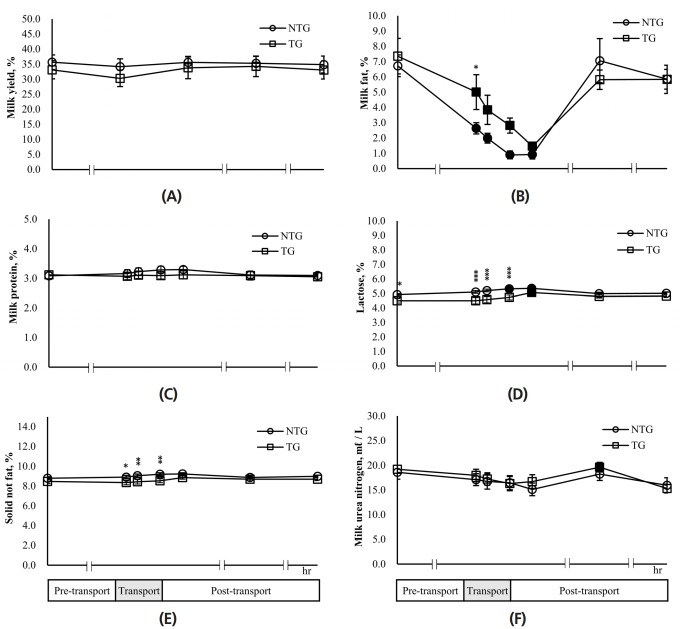
Results: Leukocyte, neutrophil, and monocyte numbers in the TG were significantly higher than those of the NTG at each experimental time point. Lymphocyte numbers in the TG were significantly (p<0.05) higher than those of the NTG at 48 h post-transport. Additionally, the neutrophil:lymphocyte ratio of the TG was 45% and 46% higher than that of the NTG at 4 h during transport and 2 h post-transport, respectively. There were no significant differences in erythrocyte numbers, hemoglobin concentrations, platelet numbers, and hematocrit percentages between two groups. Cortisol levels in the TG were significantly (p<0.05) higher than those in the NTG. Milk yields in the TG were lower than those in the NTG. The somatic cell count (SCC) of the TG was significantly (p<0.05) higher than that of the NTG at 1 and 2 h during transport; that of the TG increased dramatically at 1 h during transport and gradually decreased subsequently.
Conclusion: Transport stress increased blood parameters including leucocyte, neutrophil, and monocyte numbers by increased cortisol levels, but did not affect erythrocytes, hemoglobin and hematocrit levels. Additionally, transport resulted in a decrease in milk yield and reduced milk quality owing to an increase in milk SCC.
Keywords: Hematological Responses; Milk Production; Physiological Response; Transport Stress.
Conflict of interest statement
We certify that there is no conflict of interest with any financial organization regarding the material discussed in the manuscript.
Figures
References
-
- National Research Council . Guidelines for the humane transportation of research animals. Washington DC, USA: National Academies Press; 2006. - PubMed
-
- Fraser AF. The nature of cruelty to animals. Appl Anim Ethol. 1979;5:1–4.
-
- Lambooij JE, Garssen GJ, Wastra D, Matemarn G, Merkus GSM. Transport of pigs by car for two days: some aspects of watering and loading density. Livest Prod Sci. 1985;13:289–99.
-
- Brandshaw RH, Parrot RF, Goode JA, et al. Behavioural and hormonal responses of pigs during transport: effect of mixing and duration of journey. Anim Sci. 1996;62:547–54.
-
- Atkinsson S. Farm animal transport, welfare and meat quality [master’s thesis] Skara, Sweden: Swedish University of Agricultural Sciences; 2000.
Grants and funding
LinkOut - more resources
Full Text Sources
Other Literature Sources
Research Materials
Miscellaneous