


The marine Omega3 wound matrix for treatment of complicated wounds: A multicenter experience report
- PMID: 30147244
- PMCID: PMC6096721
- DOI: 10.1007/s00772-018-0428-2
The marine Omega3 wound matrix for treatment of complicated wounds: A multicenter experience report
Abstract
Introduction: The Kerecis™ Omega3 Wound matrix is a decellularized skin matrix derived from fish skin and represents an innovative concept to achieve wound healing. The aim of this study was to report the cumulative experience of three centers for vascular surgery regarding use of the Omega3 Wound matrix in selected patients with complicated wounds.
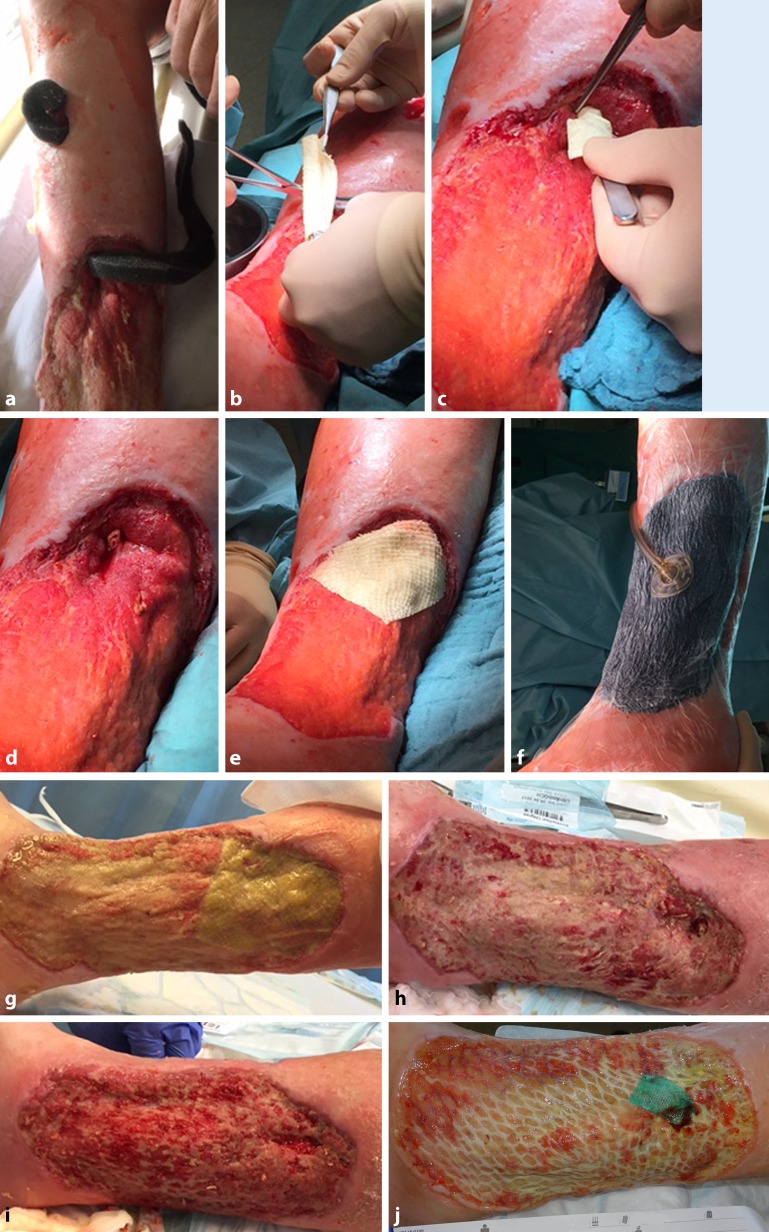
Material and methods: In this study 23 patients with 25 vascular and/or diabetes mellitus-associated complicated wounds and partially exposed bony segments were treated with the Omega3 Wound matrix in three vascular centers. In several patients, conventional wound treatment with vacuum therapy had previously been carried out sometimes over several weeks without durable success. Following initial debridement in the operating room, the matrix was applied and covered with a silicone mesh. In the further course, wound treatment was conducted on an outpatient setting if possible.
Results: In total 25 wounds were treated with localization at the level of the thigh (n = 2), the distal calf (n = 7), the forefoot (n = 14) and the hand (n = 2). The time to heal varied between 9 and 41 weeks and between 3 and 26 wound matrices were applied per wound. Interestingly, a reduction of analgesics intake was noted when the treatment with the Omega3 Wound matrix was initiated.
Conclusion: The novel Omega3 Wound matrix in this study represented an effective treatment option in 25 complicated wounds. Further studies are necessary to evaluate the impact of the wound matrix on stimulation of granulation tissue and re-epithelialization as well as the potential antinociceptive and analgetic effects.
Einleitung: Die Omega-3-Wundmatrix (Kerecis®) stellt eine innovative Wundauflage dar, die aus der Haut des Kabeljaus durch entsprechende Verfahren wie Dezellularisierung gewonnen wird und seit Kurzem in Deutschland verfügbar ist. Die Intention der vorliegenden Studie ist die Zusammenstellung der Behandlungserfahrungen aus 3 gefäßchirurgischen Zentren mit dem Einsatz der Omega-3-Wundmatrix bei selektierten Wundpatienten.
Material und methoden: In einem multizentrischen Erfahrungsbericht haben wir die Ergebnisse von insgesamt 23 Patienten mit 25 vaskulären und diabetes- bzw. vaskulitisassoziierten Problemwunden zusammengestellt. Bei mehreren Patienten war zuvor eine konventionelle Wundbehandlung mit Vakuumtherapie teils über mehrere Wochen ohne durchgreifenden Erfolg durchgeführt worden. Die Erstapplikation der Omega-3-Wundmatrix erfolgte im OP unter stationären Bedingungen, danach wurden die Patienten nach Möglichkeit einmal wöchentlich ambulant versorgt.
Ergebnisse: Insgesamt behandelten wir 25 Problemwunden sowohl nach Amputationen als auch bei primärer Wunde (Oberschenkel n = 2, Unterschenkel n = 7, Fuß n = 14, Hand n = 2). Die Abheilungszeiten variierten von 9 bis 41 Wochen, die Anzahl der pro Wunde verwendeten Omega-3-Wundmatrizes von 3 bis 26. Zusätzlich war im Rahmen der Behandlung mit Omega-3-Wundmatrizes eine Verminderung der lokalen Wundschmerzen zu verzeichnen.
Schlussfolgerung: Die Behandlung mit der innovativen marinen Omega-3-fettsäurehaltigen Wundmatrix stellt in dieser Untersuchung einen wirksamen Ansatz in der Behandlung von 25 Problemwunden dar. Weitere Untersuchungen sind notwendig, um die Granulations- und Reepithelialisierungsfunktion sowie die zusätzlich vorhandene analgetische bzw. antinozizeptive Wirkung dieses Präparates genauer zu evaluieren.
Keywords: Amputation; Arterial occlusive disease; Diabetic ulcer; Wound healing; Wound matrix.
Conflict of interest statement
Compliance with ethical guidelinesH. Diener has received lecture fees from Kerecis. B. Dorweiler, T.T. Trinh, F. Dünschede, C.F. Vahl, E.S. Debus and M. Storck declare that they have no competing interests.
Figures


References
-
- Heyer K. Versorgungsepidemiologie des Ulcus cruris in Deutschland. Erkrankungshäufigkeit, Versorgungsqualität und Prädiktoren der Wundheilung. Wiesbaden: Springer; 2016.
-
- Elraiyah T, Tsapas A, Prutsky G, Domecq JP, Hasan R, Firwana B, Nabhan M, Prokop L, Hingorani A, Claus PL, Steinkraus LW, Murad MH. A systematic review and meta-analysis of adjunctive therapies in diabetic foot ulcers. J Vasc Surg. 2016;63(2 Suppl):46S–58S. doi: 10.1016/j.jvs.2015.10.007. - DOI - PubMed
Publication types
LinkOut - more resources
Full Text Sources
Other Literature Sources