Forced Salivation As a Method to Analyze Vector Competence of Mosquitoes
- PMID: 30148488
- PMCID: PMC6126663
- DOI: 10.3791/57980
Forced Salivation As a Method to Analyze Vector Competence of Mosquitoes
Abstract
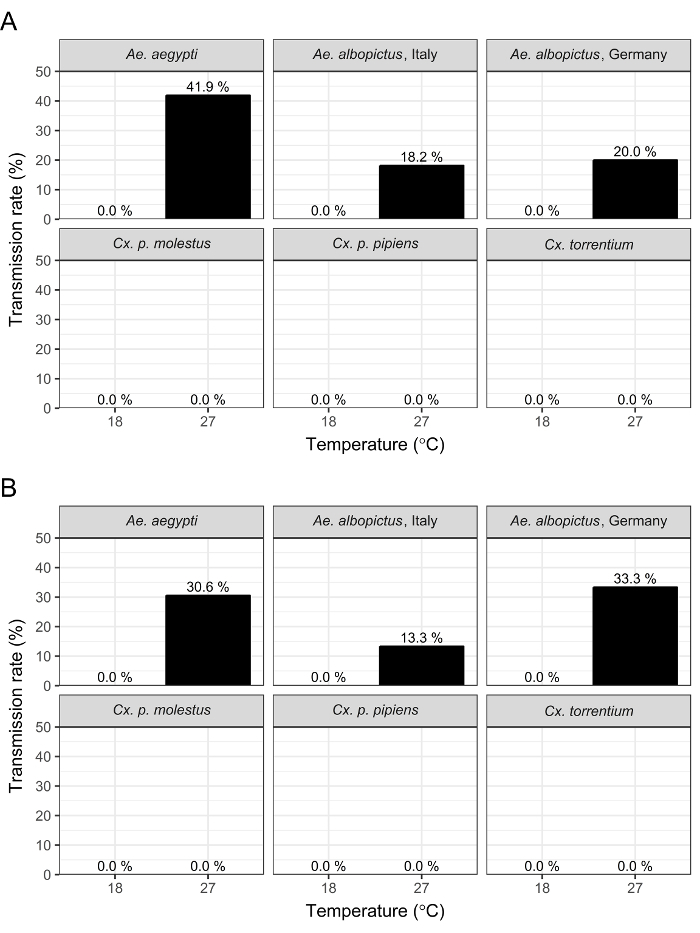
Vector competence is defined as the potential of a mosquito species to transmit a mosquito-borne virus (mobovirus) to a vertebrate host. Viable virus particles are transmitted during a blood meal via the saliva of an infected mosquito. Forced salivation assays allow determining the vector potential on the basis of single mosquitoes, avoiding the use of animal experiments. The method is suitable to analyze a large number of mosquitoes in one experiment within a short period of time. Forced salivation assays were used to analyze 856 individual mosquitoes trapped in Germany, including two different Culex pipiens pipiens biotypes, Culex torrentium as well as Aedes albopictus, which were experimentally infected with Zika virus (ZIKV) and incubated at 18 °C or 27 °C for two and three weeks. The results indicated the lack of vector competence of the different Culex taxa for ZIKV. In contrast, Aedes albopictus was susceptible to ZIKV, but only at 27 °C, with transmission rates similar to an Aedes aegypti laboratory colony tested in parallel.

References
-
- World Health Organization Regional Office for Europpe (WHO/Europe) No Title. 2016. Available from: http://www.euro.who.int/en/health-topics/emergencies/zika-virus/technica....
-
- Turell MJ, Linthicum KJ, Patrican LA, Davies FG, Kairo A, Bailey CL. Vector competence of selected African mosquito (Diptera: Culicidae) species for Rift Valley fever virus. Journal of Medical Entomology. 2008;45(1):102–108. - PubMed
Publication types
MeSH terms
LinkOut - more resources
Full Text Sources
Other Literature Sources
Medical
Research Materials