


Prevalence and correlates of physical and sexual intimate partner violence among women living with HIV in Uganda
- PMID: 30148854
- PMCID: PMC6110509
- DOI: 10.1371/journal.pone.0202992
Prevalence and correlates of physical and sexual intimate partner violence among women living with HIV in Uganda
Abstract
Background: Intimate partner violence (IPV) is a significant global health problem. Women who experience IPV have increased HIV incidence, reduced antiretroviral adherence, and a lower likelihood of viral load suppression. There is a lack of evidence regarding how to effectively identify and support women living with HIV (WLWH) experiencing IPV, including uncertainty whether universal or targeted screening is most appropriate for lower-resourced settings. We examined physical and sexual IPV prevalence and correlates among WLWH in Uganda to understand the burden of IPV and factors that could help identify women at risk.
Methods: We utilized data from women receiving ART and enrolled in the Uganda AIDS Rural Treatment Outcomes (UARTO) cohort study between 2011 and 2015. Bloodwork and interviewer-administered questionnaires were completed every 4 months. IPV was assessed annually or with any new pregnancy. Multivariate models assessed independent socio-demographic and clinical factors correlated with IPV, at baseline and follow-up visits.
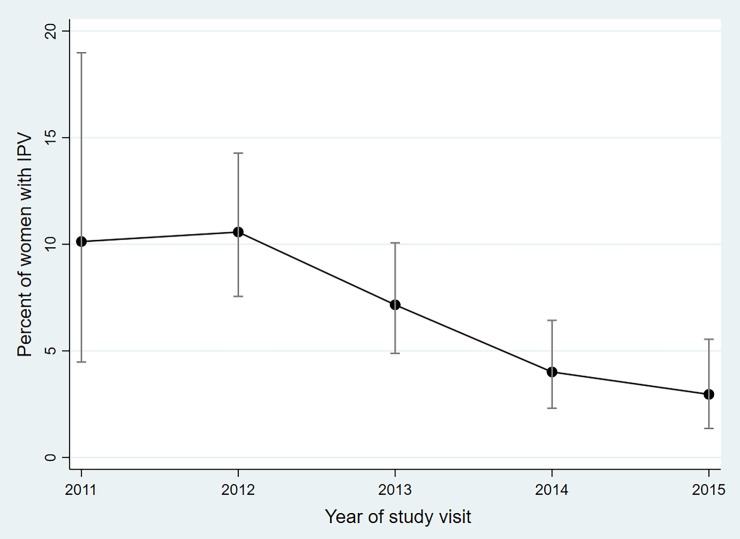
Results: 455 WLWH were included. Median age was 36 years, 43% were married, and median follow-up was 2.8 years. At baseline 131 women (29%) reported any experience of past or current IPV. In the adjusted models, being married was associated with a higher risk of baseline IPV (ARR 2.33, 95% CI 1.13-4.81) and follow-up IPV (ARR 2.43, 95% CI 1.33-4.45). Older age (ARR 0.96, 95% CI 0.94-0.99) and higher household asset index score (ARR 0.81, 95% CI 0.68-0.96) were associated with lower risk of IPV during follow-up.
Conclusion: There was a high prevalence of physical and sexual IPV amongst WLWH, and many women experienced both types of violence. These findings suggest the need for clinic-based screening for IPV. If universal screening is not feasible, correlates of having experienced IPV can inform targeted approaches.
Conflict of interest statement
The authors have declared that no competing interests exist.
Figures
References
-
- World Health Organization. Responding to intimate partner violence and sexual violence against women: WHO clinical and policy guidelines. Geneva; 2013. - PubMed
-
- Jewkes RK, Dunkle K, Nduna M, Shai N. Intimate partner violence, relationship power inequity, and incidence of HIV infection in young women in South Africa: a cohort study. Lancet (London, England). 2010;376: 41–8. - PubMed
Publication types
MeSH terms
Substances
Grants and funding
LinkOut - more resources
Full Text Sources
Other Literature Sources
Medical
Miscellaneous
