


Structural, morphological, functional and digestibility properties of starches from cereals, tubers and legumes: a comparative study
- PMID: 30150840
- PMCID: PMC6098761
- DOI: 10.1007/s13197-018-3342-4
Structural, morphological, functional and digestibility properties of starches from cereals, tubers and legumes: a comparative study
Abstract
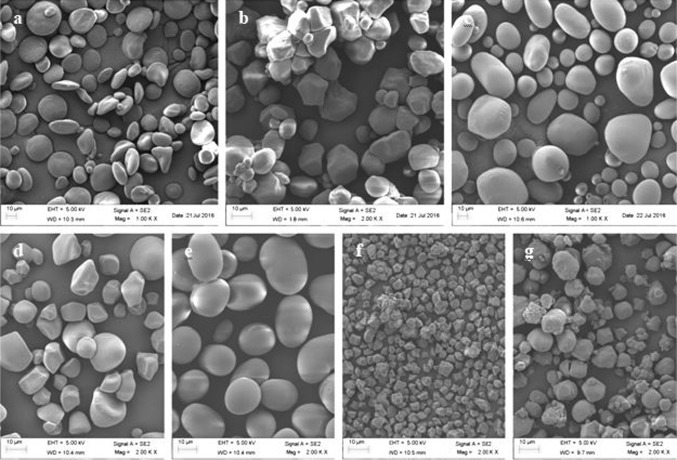
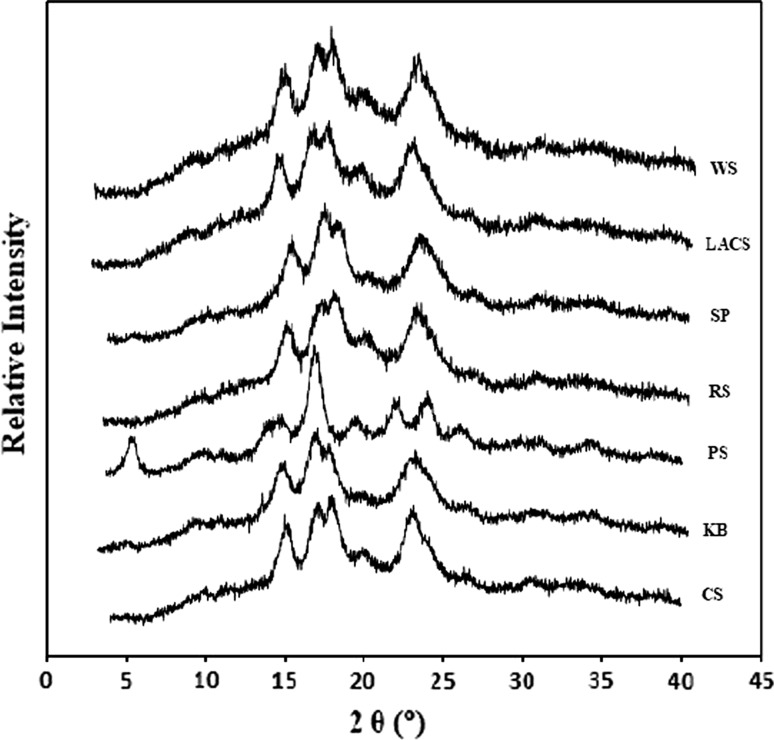
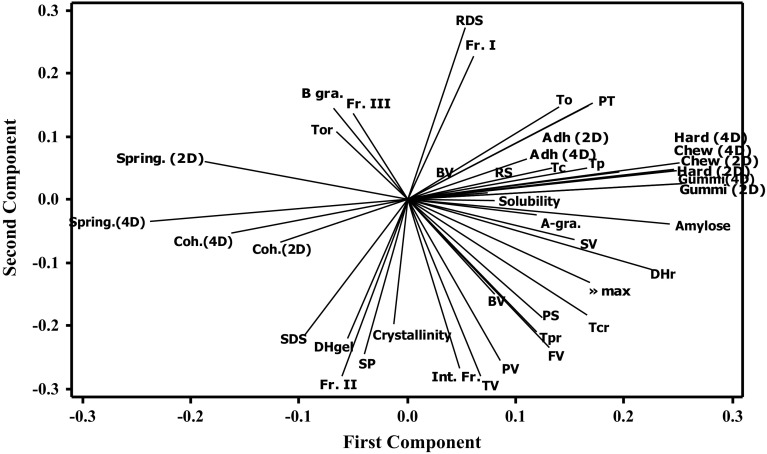
A comparison between structural, morphological, functional and digestibility studies of starches from cereals i.e. wheat (WS), corn (CS), low amylose corn (LACS) and rice (RS), tubers i.e. potato (PS) and sweet potato (SP), and legumes i.e. kidney bean (KB) were investigated. The shape of granules varied from oval to elliptical or spherical according to the source. Distribution of iso- amylase debranched materials revealed that long and short side chains fractions of amylopectin ranged from 12.6 to 33.1% and 40.5 to 52.5% respectively. KB starch showed the highest amylose content (49.50%) while RS showed the lowest (8.51%). Starches with greater granule size (PS, SP and KB) showed higher proportion of long side chains of amylopectin (AP) (Fr.II) than short side chains of AP (Fr.III). Peak viscosity (PV), breakdown viscosity (BV) and final viscosity (FV) showed significant positive relationship with Fr. II and negative with apparent amylose content (AAC) and Fr.III. Tuber starches showed greater paste viscosities followed by legume starches. Tuber and legume starches with higher apparent amylose content and Fr. II showed greater crystallinity. Gel hardness and gelatinization temperatures showed inverse relationship with RS starch having higher proportion of smaller granules (0-10 µm). KB with higher amylose content showed maximum rapidly digestible starch (RDS) content while SP showed the highest resistant starch. Above observations would be utilized in modifying properties of native starches and help in improving texture, moisture retention capacity and gel firmness of starch and its products.
Keywords: Fine structure; Fourier-transform infrared spectroscopy; In vitro digestibility; Scanning electron microscopy; Starch; X-ray diffraction.
Conflict of interest statement
Compliance with ethical standardsThe authors declare no conflict of interest.
Figures
References
-
- Ai Y, Jane JL. Gelatinization and rheological properties of starch. Starch-Stärke. 2015;67:213–224. doi: 10.1002/star.201400201. - DOI
-
- Ambigaipalan P, Hoover R, Donner E, Liu Q, Jaiswal S, Chibbar R, Nantanga KKM, Seetharaman K. Structure of faba bean, black bean and pinto bean starches at different levels of granule organization and their physicochemical properties. Food Res Int. 2011;44:2962–2974. doi: 10.1016/j.foodres.2011.07.006. - DOI
-
- Colonna P, Leloup V, Buleon A. Limiting factors of starch hydrolysis. Eur J Clin Nutr. 1992;46:17–32. - PubMed
-
- Copeland L, Blazek J, Salman H, Tang MC. Form and functionality of starch. Food Hydrocoll. 2009;23:1527–1534. doi: 10.1016/j.foodhyd.2008.09.016. - DOI
LinkOut - more resources
Full Text Sources
Other Literature Sources
Miscellaneous