


The Role of Histamine and Histamine Receptors in Mast Cell-Mediated Allergy and Inflammation: The Hunt for New Therapeutic Targets
- PMID: 30150993
- PMCID: PMC6099187
- DOI: 10.3389/fimmu.2018.01873
The Role of Histamine and Histamine Receptors in Mast Cell-Mediated Allergy and Inflammation: The Hunt for New Therapeutic Targets
Abstract
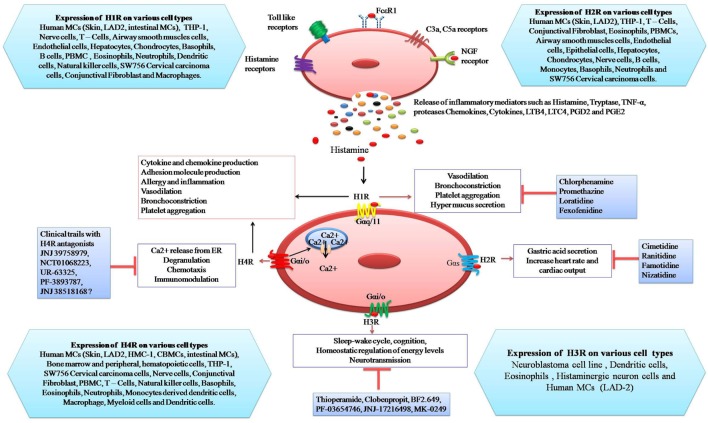
Histamine and its receptors (H1R-H4R) play a crucial and significant role in the development of various allergic diseases. Mast cells are multifunctional bone marrow-derived tissue-dwelling cells that are the major producer of histamine in the body. H1R are expressed in many cells, including mast cells, and are involved in Type 1 hypersensitivity reactions. H2R are involved in Th1 lymphocyte cytokine production. H3R are mainly involved in blood-brain barrier function. H4R are highly expressed on mast cells where their stimulation exacerbates histamine and cytokine generation. Both H1R and H4R have important roles in the progression and modulation of histamine-mediated allergic diseases. Antihistamines that target H1R alone are not entirely effective in the treatment of acute pruritus, atopic dermatitis, allergic asthma, and other allergic diseases. However, antagonists that target H4R have shown promising effects in preclinical and clinical studies in the treatment of several allergic diseases. In the present review, we examine the accumulating evidence suggesting novel therapeutic approaches that explore both H1R and H4R as therapeutic targets for histamine-mediated allergic diseases.
Keywords: allergy; antihistamines; histamine; histamine receptors; inflammation; mast cells.
Figures
References
Publication types
MeSH terms
Substances
LinkOut - more resources
Full Text Sources
Other Literature Sources
Medical
