


Whole genome shotgun sequencing revealed highly polymorphic genome regions and genes in Escherichia coli O157:H7 isolates collected from a single feedlot
- PMID: 30153286
- PMCID: PMC6112667
- DOI: 10.1371/journal.pone.0202775
Whole genome shotgun sequencing revealed highly polymorphic genome regions and genes in Escherichia coli O157:H7 isolates collected from a single feedlot
Abstract
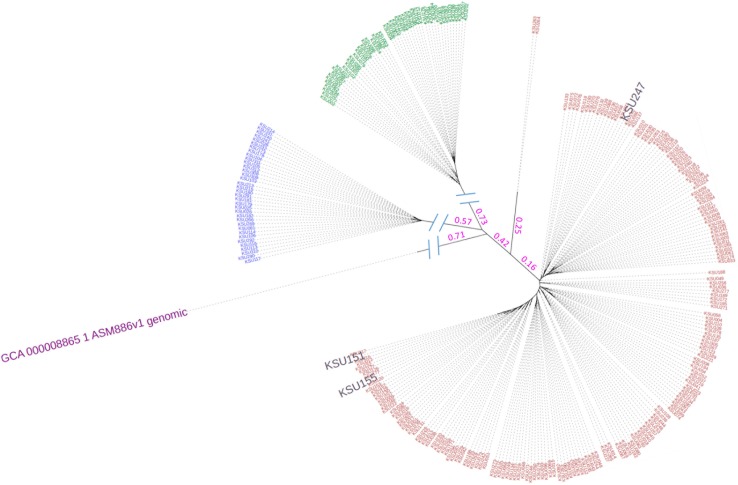
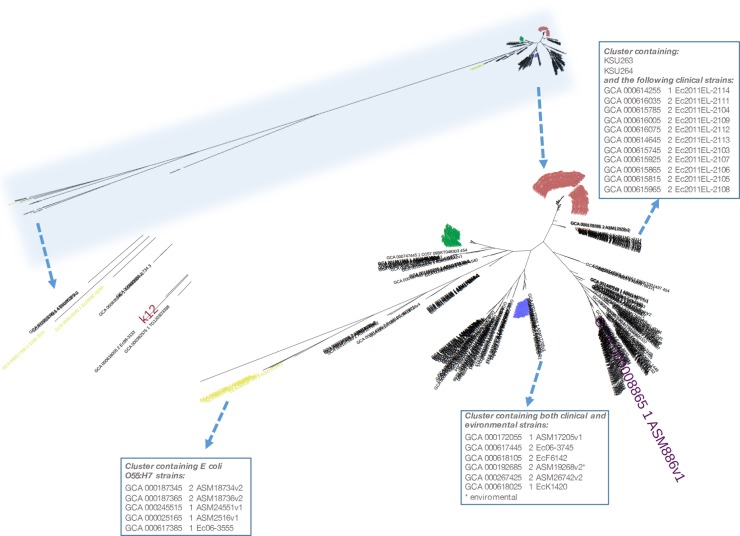
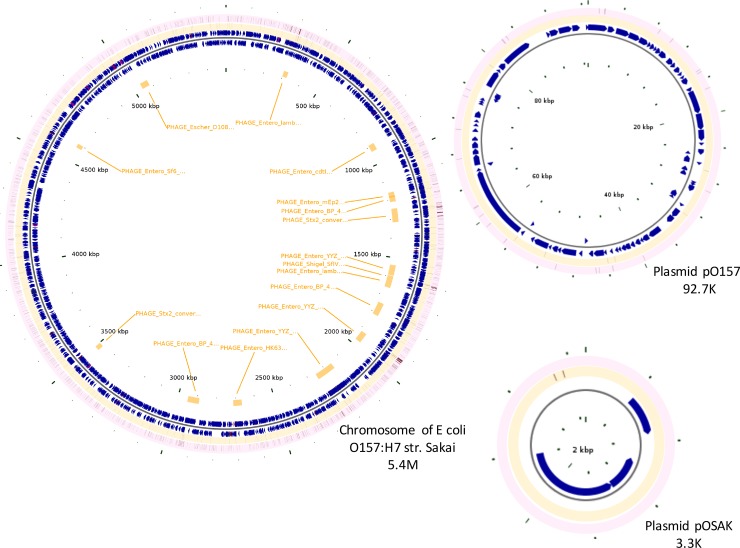
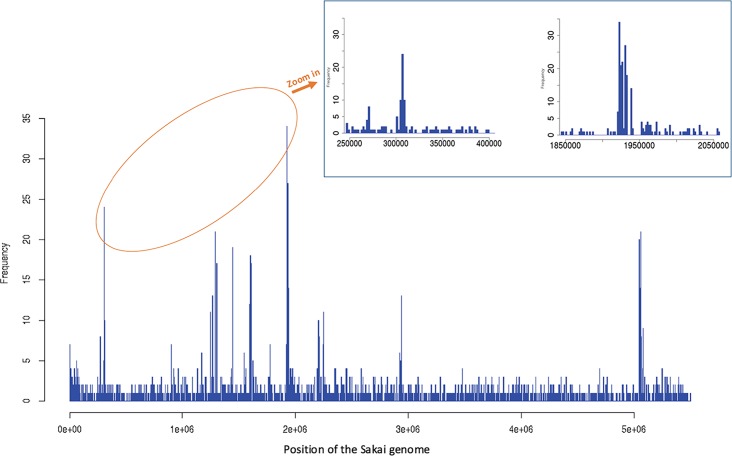
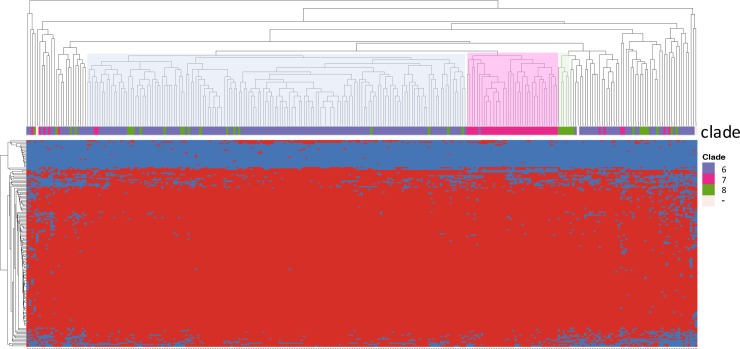
Escherichia coli serotype O157:H7 continues to pose a serious health threat to human beings. Cattle, a major reservoir of the pathogen, harbor E. coli O157:H7 in their gastrointestinal tract and shed variable concentrations of E. coli O157:H7 into the environment. Genetic characterization of cattle-shed E. coli O157 strains is of interest to the livestock industry, food business, and public health community. The present study applied whole genome shotgun sequencing (WGS) and single nucleotide variant (SNV) calling to characterize 279 cattle-shed E. coli O157:H7 strains isolated from a single feedlot located in southwestern region of the US. More than 4,000 SNVs were identified among the strains and the resultant phylogenomic tree revealed three major groups. Using the Sakai strain genome as reference, more than 2,000 SNVs were annotated and a detailed SNV map generated. Results clearly revealed highly polymorphic loci along the E. coli O157:H7 genome that aligned with the prophage regions and highly variant genes involved in processing bacterial genetic information. The WGS data were further profiled against a comprehensive virulence factor database (VFDB) for virulence gene identification. Among the total 285 virulence genes identified, only 132 were present in all the strains. There were six virulence genes unique to single isolates. Our findings suggested that the genome variations of the E. coli O157:H7 were mainly attributable to dynamics of certain phages, and the bacterial strains have variable virulence gene profiles, even though they came from a single cattle population, which may explain the differences in pathogenicity, host prevalence, and transmissibility by E. coli O157:H7.
Conflict of interest statement
The authors have declared that no competing interests exist.
Figures
References
-
- Zhang D, Coronel-Aguilera CP, Romero PL, Perry L, Minocha U, Rosenfield C, et al. The Use of a Novel NanoLuc -Based Reporter Phage for the Detection of Escherichia coli O157:H7. Sci Rep. 2016;6:33235 10.1038/srep33235 ; PubMed Central PMCID: PMCPMC5021930 Indiana which has licensed technology related to using PhiV10 and its derivatives for the detection of E. coli O157:H7. Authors Bruce Applegate, Dandan Zhang, Claudia P Coronel-Aguilera, Patricia L Romero, Lynda Perry, Udit Minocha and Carla Rosenfield are coinventors on recent disclosures of IP related to PhiV10 and its derivatives. - DOI - PMC - PubMed
Publication types
MeSH terms
Substances
LinkOut - more resources
Full Text Sources
Other Literature Sources
